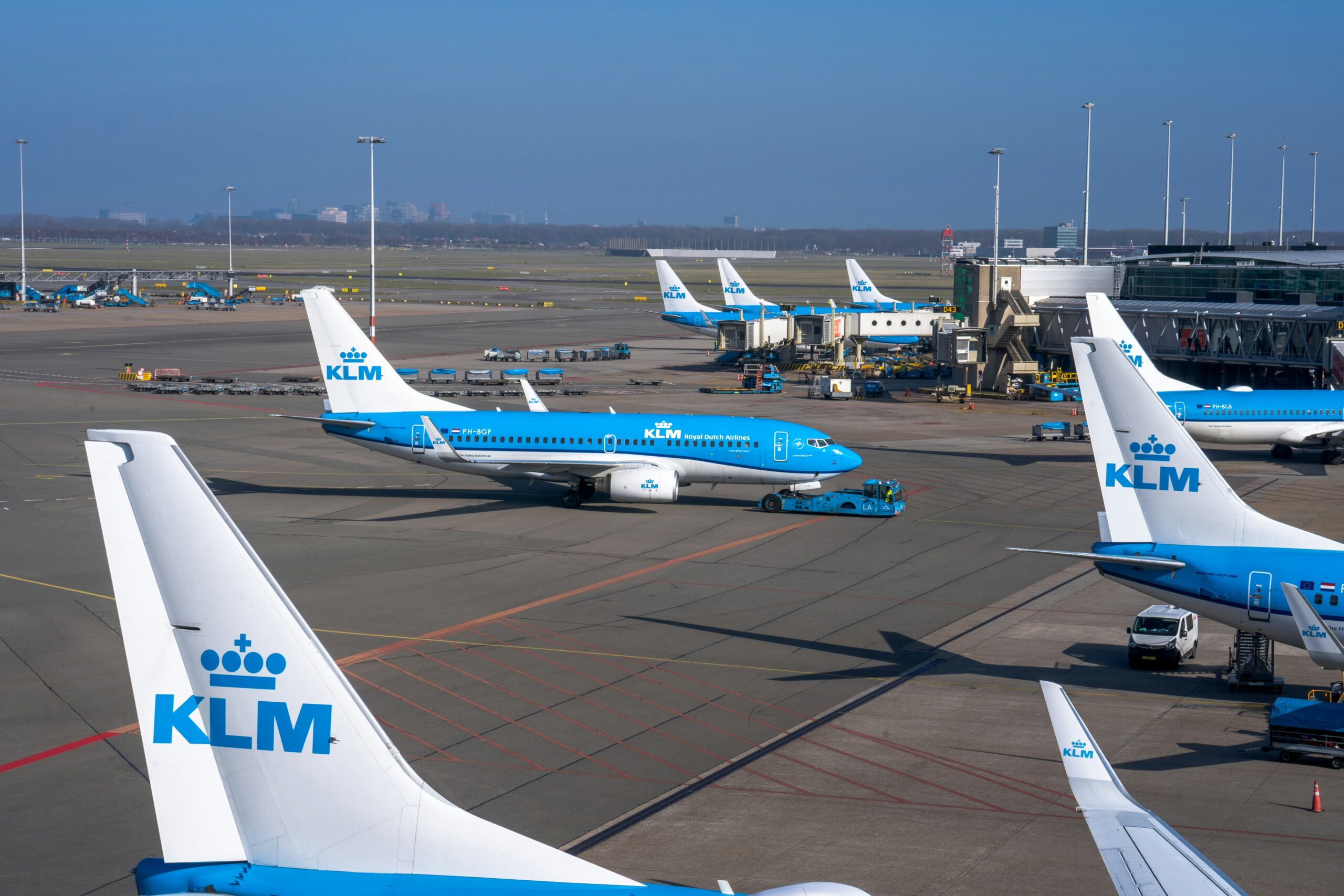



KLM Cityhopper has operated a passenger flight between Amsterdam and Hamburg using a 5% blend of synthetic kerosene (e-SAF). The flight marks the first passenger service to Germany using this type of fuel. It is part of ongoing efforts to test and scale alternative aviation fuels in real operating conditions. The operation shows how synthetic fuels are gradually being introduced into commercial aviation, even if only in small blends for now.
Synthetic kerosene, also known as e-SAF, is produced using renewable electricity, captured CO2, and water through a power-to-liquid process. This allows the fuel to be created without fossil oil, while still being compatible with existing aircraft engines and airport infrastructure. The fuel is designed to reduce lifecycle emissions by more than 90% compared to conventional kerosene. Because it can be used in today’s aircraft without technical modifications, it is seen as one of the more practical options for reducing aviation emissions in the short to medium term.
The 5% blend used on the Amsterdam–Hamburg route remains small, but it plays an important role in testing and demonstrating operational feasibility. These types of flights are not primarily about immediate emission reductions, but about proving that synthetic fuels can be integrated safely into commercial passenger operations. KLM already carried out a similar milestone in 2021, when it operated the first passenger flight using synthetic kerosene from Amsterdam to Madrid.
At the same time, the project highlights the gap between ambition and availability. While e-SAF is technically viable, production volumes remain extremely limited. Only small quantities are currently available, with 200 litres used in this latest operation compared to 500 litres in the 2021 test flight. This illustrates how slowly production capacity is developing, despite growing climate targets in the aviation sector and increasing regulatory pressure in Europe.
The development of synthetic aviation fuels is also closely linked to European climate rules. Through the ReFuelEU Aviation regulation, the European Union is requiring airlines to gradually increase the use of sustainable aviation fuels in the coming years. This includes specific targets for both regular SAF and newer fuels like e-SAF. The goal is to reduce aviation emissions and push the market to scale up production. However, airlines and fuel producers say that meeting these targets will depend on how quickly production capacity can grow across Europe.
Cost remains one of the main barriers to wider adoption. E-SAF is currently around four times more expensive than conventional sustainable aviation fuel and roughly eight times more expensive than fossil kerosene. The production process requires large amounts of renewable electricity and complex industrial systems, which are still in early stages of scaling. In addition, permitting procedures and regulatory uncertainty in Europe continue to slow down investment in new production facilities.
Airports are becoming key actors in this transition. Hamburg Airport, which supported the operation, has indicated that its infrastructure is prepared to handle alternative aviation fuels. This includes systems for storage, blending, and distribution, which are essential for integrating new fuel types into daily operations. As more airlines begin testing and adopting SAF blends, airport readiness is becoming an important factor in determining how quickly these fuels can scale.
Speaking about the flight, KLM CEO Marjan Rintel said: “Today’s flight to Hamburg once again shows that flying on synthetic kerosene is technically possible, but the reality is that the availability of e-SAF lags far behind ambition.” She also stressed: “To truly make a difference, we must work together with governments, industry, and partners on scaling up and affordability in order to accelerate the sustainability of aviation.”
Looking ahead, synthetic aviation fuels such as e-SAF are expected to play an increasing role in efforts to reduce aviation emissions. However, scaling production remains the key challenge, particularly given high costs and limited supply. Alongside other solutions such as conventional SAF and future propulsion technologies, e-SAF is likely to form part of a broader mix of decarbonisation strategies. For now, the Amsterdam–Hamburg flight mainly demonstrates that the technology is already operational, while the industry continues to face the challenge of making it widely available.