

Four kilometres. That is roughly all it takes to leave the elegant streets, thermal baths and Belle Époque heritage of Spa behind and find yourself walking through a landscape that feels considerably further away.
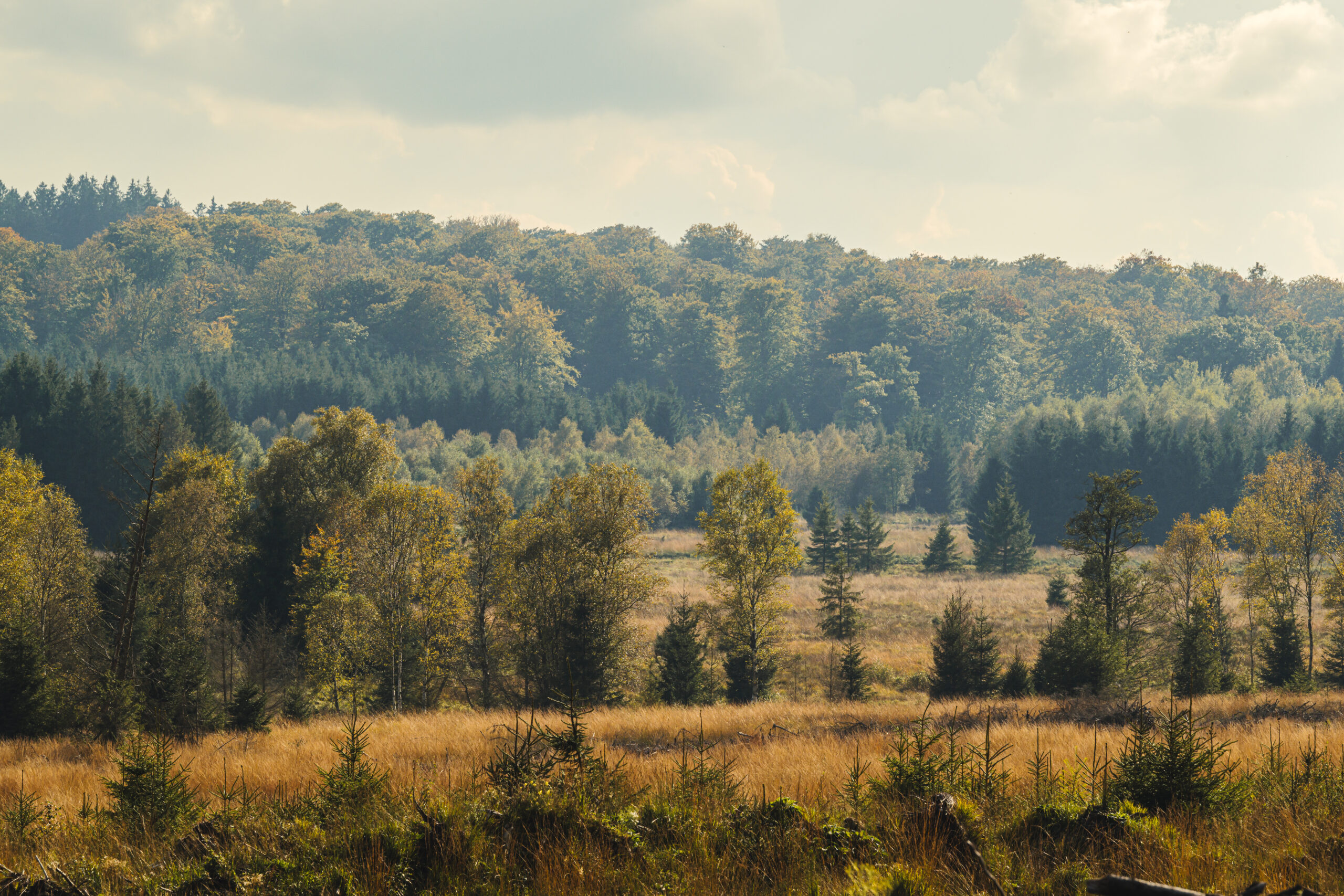
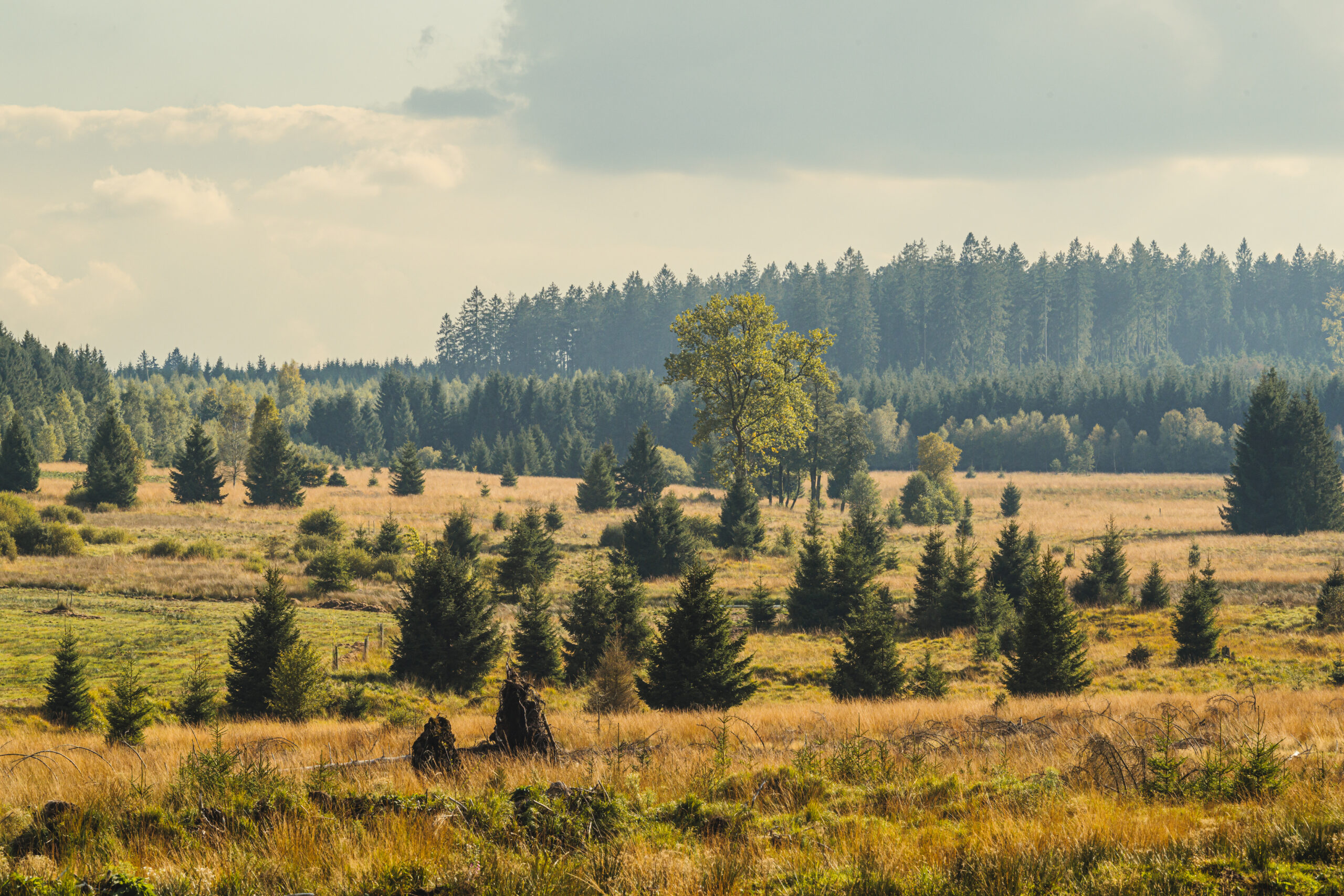
At more than 500 metres above sea level, the Domaine de Bérizenne and neighbouring Fagne de Malchamps reveal another side of the region. Peat bogs, wet and dry heathlands, acidic marshes and forests replace the architecture of the thermal town below, while water remains almost as important here as it is in Spa itself.
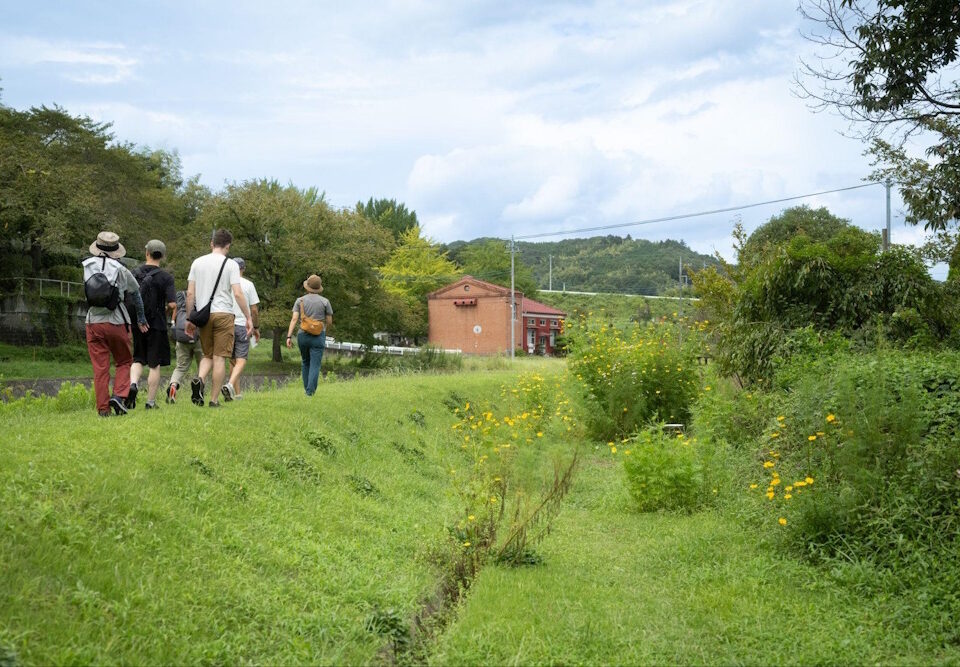
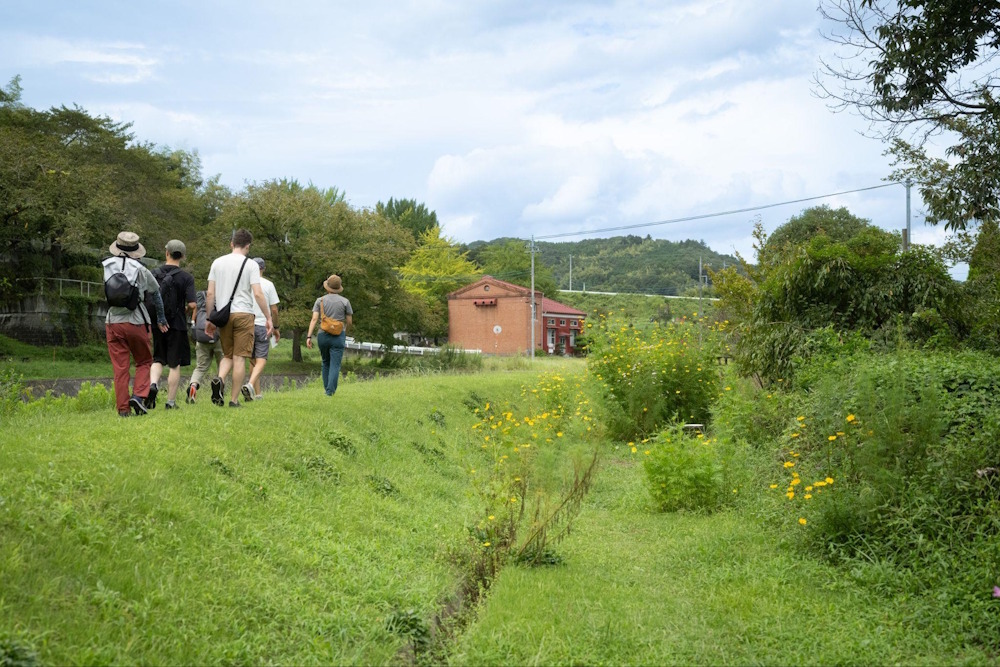
I explored the area with guide Philippe Calonne, starting from the Domaine de Bérizenne before heading into the Fagne de Malchamps. The protected area covers around 365 hectares and forms part of the Natura 2000 network. Despite its relatively compact size, it contains an unusually diverse collection of habitats, including peatlands, wet heath, dry heath and acidic forests, supporting plants and wildlife that are increasingly difficult to find elsewhere.
What makes the excursion particularly attractive for visitors to Spa is its proximity. The town sits at a little over 300 metres above sea level, while within just four kilometres the landscape climbs by almost 200 metres to the plateau.
It is close enough for a morning excursion, yet sufficiently different to feel like another destination.
A landscape built centimetre by centimetre
The word fagne itself gives a clue to the landscape underfoot. These are wet, marshy environments, and the Fagne de Malchamps has developed on highly acidic soils where conventional agriculture was historically difficult.
Its name, Malchamps, literally evokes a “bad field”, an appropriate description of land that proved poorly suited to intensive cultivation. What was once a disadvantage has ultimately helped preserve an ecosystem that is now extremely valuable.
As we walked, the landscape changed constantly. Open heathland gave way to patches of forest, boggy ground and expanses of heather. Philippe pointed out blueberries, sedges, birches and different varieties of heather, as well as the habitats of carnivorous sundews, small plants that compensate for the nutrient-poor soil by trapping insects.
At one point, he bent down and picked up what looked, at first sight, like an unremarkable handful of bright green moss.
“This is sphagnum,” he explained, holding it up against the surrounding fagne.
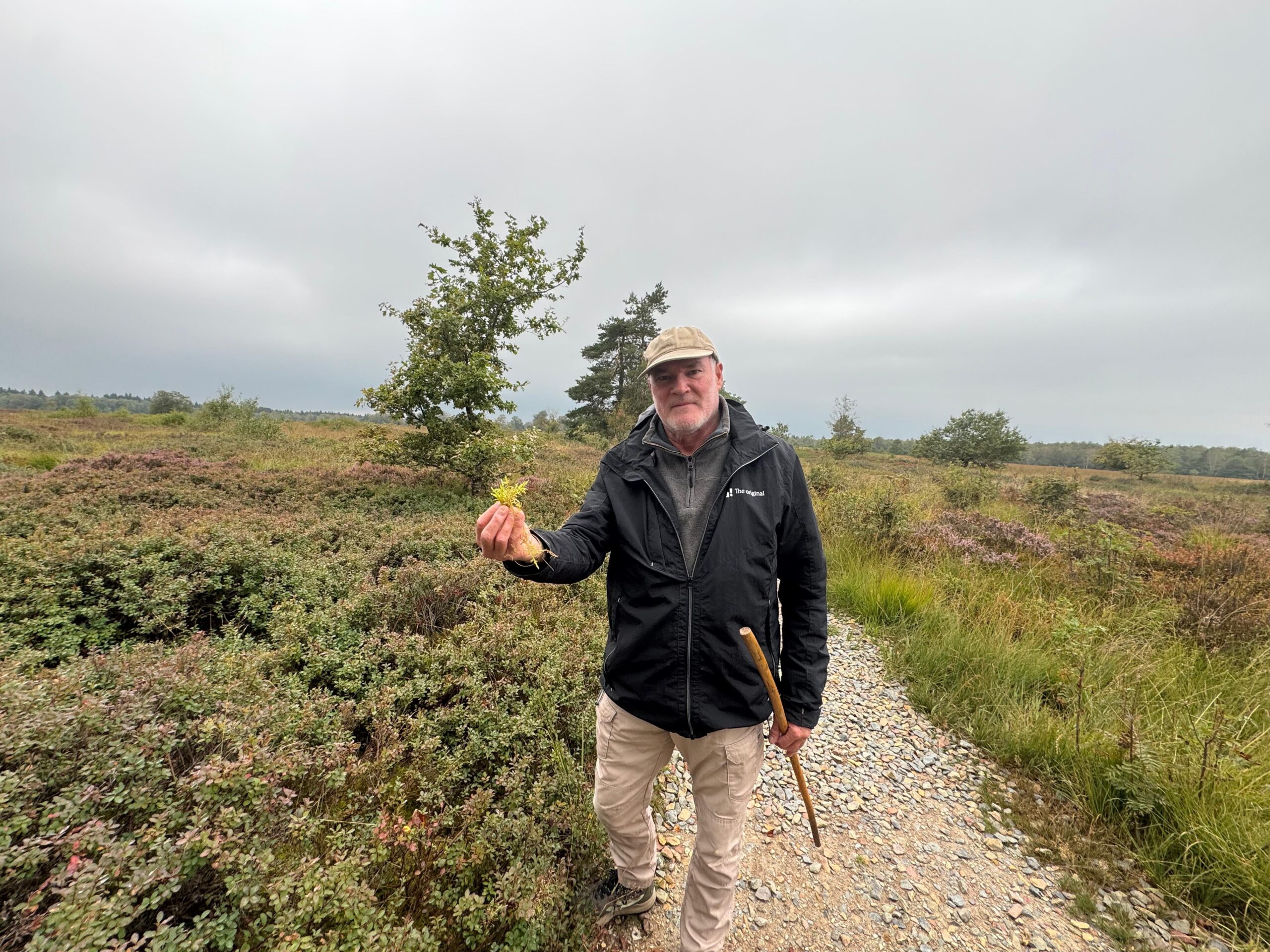
Unlike most plants, sphagnum has no roots or vascular system. It thrives in this wet environment and grows extraordinarily slowly, Philippe explained, at a maximum of around one centimetre per year. When it dies, rather than decomposing completely, it accumulates beneath new growth. Layer after layer, over very long periods of time, this process creates peat.
It is difficult to reconcile something so small and delicate in your hand with the enormous ecological role it plays. Sphagnum helps retain water and creates the acidic conditions characteristic of the fagne, while peatlands are also important carbon stores.
And here, that handful of moss is part of an even bigger story.
Protecting the landscape means protecting Spa’s water
The Domaine de Bérizenne belongs to Spadel, the Belgian family-owned group behind Spa mineral water. Philippe explained that the company acquired the estate in 1972 for a very particular reason: to protect the water.
“It’s simply to make sure that the water they collect for bottling remains pure,” he explained during our walk. Preventing potentially polluting industrial activity in and around the catchment area is therefore essential to safeguarding the resource.
This protection goes far beyond the 365 hectares of the Fagne de Malchamps. The protected Spa aquifer area has expanded over generations and today covers 13,177 hectares, making it one of the largest areas of its kind in Europe. Agriculture and industry are prohibited in the protected catchment zone, as is the use of pesticides, fertilisers and chemical soil improvers.
Walking across the fagne makes the reason for that protection much easier to understand.
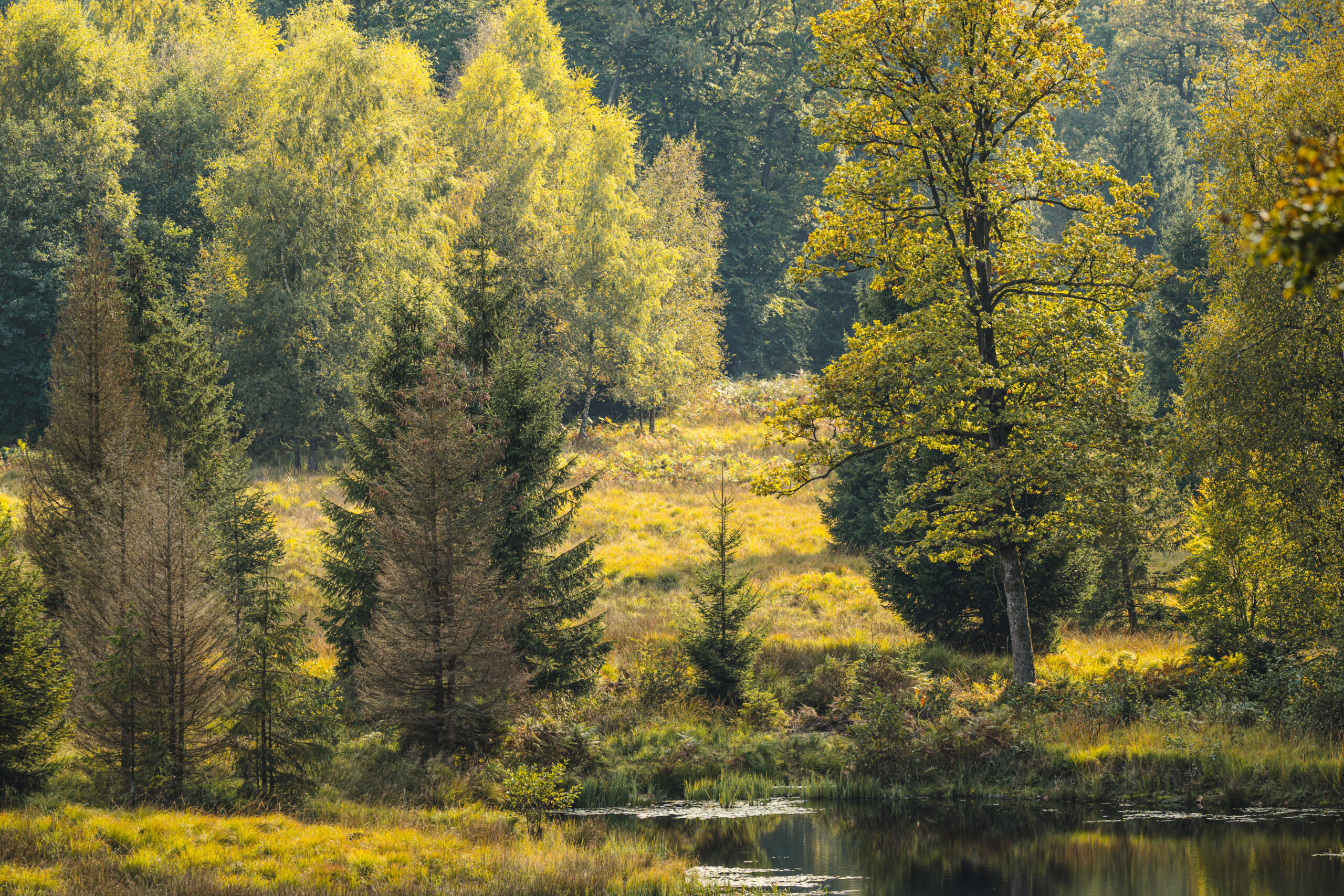
Rain falling on the plateau does not simply run immediately into streams. Water moves slowly through layers of vegetation, peat and soil. Sphagnum plays an important role in this environment, while beneath the peat lie geological layers including clay and ancient rock.
Philippe described how some of that rainwater is naturally filtered through the upper layers before eventually re-emerging at springs with very low mineralisation. Other water penetrates much deeper through geological faults, interacting with mineral-rich layers before returning towards the surface. That deeper journey produces the more heavily mineralised and naturally carbonated waters associated with springs such as Marie-Henriette.
The connection between the wild landscape above and Spa’s famous waters below suddenly becomes tangible. Protecting this landscape is not separate from protecting the water. It is part of the same process.
Three ways to discover the fagne
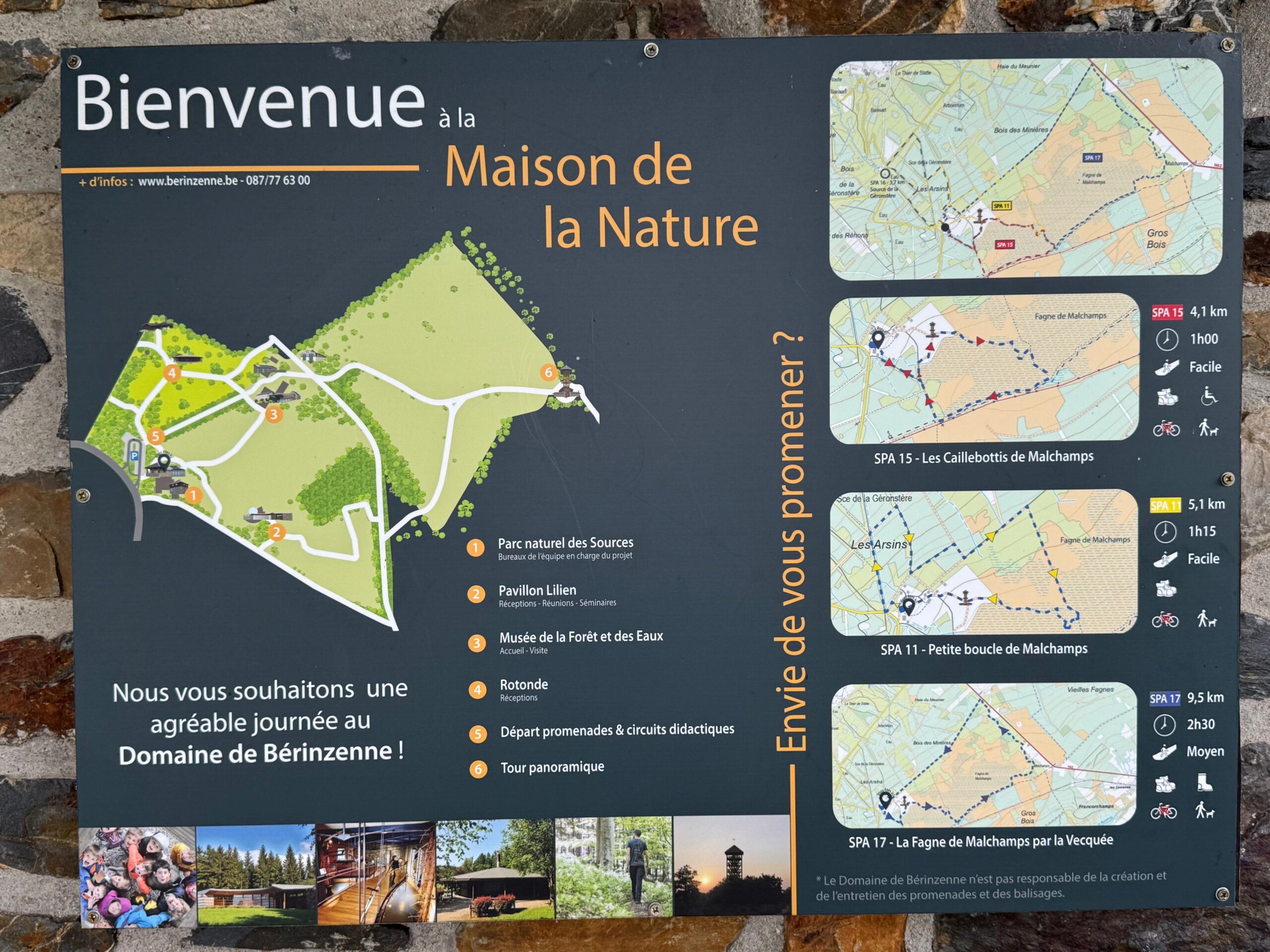
You do not need to be an experienced hiker to explore the Fagne de Malchamps. At the Maison de la Nature, a large map presents three marked walks starting from the Domaine de Bérizenne, allowing visitors to choose according to how much time and energy they have.
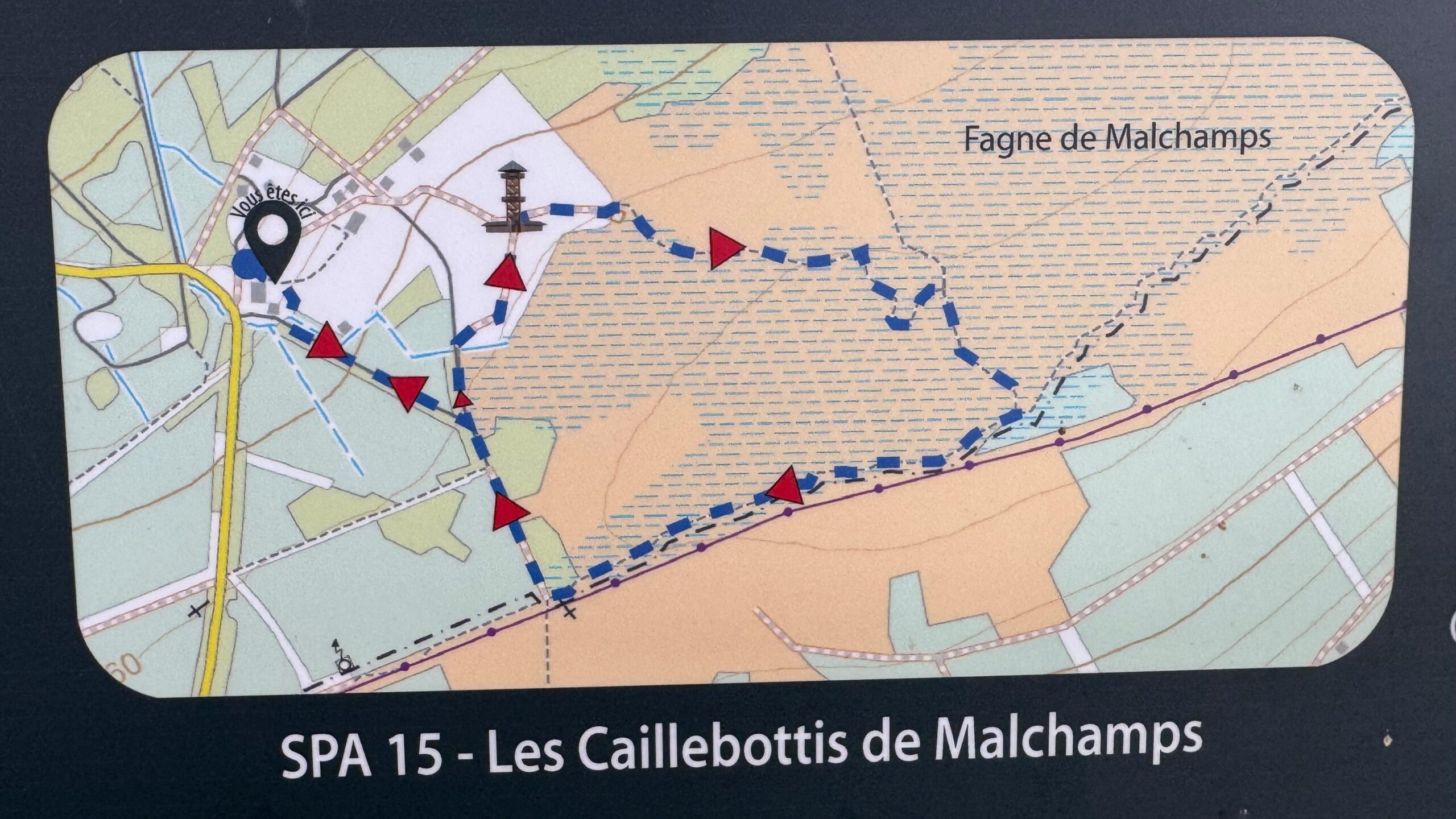
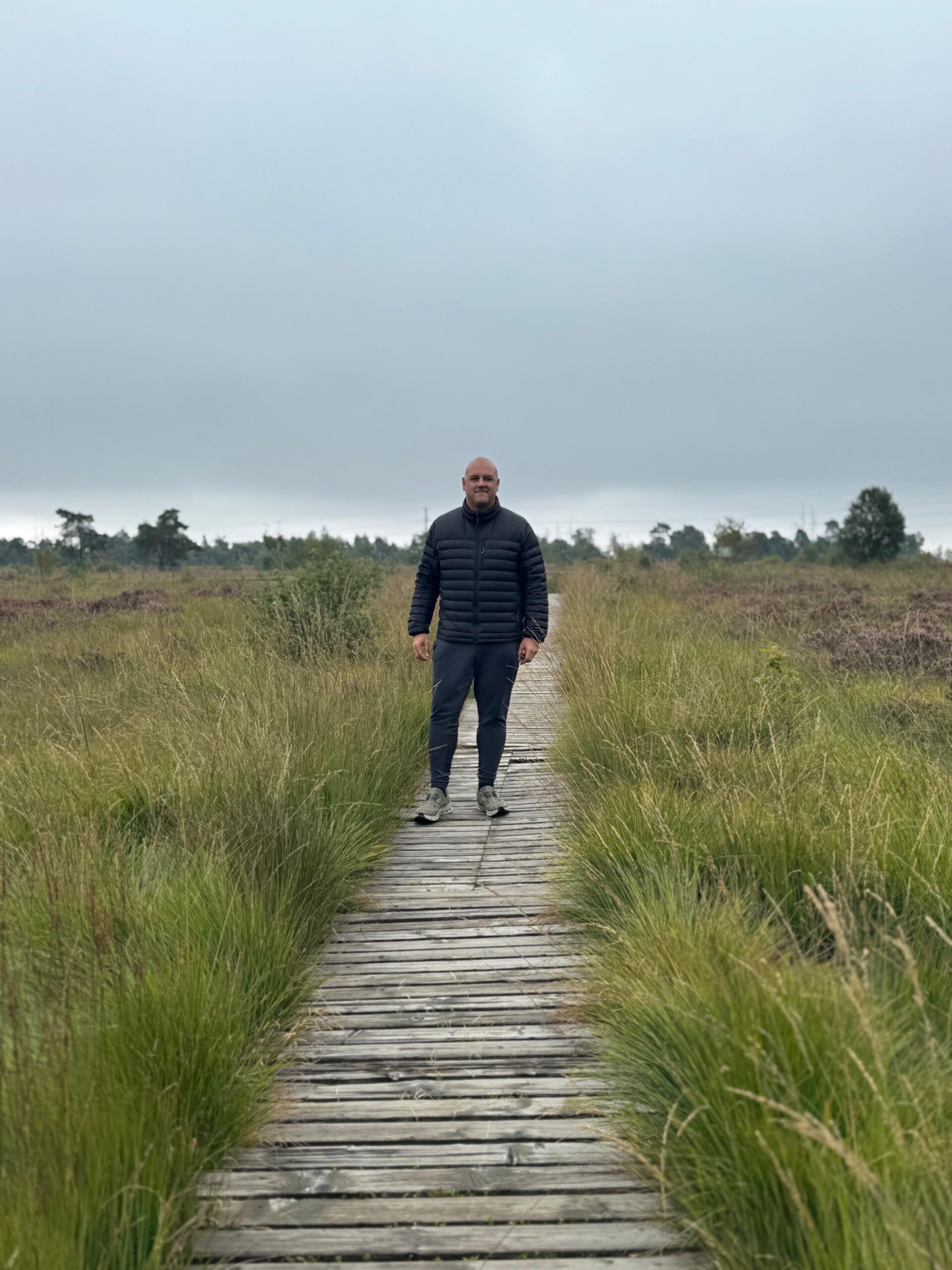
The easiest is SPA 15 – Les Caillebotis de Malchamps, a 4.1-km route indicated as taking around one hour. That is the route I chose. Walking with Philippe and stopping regularly to understand the plants, peat, geology and history around us extended the experience to approximately an hour and a half.
For those wanting to go further, SPA 11 – Petite boucle de Malchamps covers 5.1 km and takes approximately 1h15, while SPA 17 – La Fagne de Malchamps par la Vecquée extends to 9.5 km and around 2h30. All three are currently listed as open by the Domaine de Bérizenne.
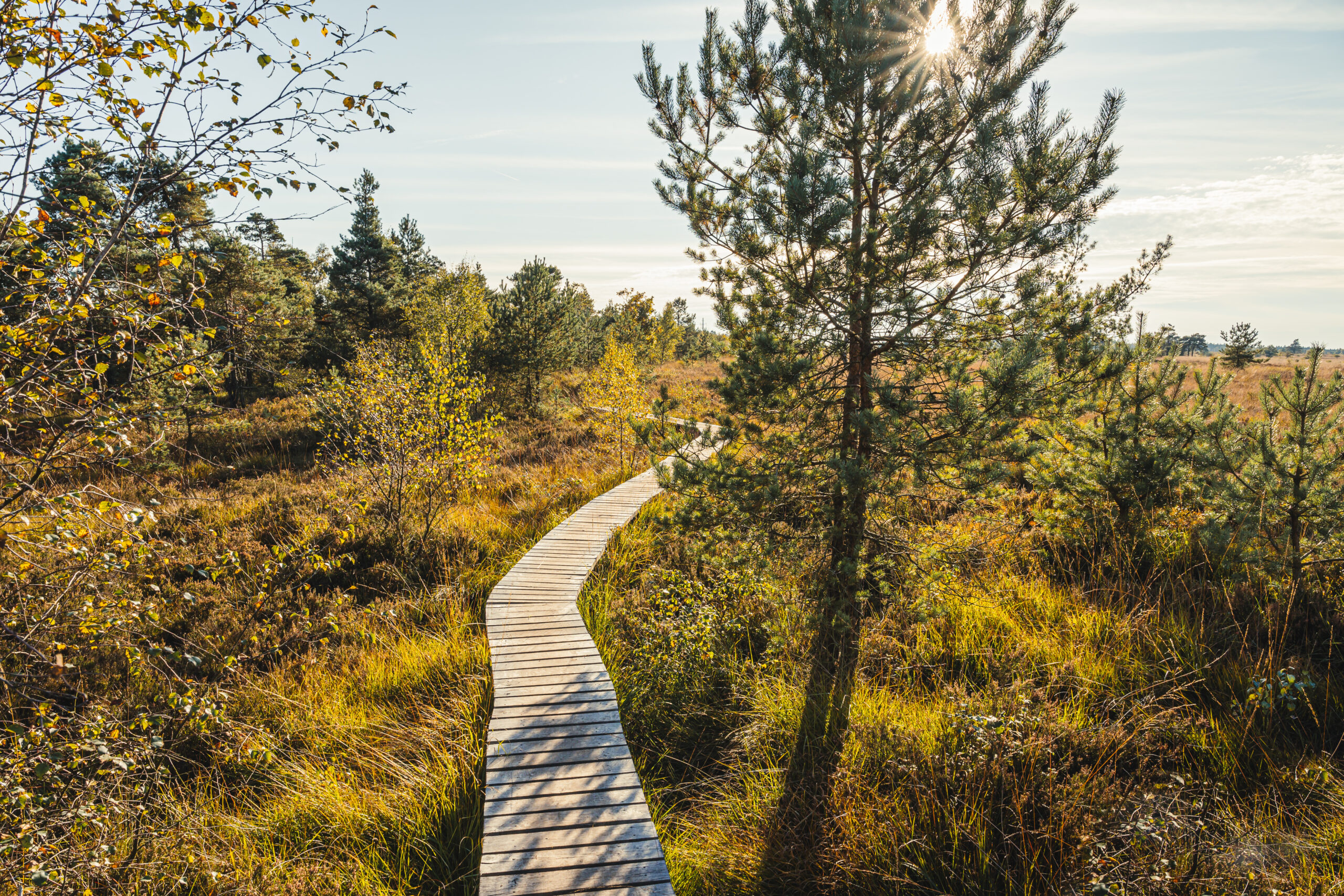
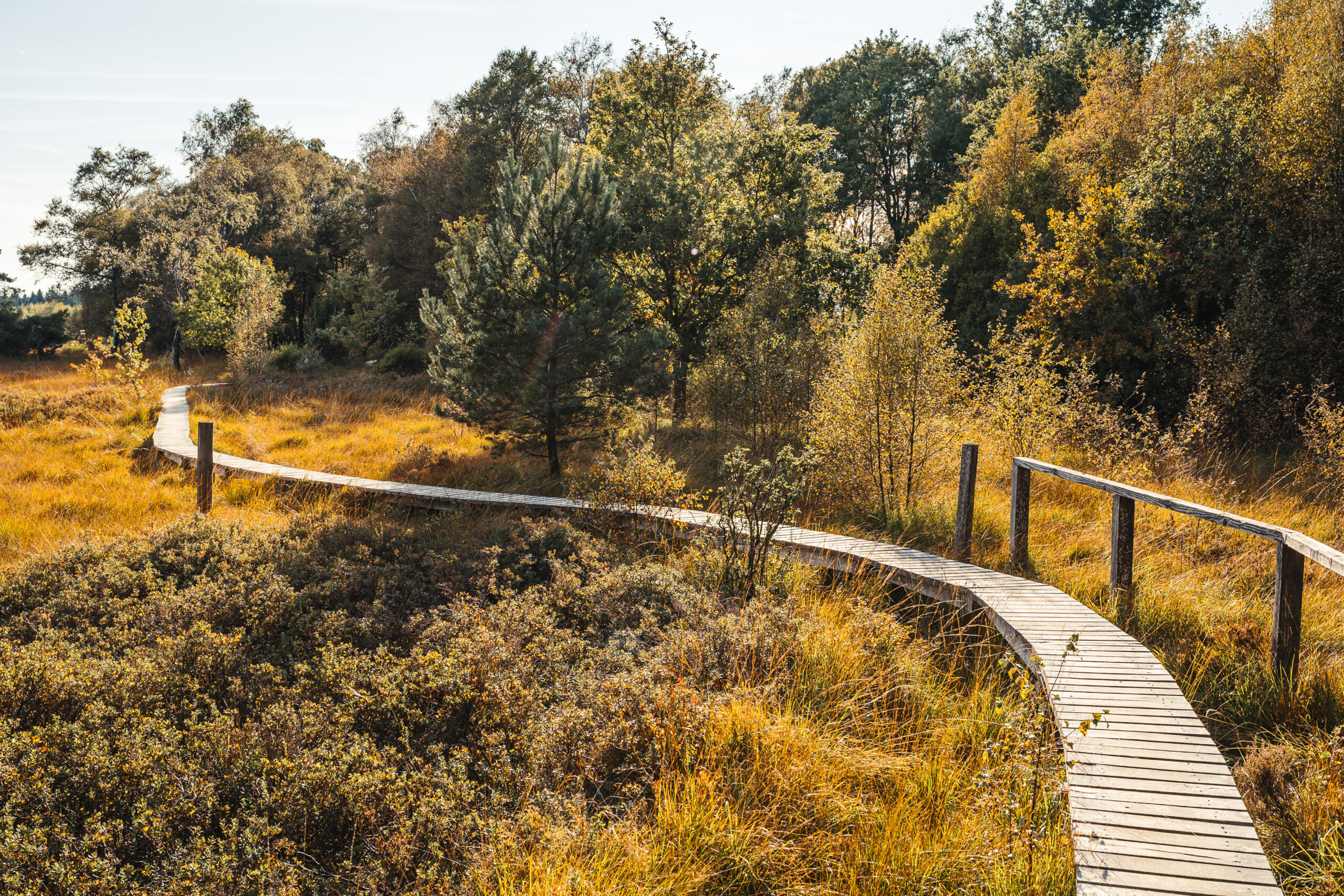
The routes also make it possible to explore this fragile environment without walking directly across the peatland. Boardwalks and designated paths cross sections where the ground can be extremely wet and unstable, while keeping visitors away from sensitive vegetation. The boardwalk sections are not accessible to wheelchairs or pushchairs.
For me, the advantage of taking a guide quickly became obvious. A 4.1-km walk becomes something entirely different when someone can explain why the ground beneath your feet is acidic, pick up sphagnum and show you how peat begins, identify the heather or point out a carnivorous plant that you would otherwise walk straight past.
Climbing above the fagne
One of the highlights of the Domaine de Bérizenne is its wooden observation tower. Built in the 1990s from larch, the structure rises 22 metres above the landscape and requires 88 steps to reach the top. It is worth the climb.
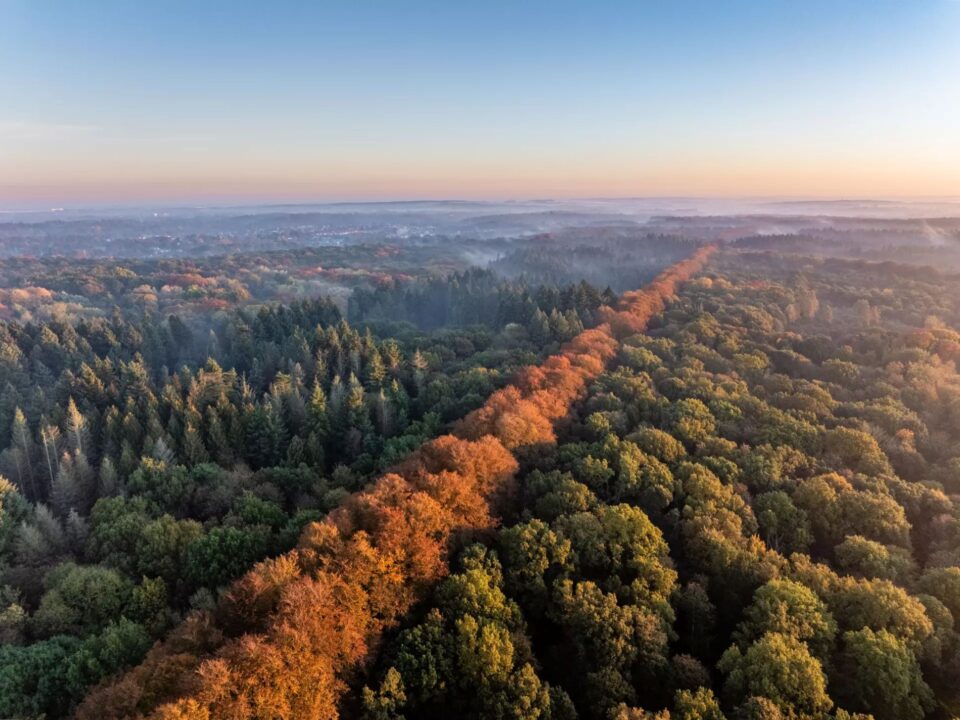
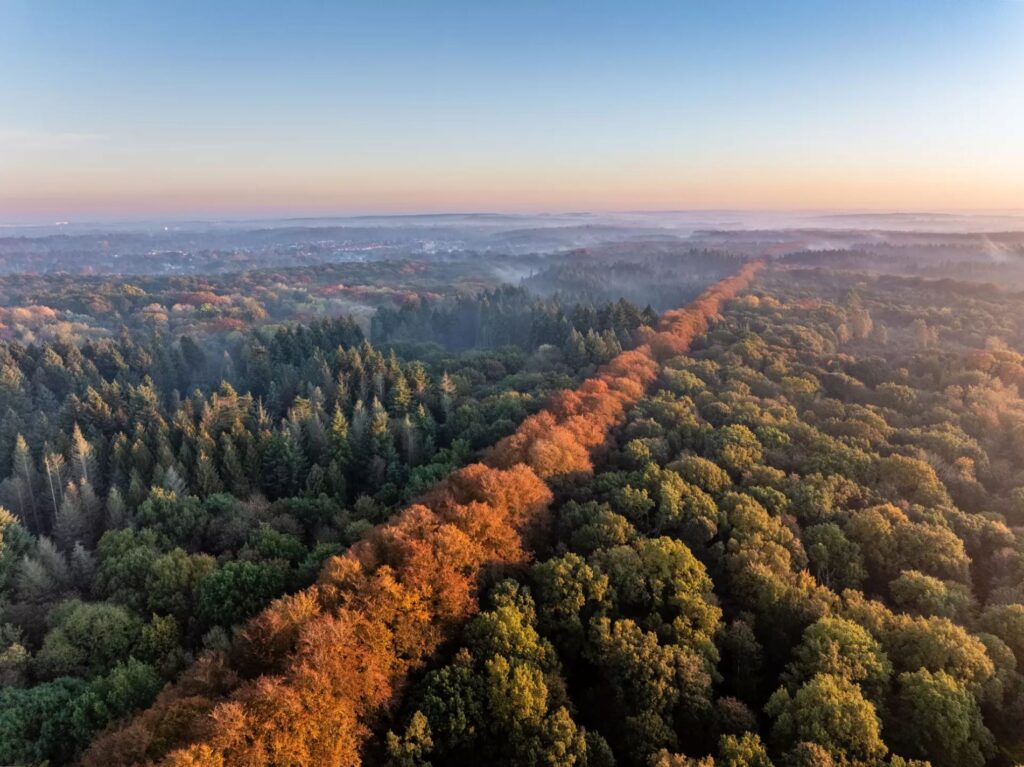
From above, the fragmented landscape seen at ground level suddenly comes together. Heathland stretches towards the forests; wetlands interrupt the vegetation and, on a clear day, the horizon continues eastwards towards the wider Hautes Fagnes and eventually Germany.
The tower also makes the vulnerability of the landscape easier to understand. What looks like an expanse of hardy vegetation is dependent on a delicate balance of water, temperature and soil conditions.
Philippe has been guiding in the area for more than ten years, long enough to notice the changes himself. “In recent years, I have noticed considerable drought,” he told me, explaining its impact on the peatlands, ponds, fauna and flora. During our walk, one small pond that he would normally expect to contain water was completely dry.
After the fires, a territory that still needs visitors
That vulnerability acquired a much more dramatic dimension this summer.
The devastating wildfires in the Hautes Fagnes provided a stark reminder that landscapes associated with water and wetlands can become extraordinarily combustible after prolonged periods of heat and drought. Peat is particularly problematic because fire can continue beneath the surface, making it extremely difficult to extinguish.
The ecological consequences extend far beyond the vegetation visible above ground. Peat accumulates extraordinarily slowly, while rare plants and wildlife depend on habitats that cannot simply be recreated once destroyed.
But the fires should not give travellers the impression that the wider region is inaccessible or that nature tourism around Spa should be avoided. The Fagne de Malchamps is a reminder that there are still extraordinary landscapes to discover, provided visitors respect restrictions, remain on designated paths and follow local guidance.
Continuing to visit responsibly can also help the territory recover. Spa and its surrounding communities depend on tourism, and supporting local guides, accommodation, restaurants and visitor attractions matters particularly after an environmental disaster has placed the region in the headlines for all the wrong reasons.
The answer is not to stay away, but to visit responsibly.
More than a hike
Back at the Domaine de Bérizenne, the experience does not necessarily end with the walk. The Musée de la Forêt et des Eaux explores the forests, water and ecosystems of the region, while the site also serves as an educational centre for schools and families.
There are traces of human history across the landscape too. An old route crossing the fagne follows the path of an ancient Roman road, later used during the Middle Ages to connect territories under the influence of the Prince-Bishops of Liège. Elsewhere, an old elm linked to the history of the Bérizenne estate has survived for centuries, while the remains of a Second World War aircraft crash add another, darker layer to the walk.
Yet what stayed with me most was not a historical monument or even the panoramic view. Towards the end of our walk, surrounded by heather and the open landscape of the plateau, Philippe summed up his attachment to the place very simply: “When I come here, I am happy.” It is easy to understand why.
Just a few kilometres away, Spa is defined by the water that emerges from its springs, fills its thermal baths and leaves the town in millions of familiar bottles. Up here, at the Fagne de Malchamps, you begin to understand the landscape behind that water: the rain, moss, peat, rock and decades-long underground journey that precedes what eventually reaches the surface.
A hike that began as a 4.1-km walk through one of Wallonia’s most unusual natural landscapes ended up explaining another side of Spa altogether.