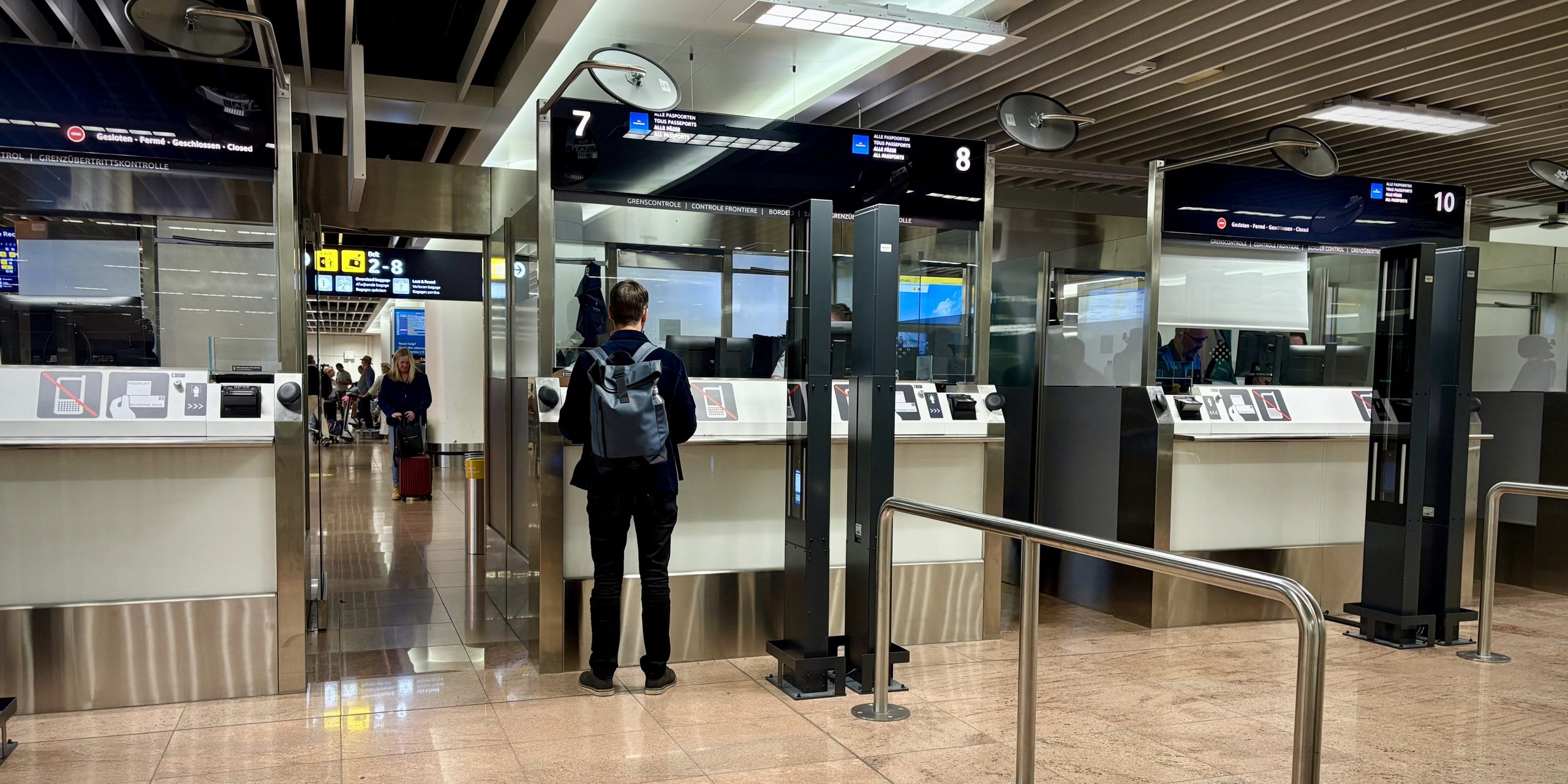



Brussels Airport is expanding its arrivals border-control area again in an effort to ease lengthy queues linked to the European Union’s Entry/Exit System (EES). Eight additional manual control positions are due to open in December 2026, increasing arrivals capacity by 66% and doubling the airport’s manual capacity within 12 months.
A further six electronic gates are planned for early 2027. The airport says the extra infrastructure will need to be fully staffed, while broader fixes – including allowing more non-European passengers to use e-gates and developing an effective registration app at EU level – remain essential.
Introduced at the end of 2025 and fully operational from April 2026, EES replaces passport stamping with digital registration for non-EU nationals arriving for short stays in the Schengen Area. It records travel-document details, entry and exit information, facial images, and fingerprints. In practice, first-time registration has added friction at busy external borders, while some nationalities that previously used automated gates at Brussels can no longer do so.

According to Brussels Airport, processing an arriving visa passenger during the morning peak now takes on average two to three times longer than before EES. The airport had already increased manual positions in 2025 by 20% at arrivals and 25% at departures, outpacing passenger growth, but says the system’s unexpectedly long processing times have swallowed that additional capacity, necessitating new investment.
Travellers have suffered through the bottlenecks for months. Travel Tomorrow reported waits of up to five hours in September, after technical problems and the loss of e-gate access forced more passengers towards staffed booths. Reporting also notes the existing facilities can only process roughly 500 to 600 non-Schengen passengers an hour, even though close to 3,500 could arrive between 6:00 am and 10:00 am on busy mornings.
The issue is not confined to Belgium: airports across Europe have reported waits of two to four hours as biometric enrolment grows. But Brussels, at the heart of Europe and home to its seats of power, has become a prominent test of whether technology, infrastructure, and staffing can keep pace with policy. EU Internal Affairs and Migration Commissioner Magnus Brunner said earlier in October 2026 that Member States had had sufficient time to prepare and urged national authorities and airports to make the system reliable before the Christmas rush.
For Brussels Airport, the new booths are therefore a pragmatic pressure-release. More desks should shorten the queues when border staffing matches demand, while the extra e-gates are expected to improve flow next year. Like hubs and travel stakeholders around the bloc, Brussels is pushing for an effective app to allow passenger pre-registration, as well as demanding the continued flexibility to suspend EES registrations at the busiest times. The passenger experience at Brussels and across Europe more widely will also depend on increased EES stability, faster registration, and coordinated action between airports, border police, national authorities, and European institutions.