


A new study by AI-first advertising-tech platform Verve shows that cruise passengers rarely engage with more than one brand when searching for a trip, with huge implications for how cruise lines acquire and retain customers.
Nearly 91% of United States consumers searching for cruises with AI tools engage with just one brand. Verve analysed online searches, AI conversations, and consumer survey responses to produce that figure. Correspondingly, less than one in ten prospective cruise passengers (only 8.9%) even look at offers from two or more brands.
The findings suggest that occasions such as new ship launches are likely to trigger brand discovery and create significant traction. Nearly 90% of searches for branded cruises are based on customers seeking specific ships, with the trend intensifying in the first half of 2026.
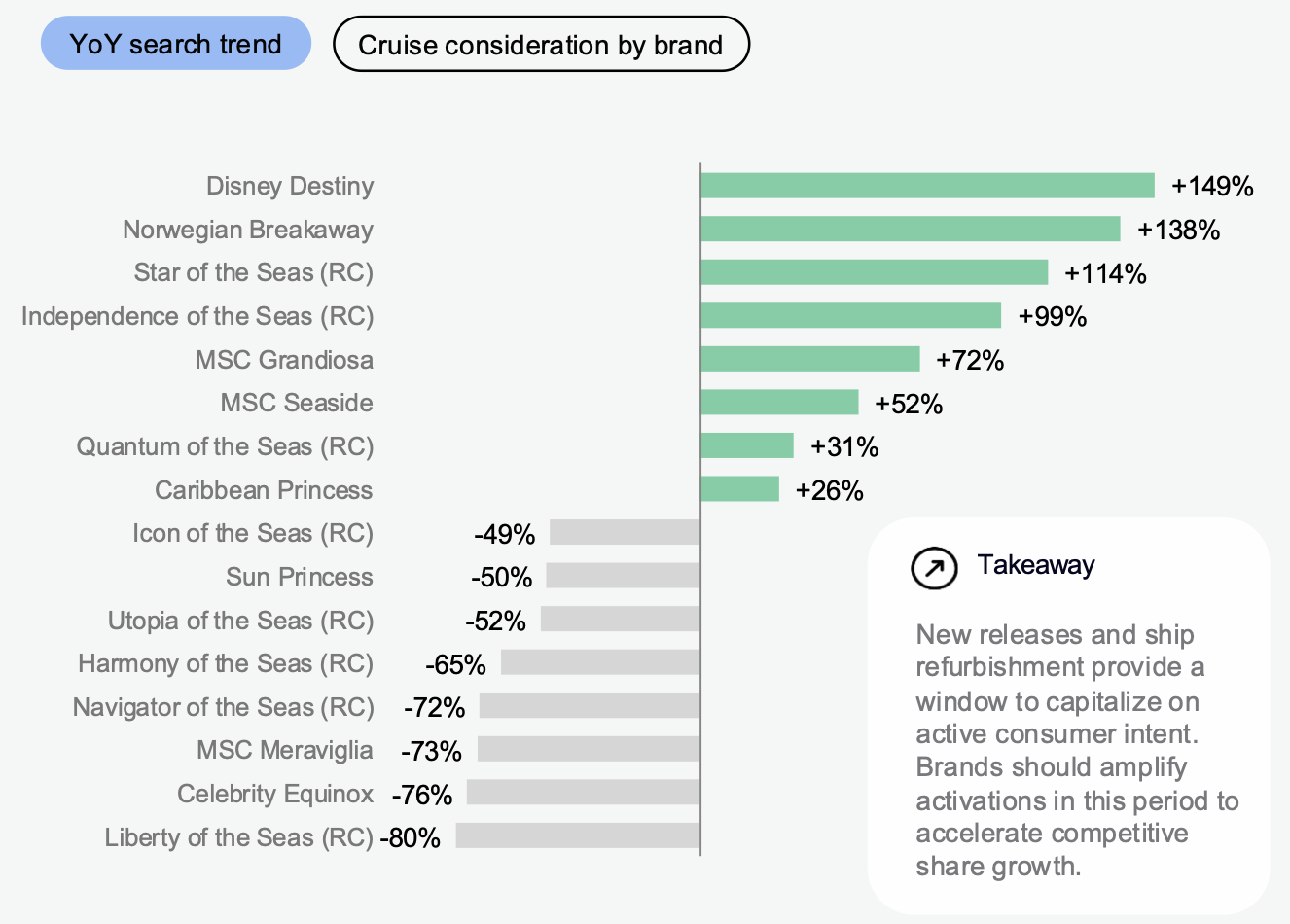
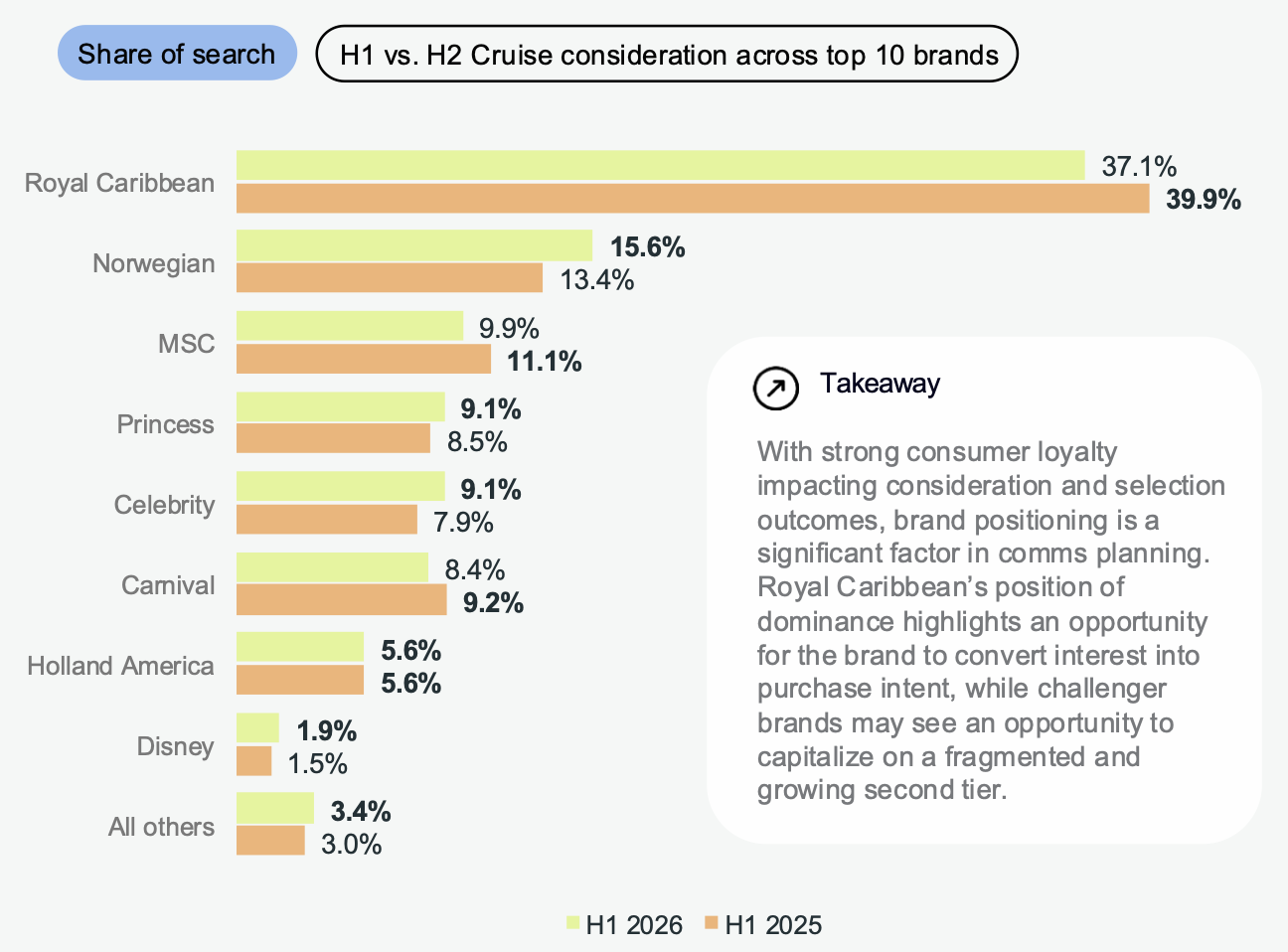
When it comes to cruise lines, Royal Caribbean is ahead of the competition, Verve found, representing 37.1% of all branded cruise searches – though their rivals may be putting up a fight, as that figure declined 2.8% year on year. Norwegian Cruise Line accounts for 15.6% of searches, and Celebrity, MSC, and Princess all occupy around eight to 10% of searches each.
Verve says the process begins with conversational AI agents and apps pointing would-be cruisers towards brands quickly after initial queries. Although so few travellers explore more than one brand, and despite conventional wisdom from the Cruise Lines International Association that points to the importance of destination, Verve says price and value are the game-changing criteria for 60% of consumers. Destination/itinerary is a priority for just 26%, and the onboard experience will influence booking for just 14%.
Booking timelines appear to confirm what other travel companies are saying: that consumers are leaving reservations later and later as they seek deals and try to avoid periods of geopolitical instability and flambéing prices. This means that almost three-quarters of would-be cruisers still have not booked their trip within a year of travel. 21% have made their reservations, and six percent say they will book soon.
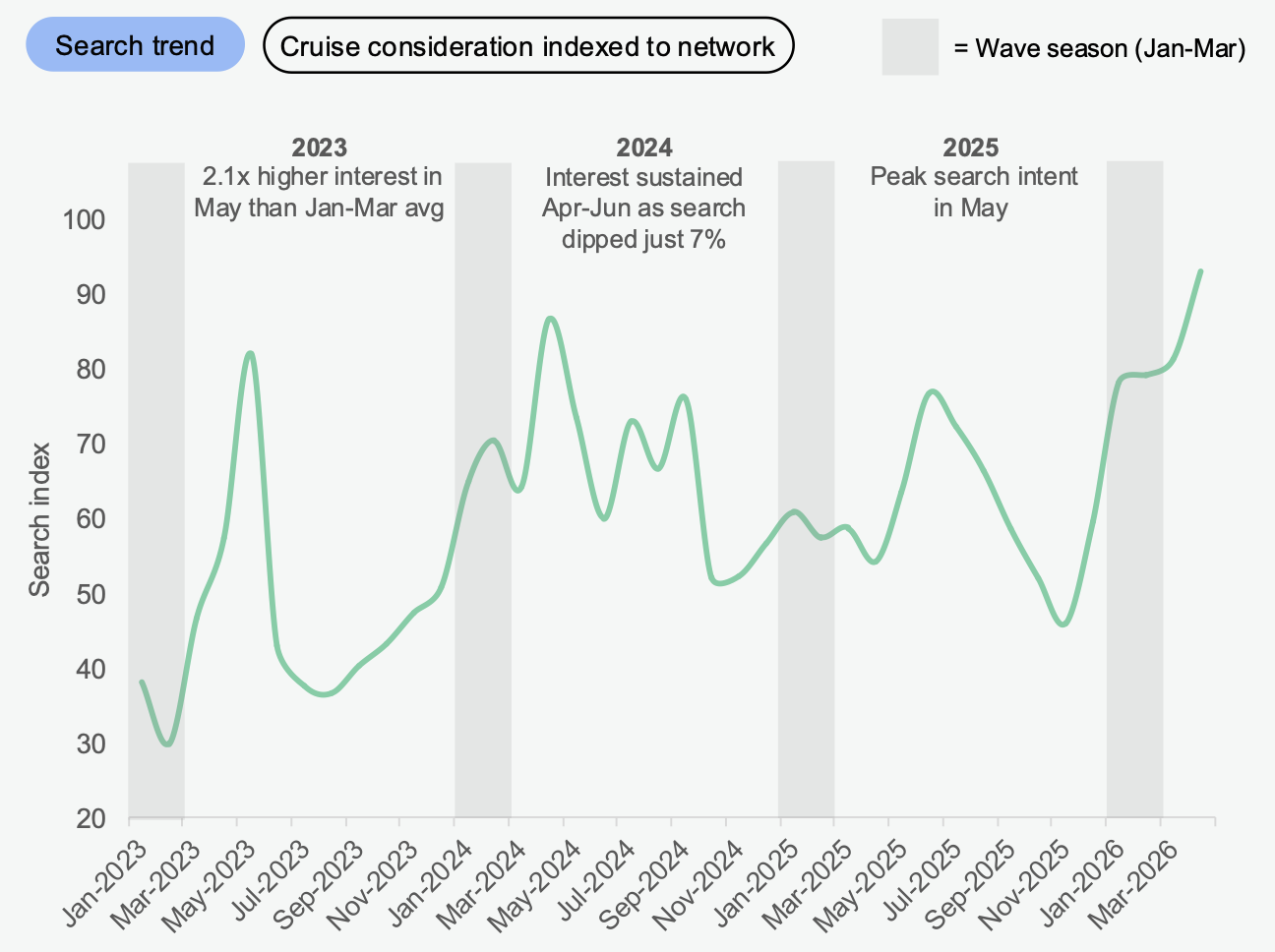
Reflecting what is happening in air- and land-based travel, where heatwaves, cost, overtourism, and crowding are pushing travellers into the so-called off-peak “shoulder seasons,” Verve also found that over the last three years “wave season” has extended beyond the typical January-to-March period into springtime, with implications for how and when cruise companies invest in advertising and promotional activity.
And when it comes to segments, it does not come as any surprise that luxury cruising is as popular as other forms of premium travel. Luxury/premium cruise searches soared by 109% year on year, compared with “only” 66% search growth for standard ocean and river cruises.