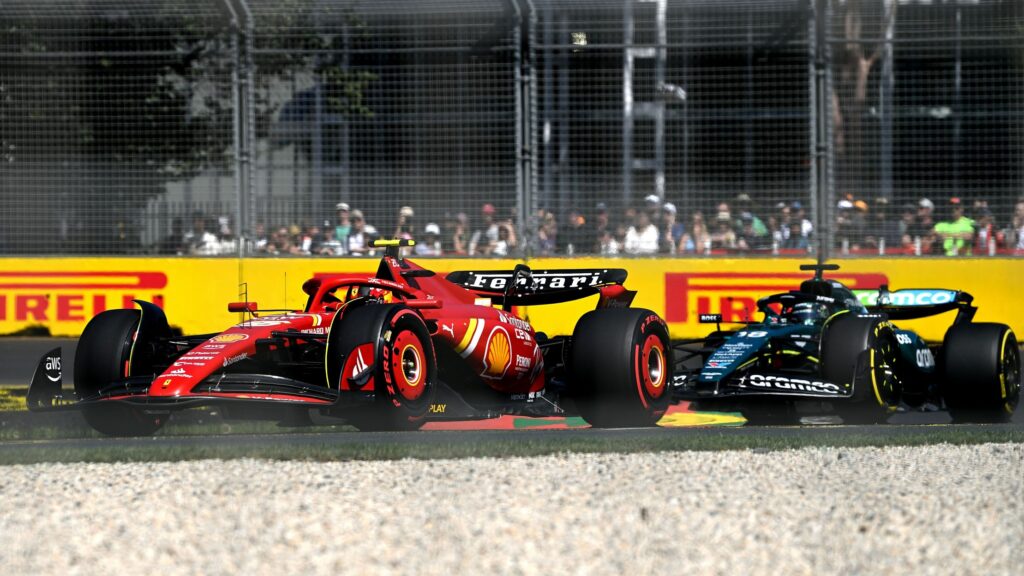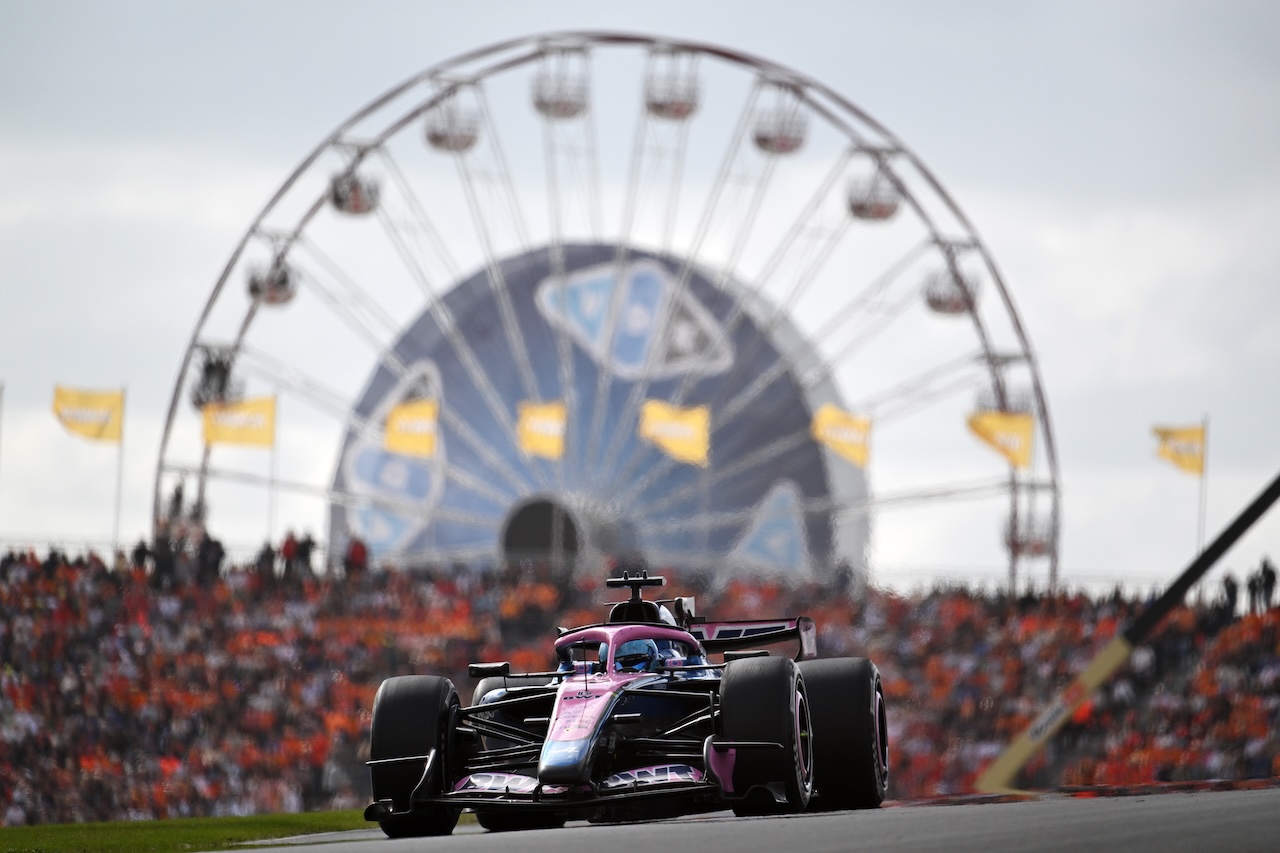

There are few places where the worlds of tourism and Formula 1 come together as naturally as Zandvoort. Sandwiched between the North Sea and the dunes of North Holland, the Dutch seaside resort has spent the past five years welcoming one of motorsport’s most colourful spectacles. On Sunday, 23 August, that chapter came to an end with the final Formula 1 Heineken Dutch Grand Prix.
The farewell weekend offered a rare opportunity to see the spectacle from both sides: from the atmosphere that transforms Zandvoort into a racing destination to the intense activity behind the scenes in the Formula 1 paddock.
More than a race destination
Zandvoort has been linked to motor racing since 1939, when enthusiasts organised a competition on a temporary street circuit. A permanent track through the dunes followed in 1948, and in 1952 the Dutch Grand Prix became part of the Formula 1 World Championship.
The names associated with the circuit tell much of Formula 1’s history: Alberto Ascari, Juan Manuel Fangio, Stirling Moss, Graham Hill, Jackie Stewart and Niki Lauda all won here. Lauda took victory in 1985, the last Dutch Grand Prix before Formula 1 disappeared from Zandvoort for 36 years.
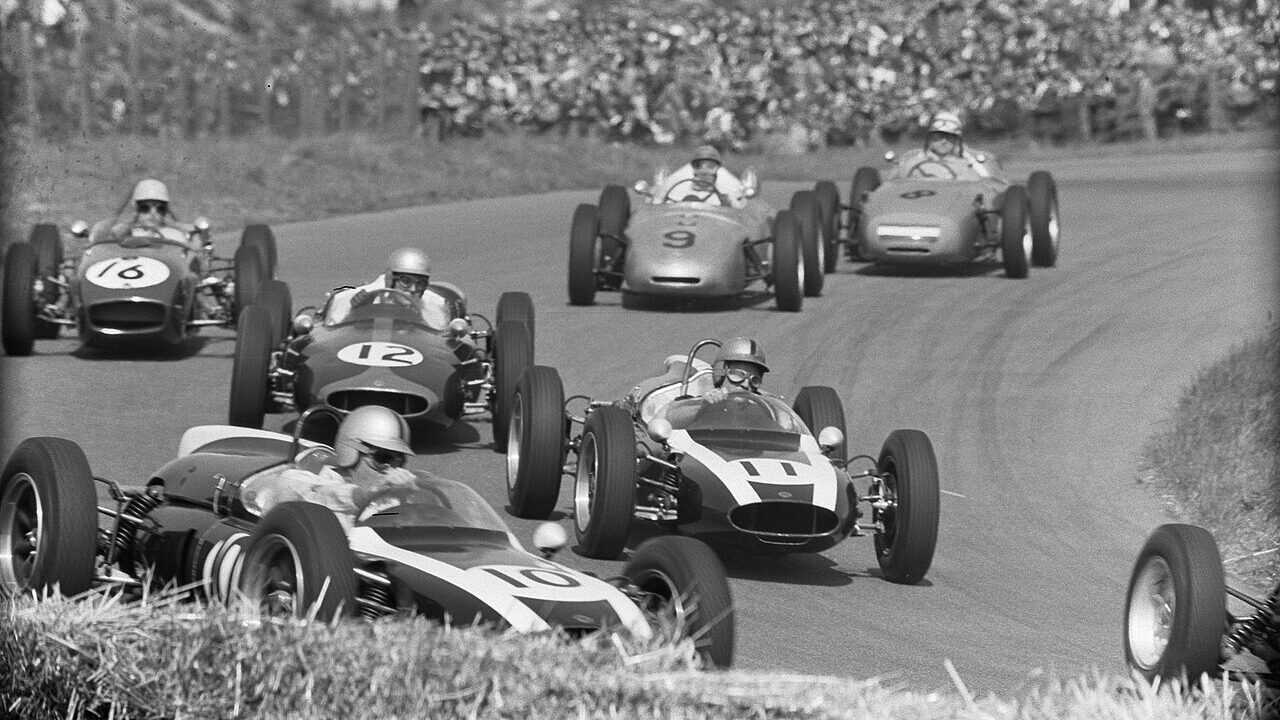
Its return in 2021, powered in no small part by the extraordinary popularity of Max Verstappen, transformed the event into one of the calendar’s most recognisable races. Hundreds of thousands of orange-clad fans descended on the town each year, turning the entire destination into a three-day festival.
But Zandvoort has always had another identity beyond motorsport. Its nine-kilometre beach, beach pavilions, dunes and surrounding nature reserves make the seaside town a popular year-round destination. The centre, beach and circuit are all within walking distance of the railway station, with direct trains connecting the town to Amsterdam and Haarlem.
During Grand Prix week, however, racing takes over. Streets are decorated, entertainment spreads throughout the centre and fans without circuit tickets gather around large screens in the village. For its farewell edition, Zandvoort even created an outdoor photographic exhibition tracing Formula 1’s return to the town since 2021.
A dramatic final Dutch Grand Prix
Zandvoort did not leave Formula 1 quietly. Heavy rain complicated preparations ahead of Sunday’s race, and the drama began almost immediately. Home favourite Max Verstappen crashed heavily on the second lap, bringing out the red flag and ending hopes of a fairy-tale conclusion in front of the Dutch crowd.
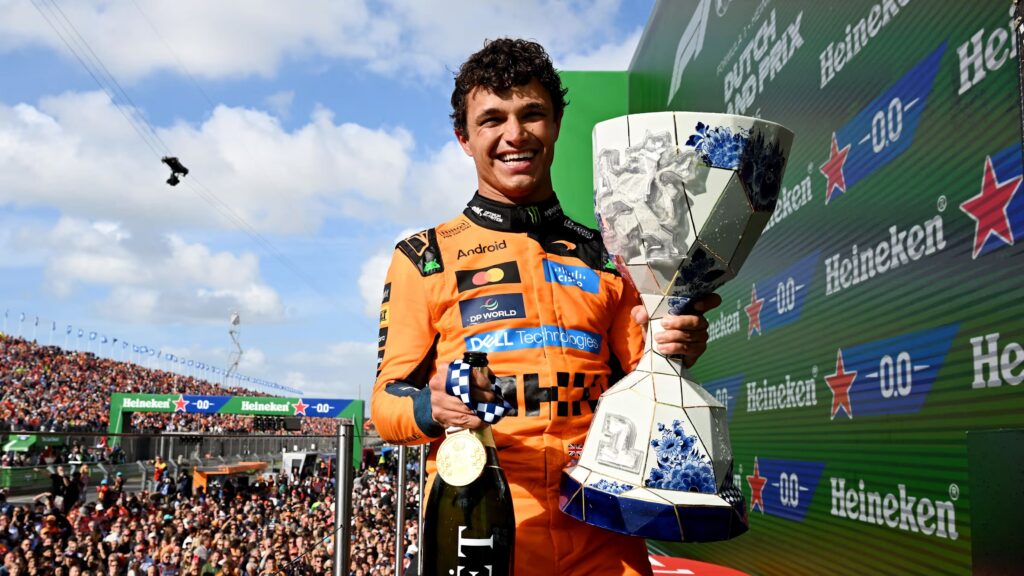
Lando Norris eventually won for McLaren after a hard-fought race, finishing ahead of Mercedes drivers Kimi Antonelli and George Russell. For Alpine, Pierre Gasly claimed the final championship point in 10th place, while Franco Colapinto finished 14th.
For Norris, winning Zandvoort’s farewell race added another layer to the occasion. He described it afterwards as one of his better victories and said he was particularly happy to win the final race at the circuit.
Behind the scenes with Alpine
Yet some of the most revealing moments of Formula 1 happen away from the television cameras.
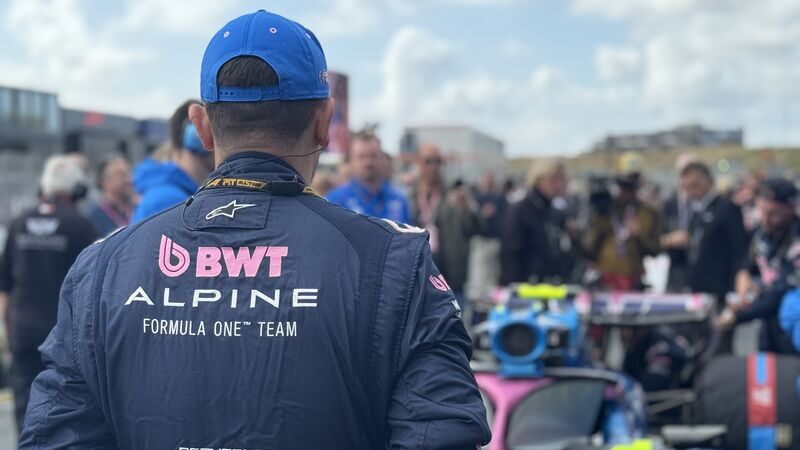
Behind the scenes, the scale and precision of the operation are striking: engineers working around the Alpine cars, constant activity in the garage, the intensity of the pit lane and the coordination of hundreds of people around two racing cars.
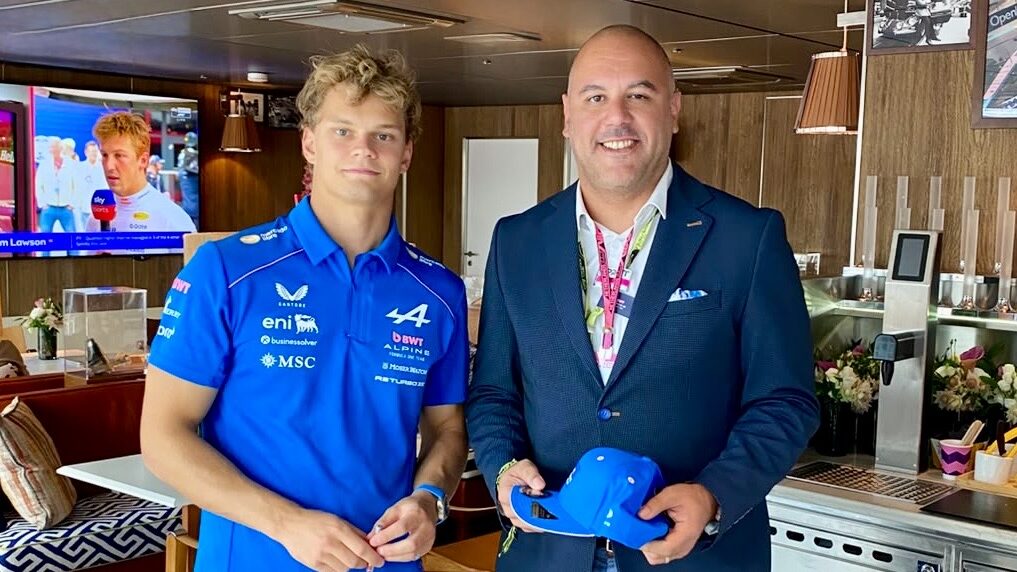
Another highlight was meeting young Alpine driver Paul Aron and having the opportunity to spend some time with him, offering another glimpse into the team and the next generation competing for a place at the highest level.
Why MSC Cruises is betting on Formula 1
The experience also helped illustrate why MSC Cruises has invested so heavily in Formula 1. The cruise line became a Global Partner of Formula 1 in 2022 and joined BWT Alpine Formula One Team as a Premium Partner in February 2025.
At first sight, cruising and Formula 1 may appear to have little in common. Behind the scenes, however, both depend on complex logistics, technology, teamwork, hospitality and the coordination of large international operations where precision is essential.
Their global reach also makes the partnership a natural fit. Formula 1 races across five continents, while MSC Cruises sails to more than 100 countries, welcomes guests from more than 185 nationalities and, across the wider MSC Group, employs around 120,000 people worldwide.
For Wim Willems, Press Officer for MSC Cruises Benelux, that international dimension is central to the partnership.
“Formula 1 and MSC Cruises are both truly global. Formula 1 brings together fans across five continents, while MSC Cruises sails to more than 100 countries and welcomes guests from more than 185 nationalities on board. Together with over 200,000 people working across our group worldwide, that international reach is part of who we are. Formula 1 gives us an exceptional platform to connect with people across borders through a shared passion for experiences.”
The Zandvoort experience showed how the partnership extends beyond brand visibility. Rather than simply placing a logo on a Formula 1 car, MSC Cruises creates experiences around the sport, bringing guests closer to the team and offering access to a world usually seen only from the grandstands or television screens.
From Barcelona to Zandvoort
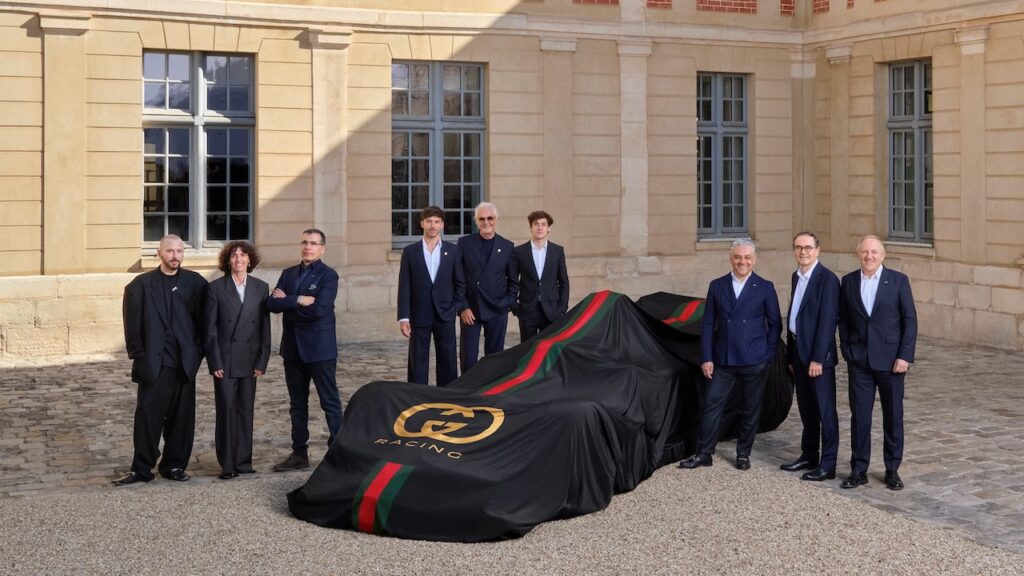
For Travel Tomorrow, Zandvoort was also the second chapter of an Alpine journey this year. In January, I was in Barcelona when BWT Alpine Formula One Team unveiled its 2026 livery aboard MSC World Europa, becoming the first Formula 1 team to reveal its colours aboard a cruise ship.
Drivers Pierre Gasly and Franco Colapinto were joined by Alpine Executive Advisor Flavio Briatore and MSC Cruises Executive Chairman Pierfrancesco Vago for the historic unveiling.
Speaking on board at the time, Vago highlighted the similarities between the two worlds. “While cruising and Formula 1 may seem worlds apart, we share the same DNA, a deep commitment to teamwork, innovation, and creating unforgettable moments,” he said.

Seven months later, inside the Alpine operation at Zandvoort, those similarities were much easier to understand.
From thousands of individual components assembled into a Formula 1 car to the crews, technology and systems required to operate a modern cruise ship carrying thousands of passengers, neither world leaves much room for improvisation. What spectators and guests ultimately experience is the result of an enormous operation taking place behind the scenes.
Alpine enters a new luxury era with Gucci
The Alpine story is about to enter another chapter. From 2027, Gucci will become the team’s title partner, with the squad competing as Gucci Racing Alpine Formula One Team. The Italian fashion house will become the first luxury fashion brand to serve as a Formula 1 title partner and will launch Gucci Racing, a new platform bringing together luxury and sport.
The announcement is another indication of how Formula 1 has evolved beyond motorsport into a global platform where travel, luxury, fashion, entertainment and hospitality increasingly overlap.
For MSC Cruises, already established both as an Alpine Premium Partner and a Global Partner of Formula 1, that evolution creates further opportunities to connect the world of travel with the sport’s vast international audience.
As the chequered flag fell in Zandvoort, one chapter closed. The circuit will remain, as will its extraordinary racing heritage and the memories created since Formula 1 returned to the Dutch coast in 2021.
But Formula 1 moves quickly. For Alpine, MSC Cruises and now Gucci, the next lap has already begun.