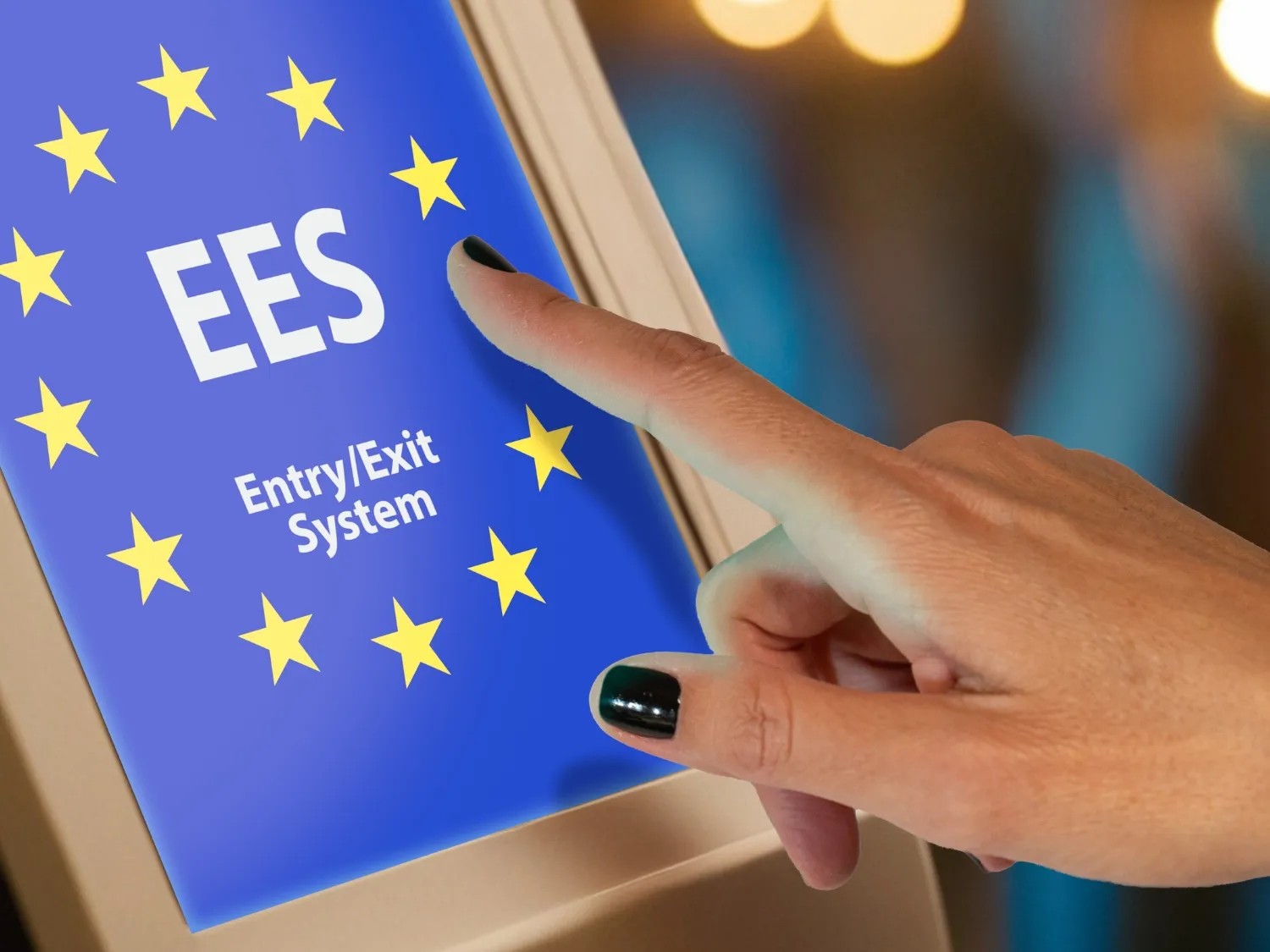


As the Entry/Exit System (EES) is causing hour-long delays at border checks across the Schengen Area, industry stakeholders are calling on the European Commission to allow member states to temporarily suspend the system during peak periods. With the busy Summer season about to start, travellers are urged to arrive (very) early at the airport in order to avoid missing their flight.
On 10 April 2026, the European Entry/Exit System (EES) was officially launched. In essence, the system eliminates the need for manual passport stamping at borders, instead gathering biometric data from non-European, third-country arrivals to any of the 29 nations that are part of the Schengen Zone. It is free to use and applicable to those without a residence permit or long-stay visa for stays of up to 90 days within any 180-day period.
🚨 @WTTC endorses the request from @ACI_EUROPE, @A4Europe and @IATA for a coordinated implementation of the Schengen Entry/Exit System (EES).
— WTTC (@WTTC) July 2, 2026
Secure borders and seamless travel must go hand in hand to protect Europe's competitiveness and the traveller experience.
📄 Read our…
However, since the implementation of the system, the EES has been causing long queues at airports across the Schengen Area. As industry stakeholders fear the situation will only worsen during the Summer season and as previous research commissioned by the World Travel & Tourism Council (WTTC) shows the delays might put 41 million European visitor arrivals at risk, the aviation industry is calling on the EU to take action by allowing member states to temporarily suspend the system.
The first organisations to directly address the European Commission at the start of peak season are Airports Council International (ACI) Europe, Airlines for Europe (A4E), and the International Air Transport Association (IATA). In an open letter addressed to European Commission President Ursula von der Leyen, published on 1 July 2026, Europe’s airports, airlines, and aviation bodies say the system has reached a critical point, creating severe operational consequences, disrupting passengers and putting border authorities, airports and airlines under unsustainable pressure.
“We therefore respectfully urge the European Commission to act now and take the following actions without delay. First, to immediately provide Member States with all the flexibility needed to completely suspend EES, preventively whenever passenger volumes exceed the operational capacity of border control facilities, at least throughout July and August. Second, in close cooperation with Member States and industry, to establish by September a permanent operational flexibility mechanism allowing Border Control Authorities to suspend EES procedures under clearly defined exceptional circumstances in order to ensure efficient and passenger-focused border management,” the letter reads.
@wendyfromnorthernireland Are you a British passport holder travelling to Europe? The EES (Entry Exit System) is now operational in 29 countries and this is what happens at arrivals in Malaga Spain #ees #entryexitsystem #uktravel #uktoeurope #traveltospain ♬ original sound – Wendy Smyth
On the same day, the World Travel & Tourism Council (WTTC) also called for coordinated action to safeguard EES implementation without disrupting travel, reacting to the open letter signed by ACI Europe, A4E, and IATA. The WTTC particularly called for three key actions to ensure a smooth rollout: to accelerate the uptake of the Travel to Europe app for digital EES pre-registration, to launch a coordinated communication campaign in key source markets so travellers clearly understand the new border requirements before departure, and to guarantee full operational readiness at borders.
“EES represents an important step towards smarter, more secure borders for Europe. But implementation must be practical, coordinated, and traveller-focused. If lengthy delays become accepted practice, travellers will look elsewhere. Europe cannot afford to compromise its competitiveness or the experience it offers millions of visitors. We encourage European Commissioners to work closely with industry to ensure the system delivers on its promise of better borders without creating unintended barriers to travel,” Gloria Guevara, President & CEO of the World Travel & Tourism Council (WTTC), commented in a press release.
On Thursday, 2 July 2026, budget airline Ryanair joined the debate in an independently published press release. The carrier asks to postpone the system until September 2026, while advising passengers to arrive earlier at the airport.
“As schools break up and Europe enters the busiest travel period of the year, it is clear that EES is still not ready for peak summer volumes. Passengers and families should not be used as guinea pigs for a half-baked passport control system that risks creating long queues, missed flights and unnecessary stress at airports this summer. It is as simple as postponing EES until September, as other EU countries like Greece have already done,” Ryanair’s Chief Operations Officer, Neal McMahon, said in a statement.
The European Commission, in its turn, is said to have called an urgent meeting in the coming days to address the situation, according to travel website The Points Guy. However, according to the same source, the Commission said the impact of the EES was limited at most airports and pointed out that member states are responsible for ensuring that the necessary operational capacity is in place.