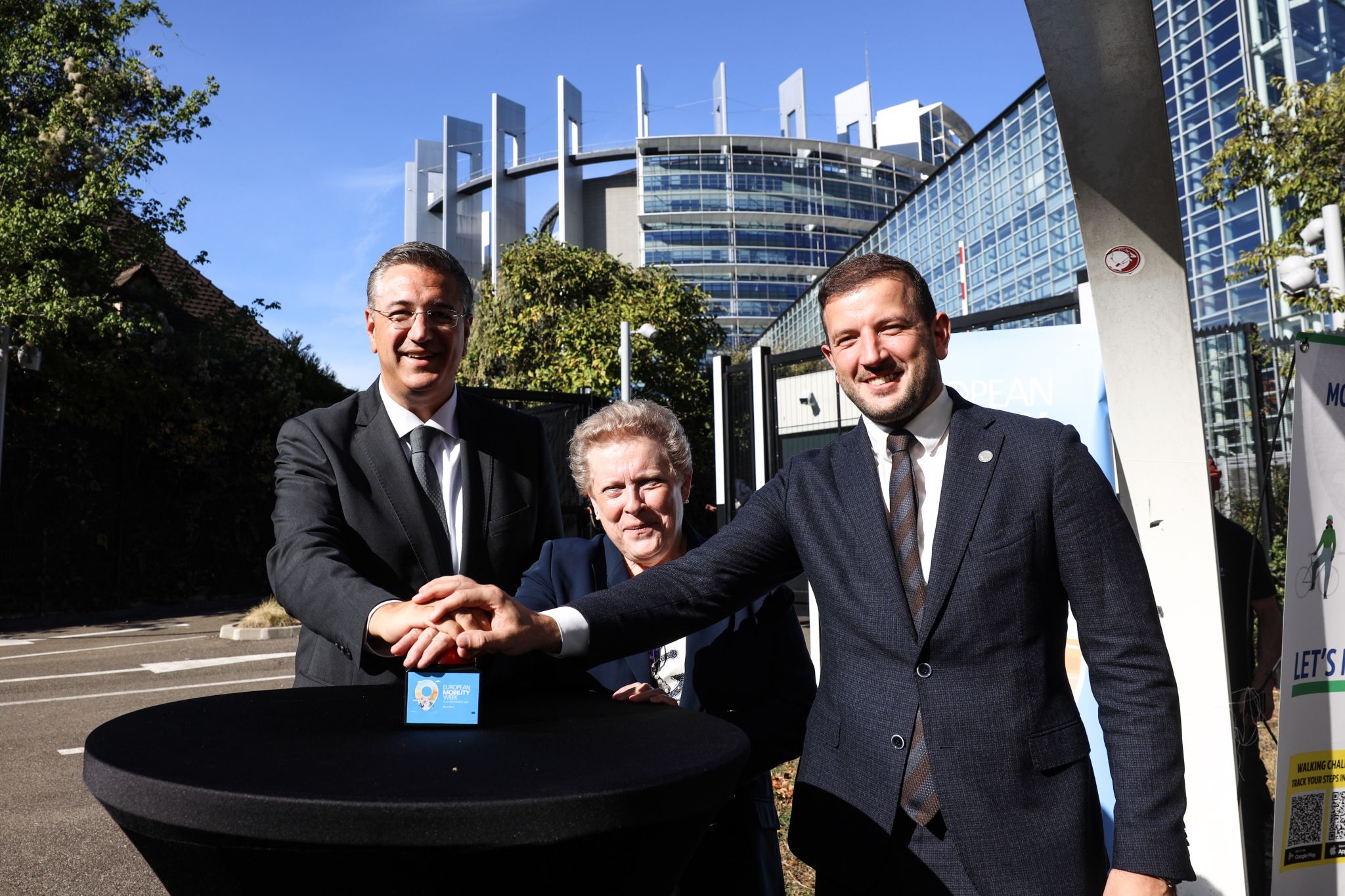



European Mobility Week began on 16 September 2026, kicking off a week of events aimed at raising awareness of sustainable urban mobility with a launch in Strasbourg. The week encourages behavioural change in favour of active mobility, public transport, and other clean, intelligent transport solutions, and culminates in Car Free Day on 22 September.
The opening ceremony was attended by the European Commissioner for Sustainable Transport and Tourism Apostolos Tzitzikostas and dignitaries including Virginijus Sinkevičius, MEP and Vice-Chair of the TRAN Committee. This year’s focus is on better access to mobility for all, safer and well-connected routes for walking and cycling, plus clean, reliable, and accessible public transport, and attractive and accessible public spaces.
Since its first year, in 2001, thousands of towns and cities in dozens of countries from Albania to Colombia and South Korea have participated in the week. The initiative has promoted pedestrianisation with enlarged streets and improved infrastructure; better accessibility through actions such as the creation of wheelchair ramps and lowering of pavements; an Improved and expanded European cycling network; traffic calming measures, particularly around schools; and the provision of electric vehicle charging points to encourage new forms of vehicle ownership.
This year action is taking place across more than 2,500 towns and cities in Europe and beyond. In Aveiro, Portugal, residents are looking at mobility at both ends of the age spectrum, with a “Kidical” mass bicycle ride organised by and for children and families, as well as launching a “senior mobility charter.”
In Kassel, Germany, more multigenerational action is at work, with a walk bringing local senior care home residents’ views to the fore and a family transport-themed treasure hunt. In Differdange, Luxembourg, Car-Free Day will see BMX demonstrations takeover the centre, while bike ramps and expanded 30 km/h zones will leave a permanent legacy.
Picking up on those themes in a statement, Tzitzikostas said: “The European Mobility Week is a reminder that transport must work for everyone. This year, our campaign’s focus is on intergenerational fairness. We need accessible, affordable and reliable mobility solutions that connect people of all ages to services, jobs, education, and each other. A fairer, cleaner and more user-friendly transport system means more opportunities, greater independence and stronger communities across Europe.”
Businesses, NGOs, schools, and other actors, including cities, who want to get involved in the ongoing challenge of the “EUROPEANMOBILITYWEEK” branded campaign are encouraged to register their “MOBILITYACTION” online.