


The Brussels annual tradition of a Car-Free Sunday appears set to gain a second date in the calendar from 2027, but the choice of timing for another day on which vehicle traffic will be banned in the Belgian capital is proving controversial.
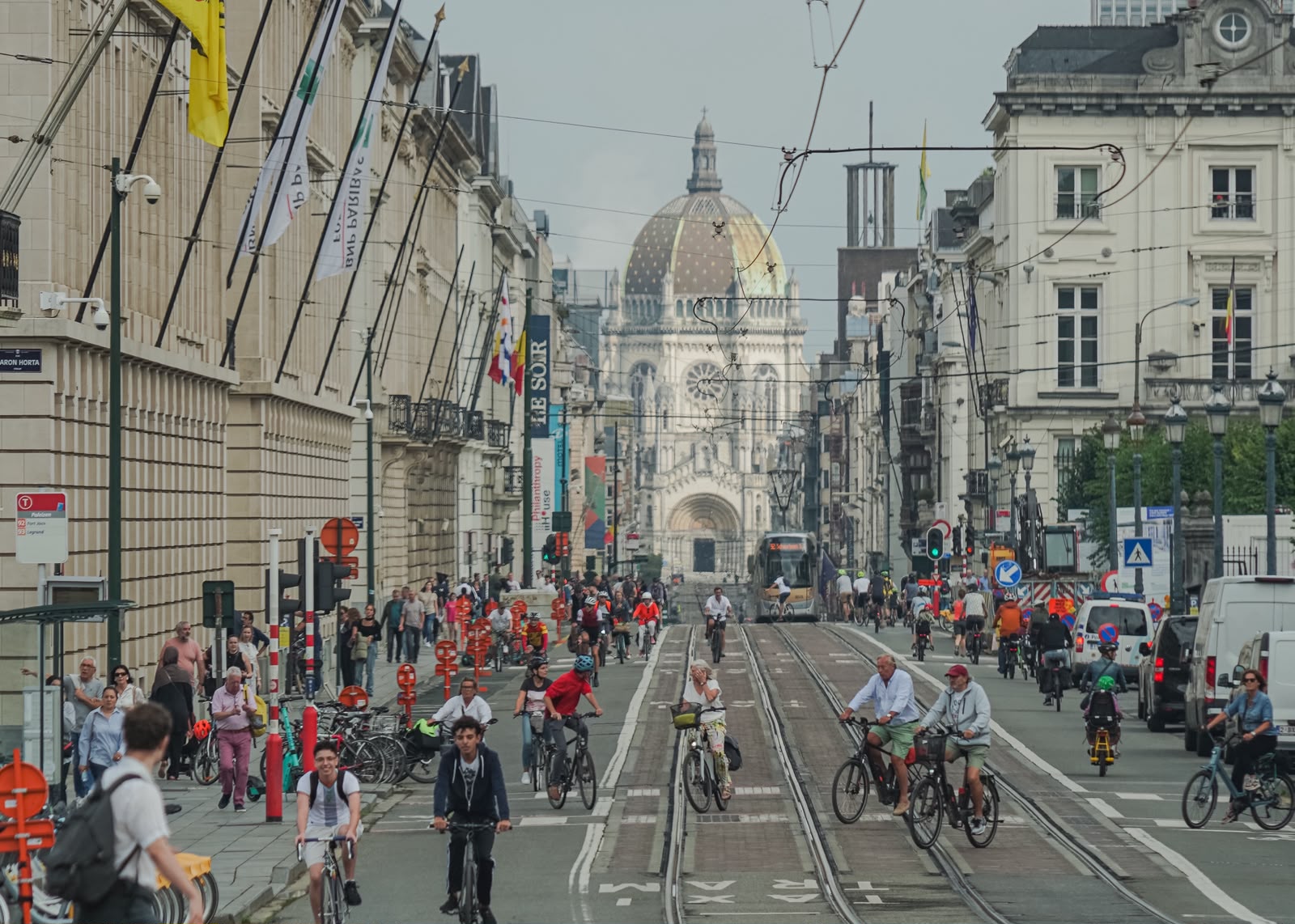
Brussels has closed to vehicles on one Sunday per year since September 1999, in a Mobility Week initiative to draw attention to the impact of vehicle traffic and pollution on the city, reduce car use, and highlight alternative ways people can get around.
Often taking place in early autumn, the event’s 2026 edition is no exception, scheduled for 20 September this year. For 2027, an additional date in May is on the cards. However, original proposals for the additional Car-Free Sunday to fall on 9 May 2027 have caused some backlash, with critics pointing out that it coincides with significant spring holidays and risks making the city inaccessible to visitors during that time.
The “Non au plan Good Move Committee” said the choice of “the spring half-term for French-speaking schools, a period when many families take the opportunity to travel, visit relatives or spend time together” was not optimal and noted: “above all, it would also coincide with Mother’s Day. In practical terms, this means that families who sometimes travel from afar to visit their mothers, parents or grandparents in Brussels will once again face roadblocks, restrictions and additional complications.”
In response, the regional government has opted for 2 May 2027 instead, according to reporting in Le Soir, but the move still faces another hurdle in the form of approval by all of the capital’s 19 municipalities.
If it goes ahead, there will be two days in the yearly calendar, probably in May and September, when the Belgian capital becomes Europe’s largest no-car zone. Brussels transport operator STIB offers reinforced and free public transport on those days.
Exemptions to the ban are issued for public transport, taxis, buses, emergency and security forces, as well as for diplomatic vehicles. For everyone else, it’s no cars from 9:30 am to 7:00 pm, and authorities advise that “the closing and the re-opening of the entrances to the Region and the tunnels will happen gradually. Therefore, there might be some traffic nuisance outside these times.”
Officials also warn that “As a result of the activities and celebrations, the streets in certain neighbourhoods might also be closed longer. So it is no use hurrying to the entrances to Brussels; this is to avoid congestion and safety problems.”
The Brussels Mobility service describes the day as “an opportunity to (re)discover the pleasure of walking, riding on a bike or scooter, or travelling on public transport in a peaceful and pleasant city.”