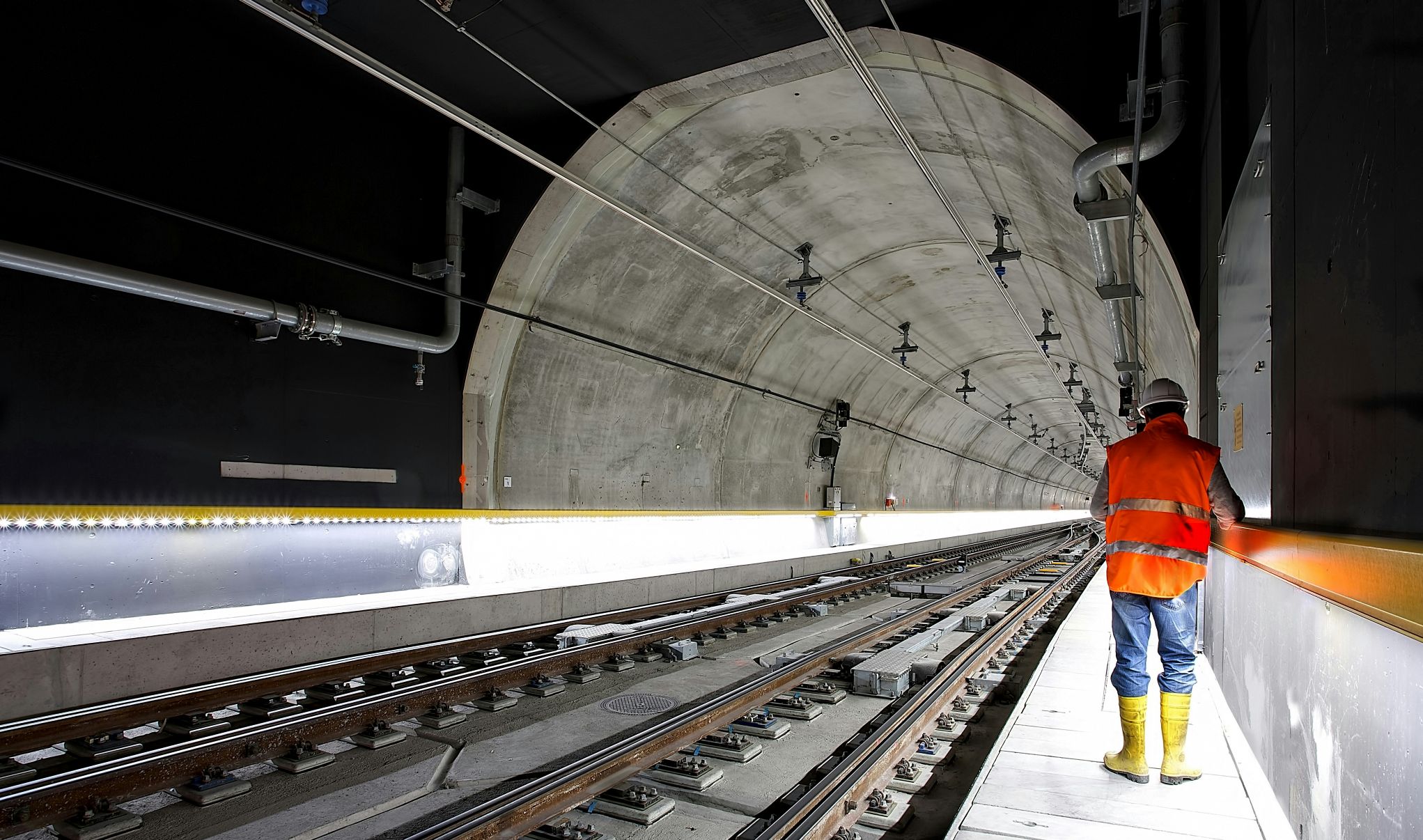



Plans are taking shape in Europe to transform the continent with an improved rail network that will slice through regional geology and geography to slash journey times and carbon emissions associated with flying.
In January 2025, the European Court of Auditors reported that the costs of delivering eight major TEN-T projects now average 82% more than originally estimated and are behind schedule by an average of 17 years.
But, as Ben Jones for CNN writes, the projects promise to be revolutionary. “Mega-projects like the Brenner Base Tunnel, Lyon–Turin and the Fehmarn Belt can be game-changers for European rail,” says Nick Brooks, secretary general of rail operator lobby group ALLRAIL.
Part of the engineering prowess that is making the new infrastructure possible is a lower altitude or “base tunnel” solution— built lower inside the range and avoiding mountain twists and turns, they can cut journey times radically. The Gotthard Base Tunnel (GBT) in Switzerland links Ticino and Uri. Its $9.7-billion twin tunnels were bored over 2,200 metres under the mountain, allowing passengers to commute between Zürich and Milan in just two and a half hours, rather than four.
Like the Lötschberg Base Tunnel, the GBT forms a section of the Neue Eisenbahn Alpentransversale (NEAT) or New Trans-Alpine Railways, offering high-capacity rail across Italy and into northern Europe, connecting the North Sea with Italy’s industrial valleys.
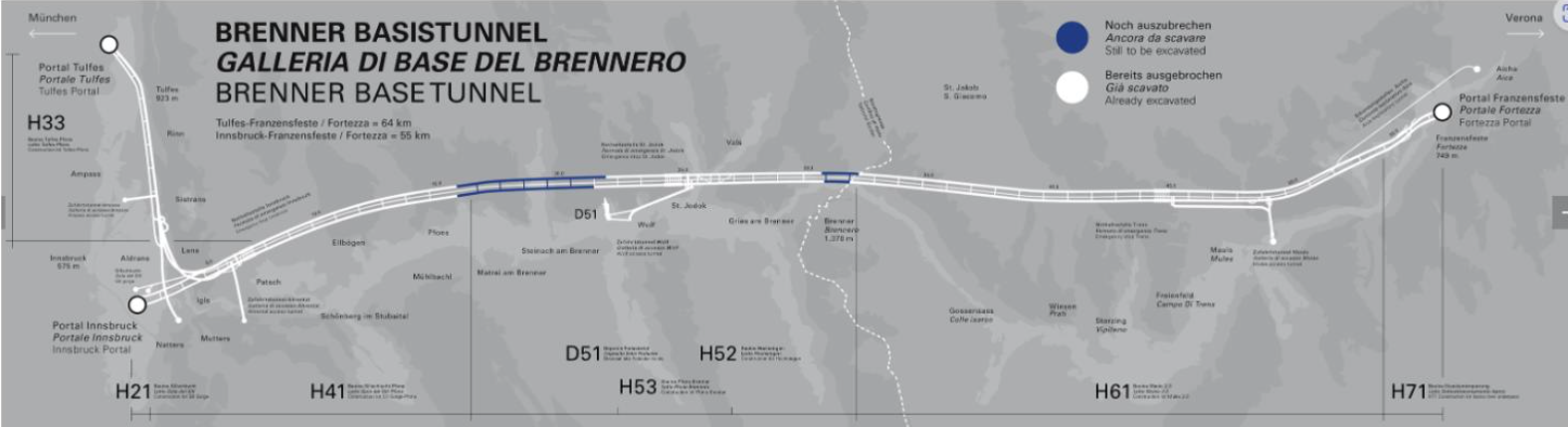
Austria is taking a leaf out of the same book. Linking Innsbruck to Bolzano in Italy, the famous Brenner Pass will also get its own Brenner Base Tunnel (BBT), scheduled to open in 2032, after a whopping 225 km has been dug out and 38 years of construction. Its network of new tunnels will offer faster, more direct Tyrolean journeys, reducing journey times between Innsbruck and Bolzano from two hours to 50 minutes—at a cost of €8.5 billion.
Another tunnel that will effectively be mothballed by the 2030s lies south of Vienna, where the 27-km, €4.3-billion Semmering Base Tunnel will connect Austria’s Graz and Villach, and become a gateway for Italy, Slovenia and the Adriatic when it opens in 2030. The original Semmeringbahn, or Semmering Railway, is currently classed as a UNESCO World Heritage Site.
While Switzerland and Austria have made progress, Germany and France could be said to be holding things back. Germany’s supposed high-capacity southern Bavaria lines are far from ready to link with the new Austrian network, and on the other side of the region, France’s Mont Cenis tunnel through another challenging section of the French Alps has caused controversy. It aims to replace around one million heavy vehicle trips per year and bring the 90/10% traffic share between road and rail down to 50/50, quadrupling international passenger services, from six to 22 trains per day. It could also link Lyon and Turin and make the Paris-Milan journey possible in just four hours. Unfortunately, this might not be until 2045, after setbacks caused by legal challenges and the need to revert to traditional blast building techniques.
To the north, and moving under the sea instead of mountains, the €7.7 billion Fehmarnbelt tunnel between Germany and Denmark is set to open its rail link between the German island of Fehmarn and the Danish island of Lolland, which is already connected to Copenhagen’s island. It will use submerged tubes under the Baltic Sea bed to carry trains and road traffic, the 18 km between the two nations, taking two hours off the journey time.
With all this construction taking place, and billions of euros being spent, Ursula von der Leyen’s push on climbing the ticketing side of the seamless rail mountain becomes even more important. as ALLRAIL’s Nick Brooks points out: “Concrete and steel alone won’t deliver better journeys . . . the EU needs genuine high-speed competition on the tracks, with impartial ticket retail on dominant ticketing platforms, long-term access certainty, fair track access charges and equal access to rolling stock and finance, so that multiple operators — both independent and state-owned incumbent carriers — can fully use the new capacity.”
Brooks went on to warn: “If the conditions above are put in place, these projects will deliver faster journeys, more trains, lower fares and better cross-border connections. Without them, there is a real risk that the mega-projects remain underused rather than transformative.”