

The World Meteorological Organization (WMO) has warned of an increasing global risk of extreme temperatures and rainfall over the coming months, as El Niño conditions develop, fuelled by unusually warm waters in the tropical Pacific.
El Niño and La Niña are opposite phases of the El Niño–Southern Oscillation (ENSO), one of the most powerful natural climate patterns on Earth. The phase Earth is approaching is El Niño. It sees ocean surface temperatures warm up in the central and eastern Equatorial Pacific. It typically occurs every two to seven years and lasts around nine to twelve months, developing between March and June and reaching its peak between November and February, with impacts on global temperatures typically being most pronounced in the second year after development.
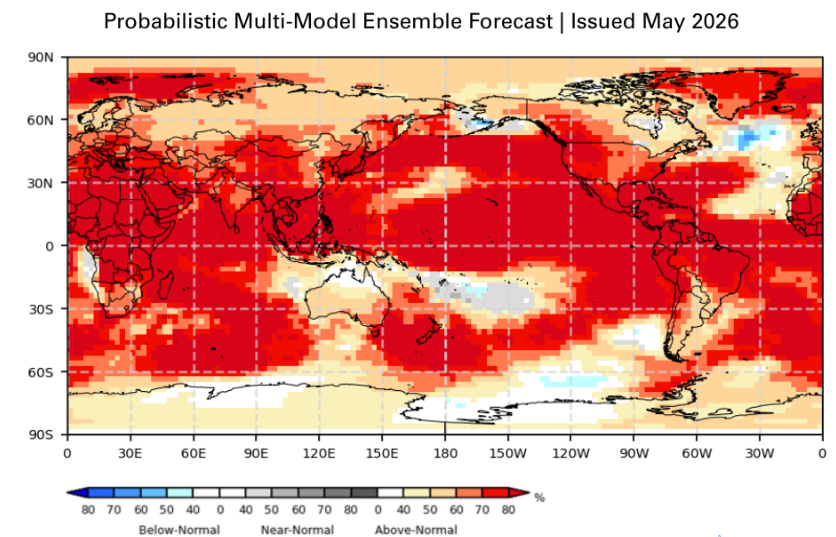
This year, above-average temperatures are forecast nearly everywhere for June to August 2026, with an 80% likelihood of an El Niño event during the period. Probabilities for this to continue until at least November are near or above 90%, the WMO says. When the peak El Niño will hit is still uncertain, but models suggest conditions will be moderate to strong when it does, and that it will exacerbate the effects of climate change that are already being experienced in many parts of the world.
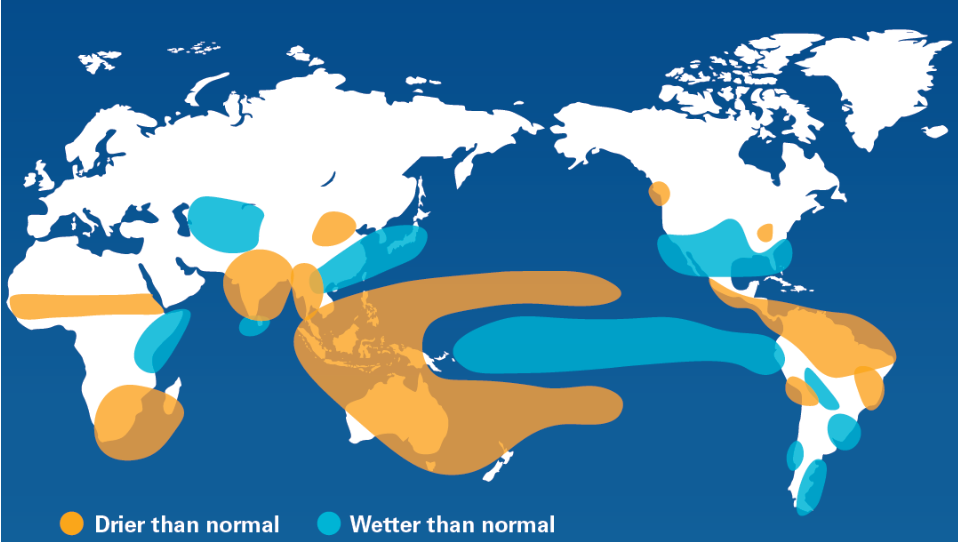
For citizens and travellers, if this coming year sees a strong event, America, Southeast Asia, and Australia will experience long spells of hot, dry weather in which the chance of droughts and wildfires goes up. With the Men’s FIFA World Cup playing out between mid-June and mid-July across Mexico, the US, and Canada, this could also mean some unbearably hot conditions for players and spectators. Staying hydrated, in the shade, and avoiding the hottest parts of the day are essential, especially for vulnerable individuals with underlying conditions.
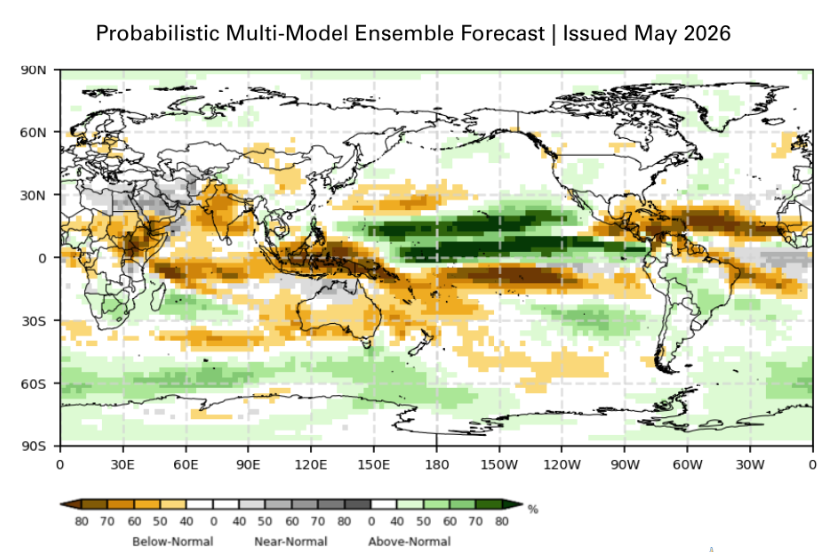
In India, the monsoon season may be less intense than usual, but the southern US could suffer heavy rainfall and flooding, as warmer Pacific waters heat up the air, and warm air can carry more moisture. However, there may be more tropical storms in the eastern and central Pacific, but fewer in the tropical Atlantic, including the southeast US.
For Northern Europe, meanwhile, El Niño may increase the chances of a cold end to the year, according to the UK Met Office. This could bring better ski conditions than have been seen for a while to some European resorts, but will also heighten the risk of travel disruption in the air, on roads and rail, over the winter holiday season 2026.
Would-be holidaymakers should check travel insurance policies carefully, as extreme weather is usually an exclusion that means they will not receive compensation in case of affected journeys. They may also want to consider travelling in the shoulder seasons to avoid high drought conditions in traditional holiday hotspots, as well as looking at the Nordics and other so-called “coolcation” summer destinations that are trending at the moment.
Aside the risks for travellers, El Niño brings more existential threats. In a video statement, United Nations Secretary-General António Guterres said, “The science is clear: El Niño is arriving on our doorstep in the coming months with 90% certainty. The world must treat it as the urgent climate warning it is. El Niño conditions will pour fuel on the fire of a warming world. Impacts will hit even harder, travel even farther, and cross borders with devastating speed.”
Coming on top of wars in key supply regions like Ukraine and the Strait of Hormuz, any negative impacts that El Niño might have on agriculture and fishing could contribute to rising world prices and food poverty.
El Niño is arriving on our doorstep in the coming months with 90% certainty.
— António Guterres (@antonioguterres) June 2, 2026
The world must treat it as the urgent climate warning it is.
The only effective response is #ClimateAction equal to the crisis – ending the addiction to fossil fuels, accelerating the shift to…
Addressing these concerns, Guterres called for “climate action equal to the crisis – ending the addiction to fossil fuels, accelerating the shift to renewables, protecting the most vulnerable, and delivering early warning systems for all.”
Echoing his words, WMO Secretary-General Celeste Saulo said: “We need to prepare for a potentially strong El Niño event – which will exacerbate drought and heavy rainfall and increase the risk of heatwaves both on land and in the ocean.” Saulo promised “the WMO community will be carefully monitoring conditions in the coming months to inform decision-making by governments, humanitarian agencies, and climate-sensitive sectors. Advance seasonal forecasts and early warnings are vital to save lives and cushion the impact on our economies and our communities.”