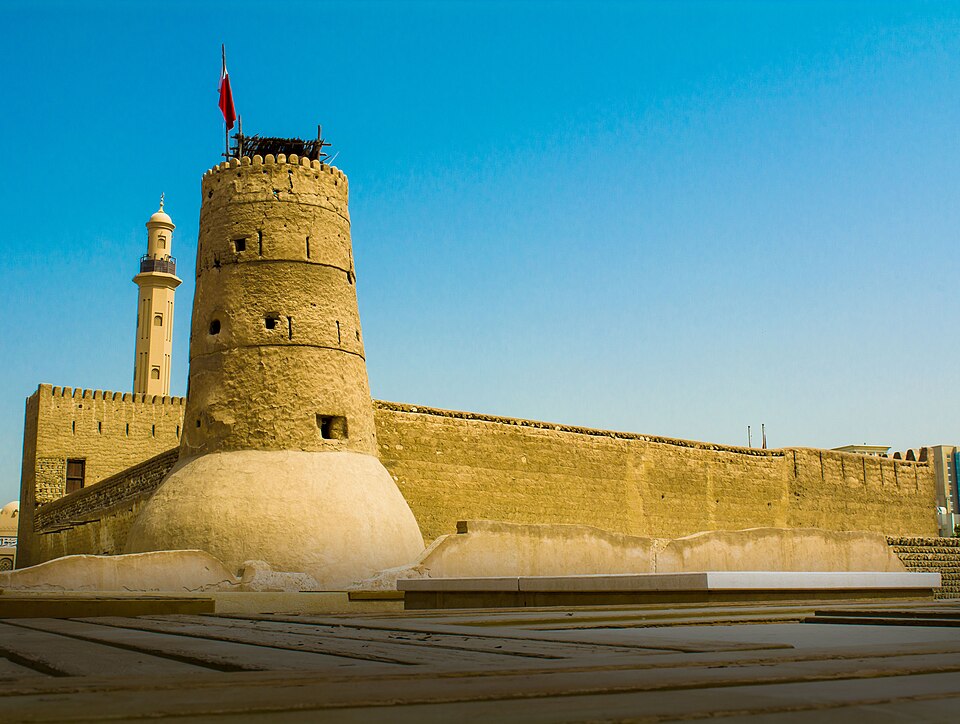



Dubai’s Al Fahidi Fort is set to reopen to the public after an extensive restoration project that has lasted five years.
The city’s oldest surviving building is located in Old Dubai, near the banks of Dubai Creek. It stands within the historic Al Fahidi neighbourhood, by the modern waterfront development of Al Seef, which features a recreated souk designed to evoke the Dubai of centuries past.
Between the reconstructed market and the towering skyscrapers of the modern city, the fort will welcome visitors again, offering a glimpse into the history of a destination now synonymous with high-rises, ultimate luxury and futuristic architecture bordering on science fiction.
Latifa bint Mohammed: During a site visit, I reviewed the progress of Al Fahidi Fort rehabilitation works.⁰⁰As you stand between the walls of Dubai’s oldest surviving structure, you find yourself face to face with the earliest beginnings of a city that believed in its dream and… pic.twitter.com/86XdECNT3w
— Dubai Media Office (@DXBMediaOffice) February 22, 2026
Long before the discovery of oil, Dubai Creek was at the heart of the city’s economic life, with fish and pearls being traded there.
Originally built – in phases – as a defensive stronghold, the fort is roughly square in shape (41 by 33 metres) and has three towers positioned at its corners; the oldest was built around 1787. Its thick walls, built of coral and shell stones bonded with lime, protected the inhabitants from threats from the land and the heat.
The main, and only, entrance features a heavy teak door reinforced with iron nails and brass plates.
Over the years, it served as a residence for the ruler, a centre of governance, a prison and an arsenal. Each of these functions marks a different period in the emirate’s history.
Al Fahidi Fort, built in 1787, is the oldest standing building in Dubai. Originally constructed as a defensive fort, it later became the city’s first museum, sharing stories of Dubai’s history over time. Following a comprehensive restoration project, the fort continues to stand… pic.twitter.com/Nkw9PfD7JB
— Dubai Media Office (@DXBMediaOffice) January 27, 2026
In 1971, the year the United Arab Emirates was founded, the fort became Dubai’s first museum.
Ayisha Khansaheb, Director of Al Fahidi Fort and Specialised Museums at the Dubai Culture & Arts Authority, presents the museum as a gateway into Dubai’s history.
In an interview with Euronews Travel, she emphasised the importance of cultural heritage for tourists, residents, local communities and schools alike.
“There is a growing need to emphasise that there is a soul, a culture and a history here,” she said.
Inside, visitors can discover the history of the fort and the city through a combination of artefacts, archival material, and immersive technology.
The tour begins in a newly built underground extension, where a series of galleries explore defence, leadership, and craftsmanship. In the fort itself, The Vault, is a light and sound show that retraces the history of Dubai’s defence capabilities.
Another gallery A Landmark Across the Ages explores the fort’s changing roles over nearly two and a half centuries, while a collection of Islamic arms and armour offers visitors a glimpse into the region’s military history.
The site has been designed as an educational space with interactive activities especially for children.
The watchtowers, gates and courtyard are open to the public, with the fort itself remaining at the heart of the exhibition, allowing visitors to “experience history through architecture”, according to Khansaheb.
لقطات من مشاركتنا في معرض سوق السفر العربي 2026، حيث كشفنا عن ملامح متحف حصن الفهيدي المرتقب، الذي يروي أكثر من 230 عاماً من تاريخ دبي من خلال تجارب رقمية وتفاعلية غامرة.
— Dubai Culture (@DubaiCulture) September 18, 2026
وشهدت مشاركتنا أيضاً معرضاً للفنانة الإماراتية مريم عباس في المجلس الخاص بكبار الشخصيات، قدّم أعمالاً تجمع… pic.twitter.com/wKnbHLNzkF
The focus on the Emirate’s defensive history is particularly resonant in 2026, as Dubai continues to contend with the consequences of a very different kind of warfare.
The Iran war, which began in late February 2026, badly hit Dubai’s tourism industry, with the United Arab Emirates being targeted by Iranian missiles and drones, which disrupted air travel.
The industry is now showing signs of recovery. According to the Dubai Department of Economy and Tourism (DET), hotel occupancy reached 66% in August, up from 36% in March.
Nevertheless, visitor numbers remain well below last year’s levels. In the first eight months of 2026, the Emirate welcomed 6.97 million international visitors, compared to 12.24 million for the same period in 2025.