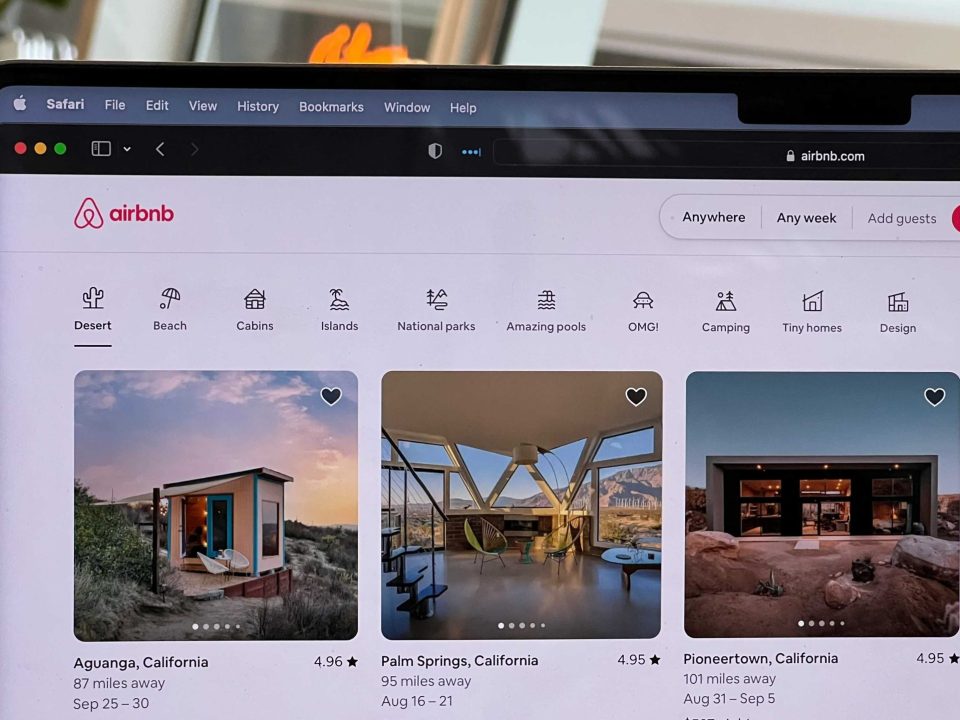


The Brussels-Capital Region is expecting to collect as much as six million euros in penalties on illegal Airbnb rentals by the end of 2026, according to estimates by the Brussels Taxation minister Dirk De Smedt and reporting by Belga News Agency and Bruzz.
All Airbnb properties in the Brussels region are, since 2016, supposed to be registered with city authorities, and their owners are liable for tourist taxes, totalling five euros per overnight stay, or four euros if the rental is a room in a property occupied by the lessor. The rules include being in possession of fire safety certificates, criminal record checks on hosts, and compliance with urban planning stipulations.
Anaïs Maes, Brussels Councillor for Urban Planning, said at the outset that part of the aim was to ensure a balance of property types in the city centre, and to avoid the housing market in the capital being hollowed out, in a fight that has also been waged in cities including Amsterdam and Barcelona.
A European Court of Justice decision in 2022 confirmed that Airbnb is obliged to share owner listing information with Brussels Taxation. Despite those efforts by the city authorities to crack down on undeclared income, unsafe housing, and competition to the regular hospitality sector and the regular housing market, some short-term rental owners have continued to lease out their properties without registering them, ensuring they are fit for rental, nor declaring the financial gains.
As reported by Travel Tomorrow in August 2025, around 2,000 owners were potentially in a position to be targeted for fines and backdated tourist taxes. Following that, an investigation by Bruzz earlier this year found that a whopping 90% of Brussels rentals advertised for let on Airbnb appeared to fall foul of local laws. The analysis relied on three datasets: the official list of 546 approved Brussels rentals, obtained through a freedom of information request, a list compiled by the Inside Airbnb watchdog, from which Bruzz took only active, “entire homes”, including aparthotels, furnished holiday homes, studios, flats, and “urban guesthouses.” Of 3,637 active listings, 2,788 were entire homes, and only 267 were on the list of recognised accommodation at the time—meaning less than 10% were compliant.
Over the course of 2025 and 2026 to date, at least €5,000,000 has been recovered, thanks to an inspection regime that aims to uncover unregistered Airbnbs and pursue the owners for the tax due. Non-compliant owners were charged €1,000 per rental, plus unpaid tourist taxes, with tax authorities assuming properties had been rented out all year unless there was proof that wasn’t the case.
Some Airbnb property owners may be looking forward to a relaxation of the laws set to be brought in by Brussels minister-president Boris Dilliès (MR). From 1 January 2027, rental accommodation within a primary residence will not require urban planning certification, and safety compliance will become less difficult. Paperwork will be reduced since, controversially, co-owners will no longer get the chance to sign off on the rental.
Owners should be aware, though, that these tweaks to the regulations do not represent a total reprieve, since properties will still need to be correctly registered as rentals, and will still be subject to tourist tax.
Another recent change owners should take note of, introduced by Airbnb rather than a local authority, concerns the cleaning and tidying chores that guests can be expected to carry out at the end of a stay. No guest should be obliged to undertake “onerous” or time-consuming tasks, the rental giant said.