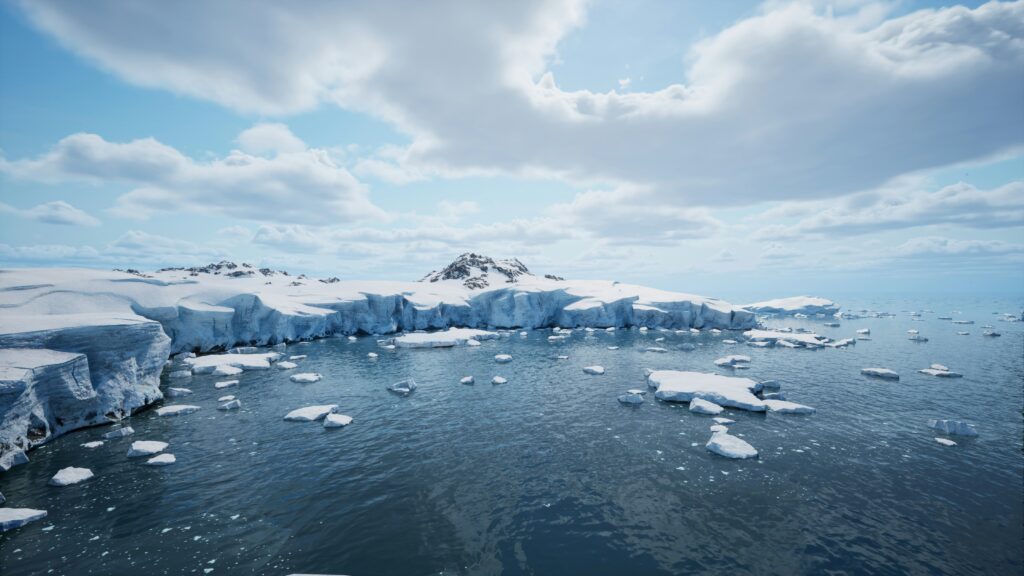
Azerbaijan has warned of a growing environmental crisis facing Caspian Sea and repeated calls for closer work between Caspian states and international partners to monitor and tackle the threats presented by biodiversity loss, climate change, and pollution.
The calls come as new international regulations come into effect in the region, requiring large infrastructure projects such as dams, gas and oil facilities, pipelines, power stations, transport, and water works to be publicly assessed and approved by all affected states.
The Protocol on Environmental Impact Assessment under the Tehran Convention used to be known as the Framework Convention for the Protection of the Marine Environment of the Caspian Sea. It contains marine safeguards and sustainable development principles now adopted by the five Caspian coastal nations – Azerbaijan, Iran, Kazakhstan, Russia, and Turkmenistan.

But discussing the issues at the UN, Leyla Aliyeva, Vice-President of the Heydar Aliyev Foundation, said there remain challenges around the governance of the Caspian Sea. Delegates noted the ongoing need for better partnership working, environmental monitoring, data collection, and information exchange, all subject to the fifth protocol of the Protocol, still under negotiation.
It is not the first time Azerbaijan has engaged on the issue. In October 2025, the President of Azerbaijan, Ilham Aliyev, urged Caspian neighbours to cooperate and coordinate measures to halt receding water levels and preserve ecosystems. “The Caspian Sea is facing a number of serious environmental challenges,” he said at the time. “One of the most pressing problems is the shallowing — the rapid decline in the water level — which poses both ecological and economic threats.”
@sophietangtravels The Caspian sea is shrinking, and current models predict it to drop another 9-18 METERS by 2100 if global warming continues 🥺 #SophieTangTravels #TurkiyeToVietnam #caspiansea #globalwarning ♬ Pieces of Memory – Carlos Carty
The Caspian Sea – the world’s largest landlocked body of water – has suffered a two-metre drop in water level between 1996 and 2023. Experts predict a loss of between five and 18 metres by 2100. The damning and exploitation of the feeder Volga River, combined with reduced rainfall have been held to blame. Other infrastructure projects include Azerbaijan and Kazakhstan’s new trans-Caspian fibre optic cable that aims to strengthen digital ties between Central Asia and the South Caucasus.
Azerbaijan’s green stance meanwhile is being held up as an effort to be seen to spearhead international environmental action in the region and beyond. In President Aliyev’s words, “the Caspian Sea is no longer merely a body of water but has become a symbol of our shared responsibility and the necessity for united action.”