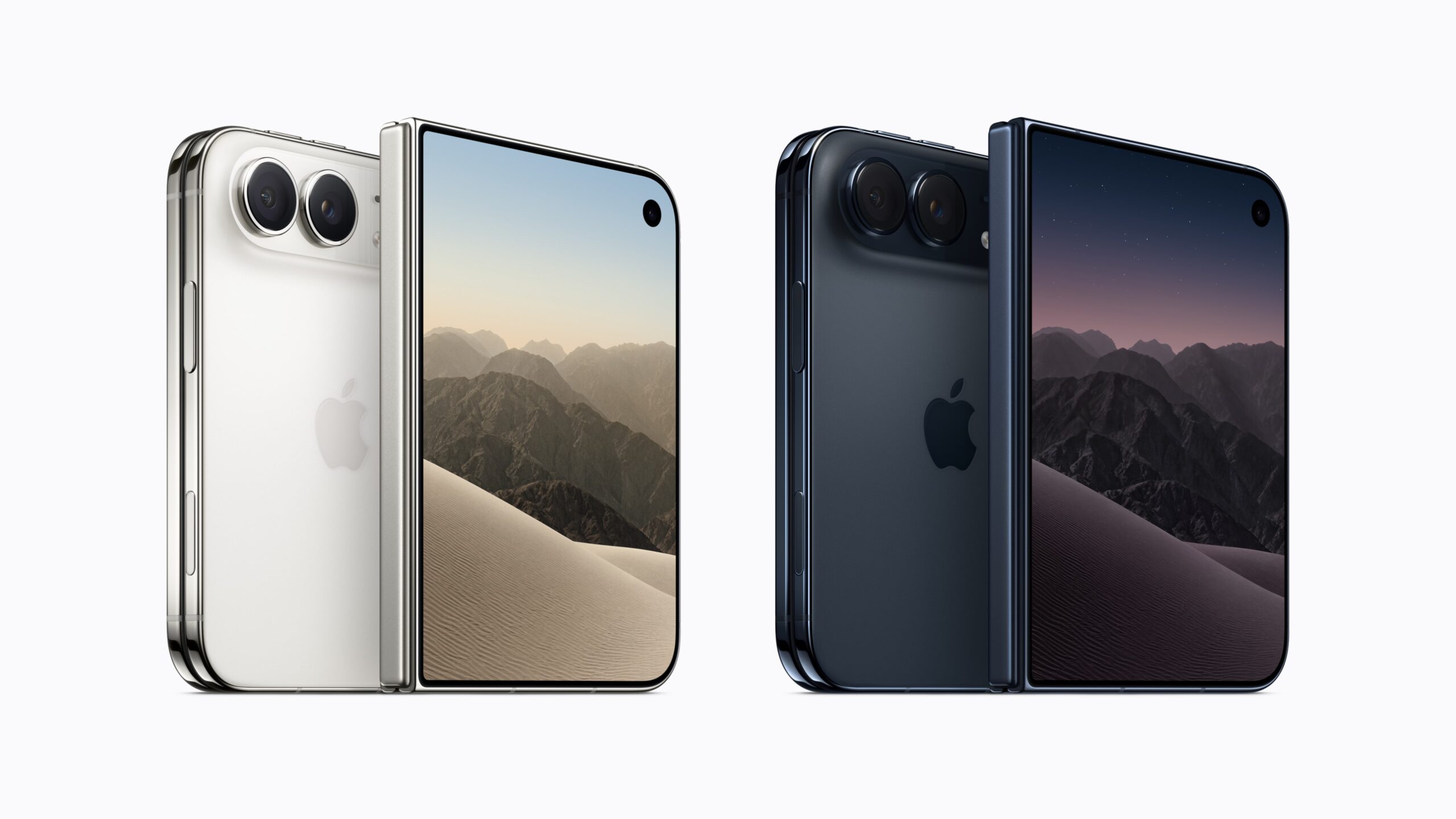



Apple has unveiled its first foldable smartphone, the iPhone Duo, marking one of the biggest changes to the iPhone since its launch nearly two decades ago and potentially offering new possibilities for travellers, content creators and journalists working on the move.
Presented on Wednesday, 9 September, by Apple’s new chief executive John Ternus, who succeeded Tim Cook earlier this month, the iPhone Duo opens like a book to reveal a 7.6-inch display, while retaining a 5.4-inch external screen when folded. Starting at $1,999 (around €1,720), it will also be the most expensive iPhone Apple has released. For European consumers, however, the direct conversion does not reflect the final retail price, which is higher due to VAT and regional pricing. For example, in Belgium, prices start at €2,339 for the 256 GB model, rising to €2,589 for 512 GB, €3,089 for 1 TB and €3,839 for 2 TB.
Apple has confirmed that the iPhone Duo will arrive in several European markets on 23 October 2026, with pre-orders opening on 16 October. France, Germany and the UK are among more than 70 countries and regions included in the first wave, while the device will reach a further 28 markets from 30 October.
The launch takes Apple into a foldable smartphone market where rivals including Samsung, Google and Motorola have already been active for several years. Foldables, however, remain a relatively small segment, accounting for less than 5% of the overall smartphone market, according to CCS Insight analyst Ben Wood.
For travellers, the significance of the format could go beyond simply having a bigger screen. A device that combines smartphone portability with some of the working space associated with a small tablet could make tasks such as navigating maps, checking itineraries, editing photographs, reading documents or working between apps easier without carrying an additional device.
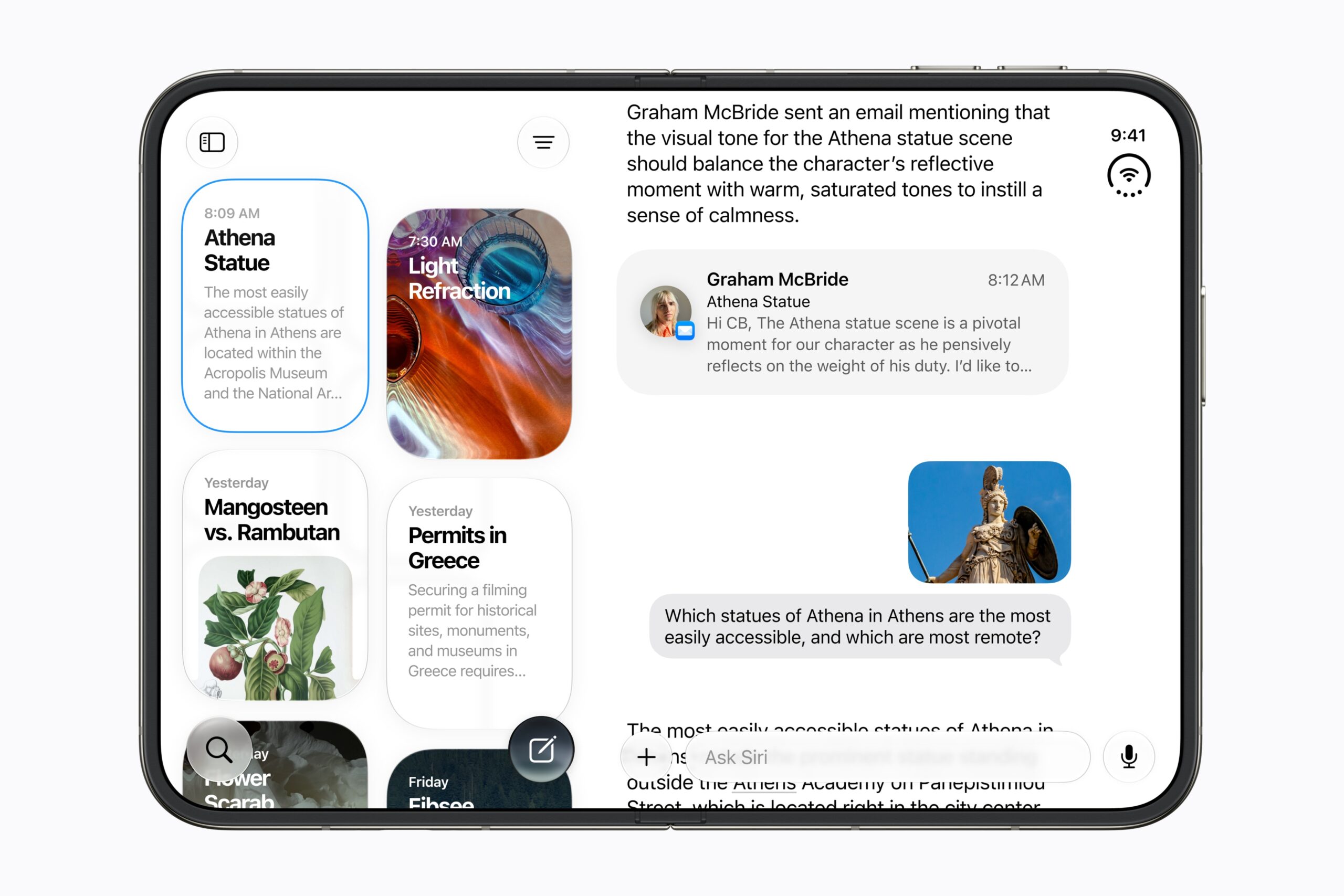
That could be particularly relevant for travel journalists, bloggers, vloggers and other creators who increasingly produce and publish material directly from destinations. Apple’s Split View allows two applications to run side by side, meaning, for example, a reporter could consult notes while writing, a traveller could compare a booking with a map, or a creator could work across editing and publishing applications on the same screen. Apple has also demonstrated the device running productivity applications such as Zoom and Slack.
Apple has confirmed that the Duo will support the USB-C Apple Pencil later this year, extending a capability previously associated with the iPad to an iPhone. That could make the larger display useful for annotating documents, taking handwritten notes or sketching while travelling.
A different approach to travel photography
The folding format also introduces several possibilities for photography and video. The Duo has two 48-megapixel rear cameras, while its outer screen can act as a preview when somebody else is taking the photograph. Users can also take selfies using the higher-resolution rear cameras while seeing themselves on the external display.
For solo travellers and content creators, the phone can be partially folded and placed on a surface, effectively creating its own stand for photographs, video calls, time-lapses or video recording without necessarily requiring a tripod.
Apple has added features specifically designed around the two-screen configuration, including Duo Preview, which lets the person being photographed see the framing, and Smart Take, which uses on-device artificial intelligence to identify when subjects are posing and automatically capture images.
The main camera can record 4K video at up to 120 frames per second in Dolby Vision, while Apple’s updated software allows Cinematic effects to be applied after recording. Those specifications could make the device particularly interesting to vloggers and mobile journalists, although whether a foldable phone can replace dedicated cameras, laptops, or other professional equipment will depend heavily on individual workflows.
A pocket-sized workspace?
The Duo is powered by Apple’s A20 Pro processor and runs iOS 27.1, which has been adapted to accommodate both screens and different folding positions. Apple says third-party applications, including Netflix, Zoom and Slack, are already taking advantage of the format.
The company is also putting artificial intelligence at the centre of the device through Apple Intelligence and its new Siri AI. Features include the ability to draw on information from messages, emails and photographs, understand what is displayed on screen and perform actions across applications.
Such capabilities could eventually have obvious applications while travelling, from finding reservation information buried in emails to organising schedules or working with content on the road. As with other AI assistants, however, their practical value will depend on accuracy, language and regional availability, as well as users’ willingness to give software greater access to personal information.
Apple says Apple Intelligence uses on-device processing where possible, alongside its Private Cloud Compute infrastructure. Siri AI is initially being rolled out in beta in English, with French, Portuguese, Spanish, Japanese and Korean support expected in October.
Connectivity is another potentially important consideration for international travellers. The Duo is eSIM-only worldwide and includes Apple’s C2 cellular modem, as well as Wi-Fi 7 and Bluetooth 6. The device also supports Apple’s satellite connectivity features when users are outside cellular and Wi-Fi coverage.
Battery life, meanwhile, is rated at up to 24 hours of mixed use across both displays. Apple says the phone can reach 50% charge in approximately 20 minutes using compatible wired charging, an increasingly relevant consideration for travellers relying on a single device throughout a day on the road.
Foldable, but not for everyone
Despite the possibilities, the Duo is positioned firmly at the premium end of the smartphone market. Foldable devices also continue to face questions around long-term durability and whether their additional screen space provides enough everyday benefit to justify their cost and complexity.
Apple says it has addressed durability through a grade 5 titanium construction, an IP68 rating for water and dust resistance, Ceramic Shield protection and a hinge containing more than 100 components. The internal folding display uses several protective layers designed to reduce stress as the phone repeatedly opens and closes.
Apple’s arrival could nevertheless give the foldable category considerably more visibility. Analysts see the launch as characteristic of the company’s tendency to enter emerging product categories after competitors have spent years developing them rather than attempting to be first. Reuters reports that analysts at IDC expect Apple to capture around 40% of the foldable market by the end of 2027, although the category remains a niche compared with conventional smartphones.
Whether the Duo can push foldable smartphones beyond their current niche remains uncertain. For travellers and travel professionals, however, combining a larger screen with photography, video, editing, navigation and multitasking in a pocket-sized device could make it a useful tool on the road. Whether those advantages justify its premium price will become clearer once the Duo reaches consumers in October.