After almost thirty years since its announcement, through three presidents, political upheavals, wars, and even a global pandemic, the Grand Egyptian Museum (GEM) has finally opened its doors to the public. Conceived in the 1990s and officially launched by President Hosni Mubarak in 2002, the project is now regarded as one of Egypt’s most significant cultural endeavours.
The opening ceremony, presided over by President Abdel Fattah el-Sisi, was attended by royalty and dignitaries from around the world, including the kings of Belgium and Spain, the crown princes of Oman and Bahrain, and heads of state and ministers from Europe. The invitations, which were sent in miniature gold-gilded sarcophagi containing papyrus scrolls, set the tone for a celebration of pharaonic grandeur. This celebration featured a full orchestra, a choral performance and a light show over the pyramids. El-Sisi also received a touch of Danish humour when the Danish delegation presented him with a LEGO model of the Great Pyramid of Giza.
Last night in the #GEM opening, we saw stories of peace, civilization & timeless beauty, where #AncientEgypt & modern Egypt meet as one… A nation thousands of years old, yet forever young in its creativity, resilience & spirit. pic.twitter.com/xwlINYEhlA
— Rania A. Al Mashat (@RaniaAlMashat) November 2, 2025
Egypt hailed the opening as a rebirth of civilisation and a long-awaited symbol of national pride. The $1 billion museum, which spans 90,000 square metres within a 50-hectare complex (roughly the size of 100 football pitches), aims to become a major economic driver, attracting up to eight million visitors a year – close to the number welcomed by the Louvre.
Key highlights set to draw the crowds include the 4,500-year-old funerary vessel of Khufu, one of the oldest and best preserved, and the full contents of Tutankhamun’s tomb displayed together for the first time since their discovery in 1922.
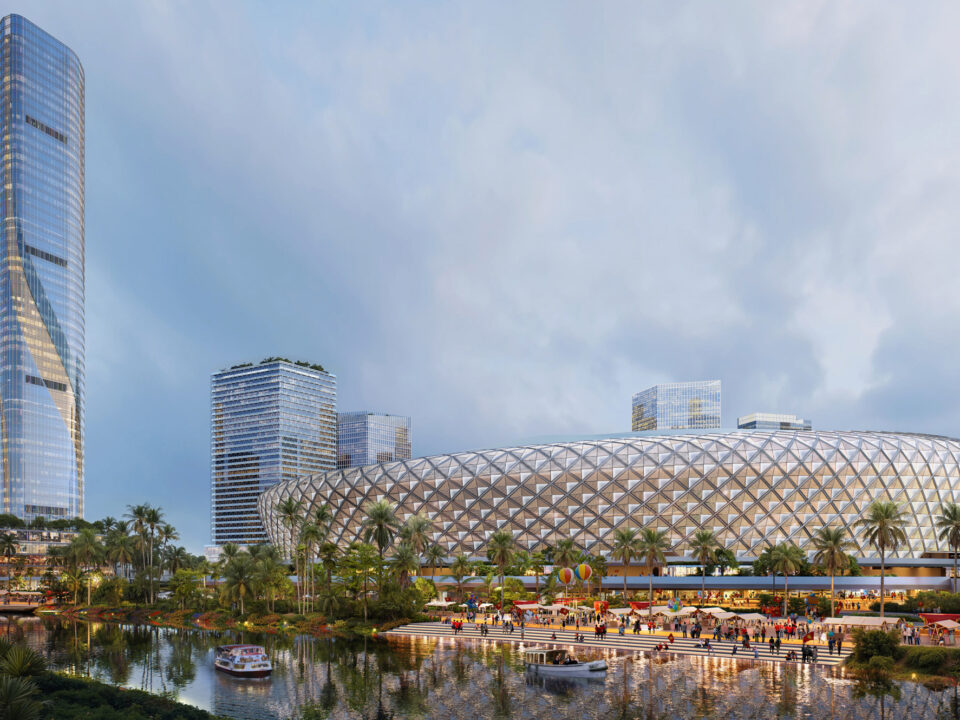
The building itself is an architectural marvel and the result of international collaboration. Designed by Heneghan Peng Architects and realised by the Belgian firm BESIX, its geometry mirrors the surrounding landscape. The structure slopes upwards towards the pyramid peaks and vast triangular windows, as well as recurring triangular motifs, frame sweeping views of Giza. “Everything is variable, everything changes,” said project engineer De Kinder, describing the structural challenges that slowed construction.

Japan’s International Cooperation Agency (JICA) supported the conservation work, training local experts in state-of-the-art restoration.
Dr Tarek Tawfik, president of the International Association of Egyptologists and former head of the GEM, told the BBC that deciding how best to display the previously unseen artefacts had been a significant curatorial challenge.
The museum holds some 100,000 artefacts in total, spanning from the pre-dynastic to the Greek and Roman eras, making it the world’s largest archaeological museum.
Tour guides around Giza are already bracing for the crowds. ‘When the Tutankhamun collection opens, you can imagine – the whole world will come back; he is the most famous king of all antiquity,’ said Ahmed Seddik, a guide and aspiring Egyptologist.
The curatorial layout combines chronological and thematic displays, exploring topics such as women, communities, literature, and daily life, in order to broaden the narrative beyond pharaohs and queens. “These aspects are often forgotten,’ Ahmed added. ‘It’s very important to bring those voices into the story.”
Dr Zahi Hawass, Egypt’s former long-serving Minister of Tourism and Antiquities, told the BBC that the opening of the museum was the culmination of a dream, proving that “Egyptians are equals of foreign Egyptologists when it comes to excavations, preserving monuments, and curating museums.”
Dr Tawfik echoed his words, saying that “colleagues from around the world have been in awe of the fantastic conservation work that has been done. As well as ancient Egyptian history, we are showcasing modern Egypt – because it’s Egypt that built this museum.”
Hawass added that he “now I want two things. First, museums must stop buying stolen artefacts; second, I want three objects returned: the Rosetta Stone, the Dendera Zodiac and the Bust of Nefertiti.”
The Netherlands has already announced it would return some artefacts to Egypt.
After three decades, the world’s largest museum of antiquity may be Egypt’s most modern statement yet.