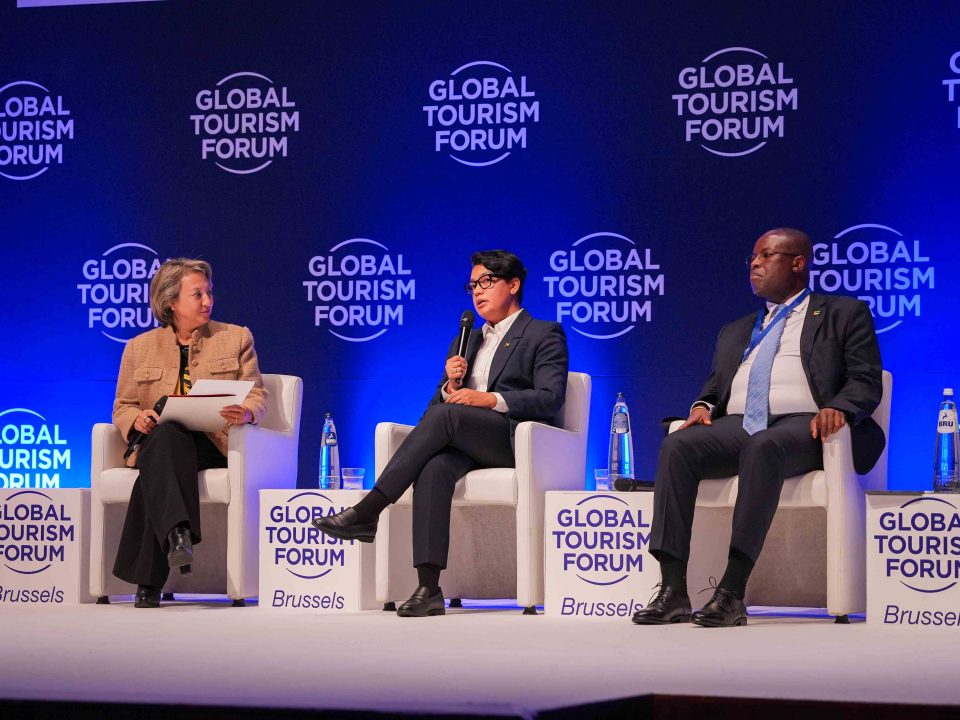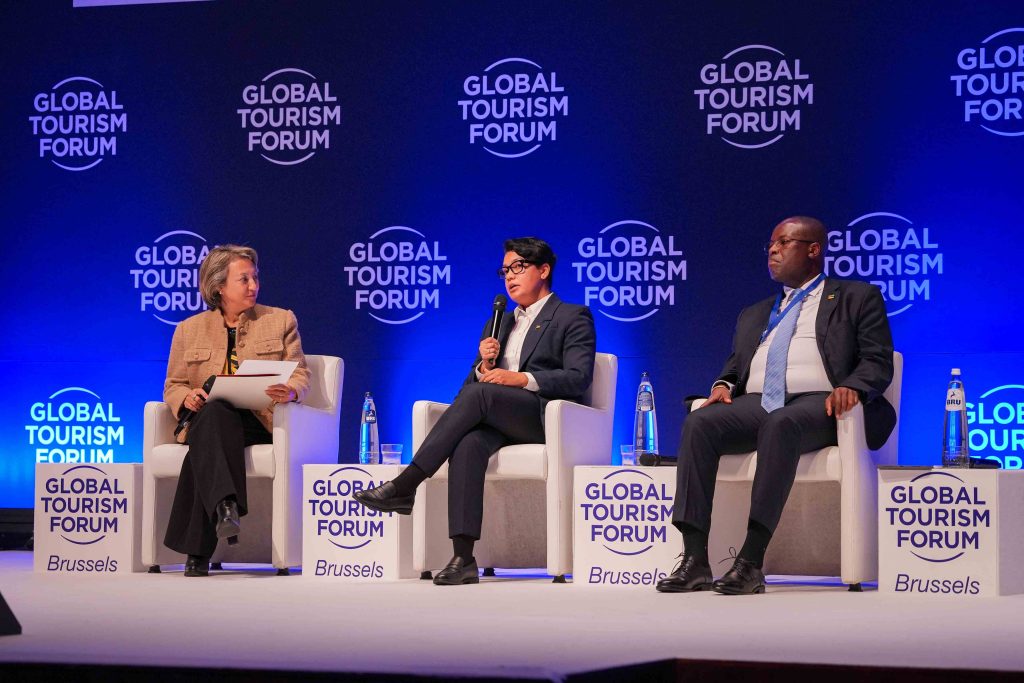


The leader of Booking.com has warned that travel demand in Europe and Asia is “softening” as the twin impacts of higher ticket prices and low wages make themselves felt. The remarks were made by Glenn Fogel, CEO and President of Booking Holdings, in an appearance on the BBC podcast, Big Boss Interview.
Fogel’s analysis comes as the ticketing giant’s fourth-quarter outlook is revised down, from +7% gross bookings to upward movement of between 2% and 4%. Room-night growth was expected to sit between 1% and 3%. Third-quarter figures reveal single-digit growth in both the domestic and international segments. The domestic market did marginally better than international travel, but the limited upticks in both point to “a bit of a softening,” Fogel said.
The CEO also described the consumer behaviour in Europe and Asia as fairly predictable, given the geopolitical instability prospective travellers are witnessing. “It’s not surprising looking at the state of the world that would happen,” said Fogel. He not only referred to the Middle East crisis and the resulting surge in oil costs this year, but also to reputational damage and falling confidence caused by violent protests as seen in Paris over recent weeks.
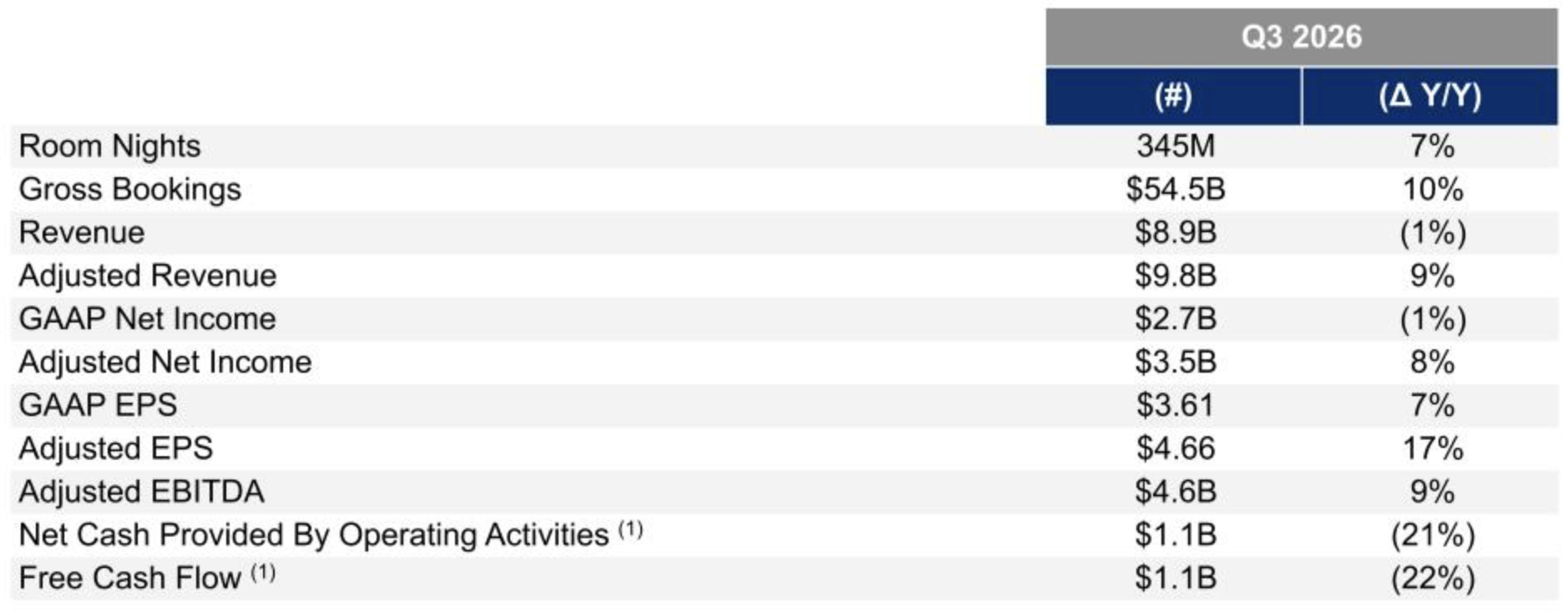
Nonetheless, room nights booked across Booking’s platforms rose to 345 million, up 7% compared to the third quarter of 2025, while gross bookings value climbed to $54.5 billion, a gain of 10%. Reported revenue fell 1% to about $8.9 billion, compared with roughly $9 billion in the same period a year earlier. However, adjusting that figure in accordance with a US Federal Trade Commission move, revenue is up 9% year on year, or about 10% after currency effects, Jawlah notes.
With little control over shocks created by foreign and domestic political policies, Fogel focused on what is possible for travel stakeholders to achieve. And despite the shocks described, he also expressed longer-term optimism for continued travel sector growth, at a faster rate than GDP, over the next two decades.
“We cannot control things like geopolitical issues,” he said, adding: “What I can do is continue to improve our services. So long as we are getting a bigger share of what in the long term is a growing market, we will be successful.”
Echoing remarks by a wide range of speakers made at this week’s Global Tourism Forum in Brussels, Fogel said that governments could help the travel sector by prioritising infrastructural investment, such as airport capacity, rather than offering financial assistance or bailouts. Increasing supply, he reasoned, could support the market by lowering prices for consumers.
Like Vincent Snauwaerts of TUI at the GTF, Fogel identified taxation and fiscal policy as another area where governments could be argued to be putting up barriers to growth. Instead of focusing on taxes on flying, however, Fogel mentioned the plethora of tourist taxes that are becoming more common in destinations around the world, and highlighted how inconsistent and confusing the experience of dealing with such visitor levies is. Yet, he admitted the data on whether such taxes are putting travel consumers off is far from clear.