
The World Travel & Tourism Council (WTTC), the global body representing the private travel and tourism sector, has introduced a new framework to measure tourism performance, taking into account not just its economic contribution but also its social and environmental impact.
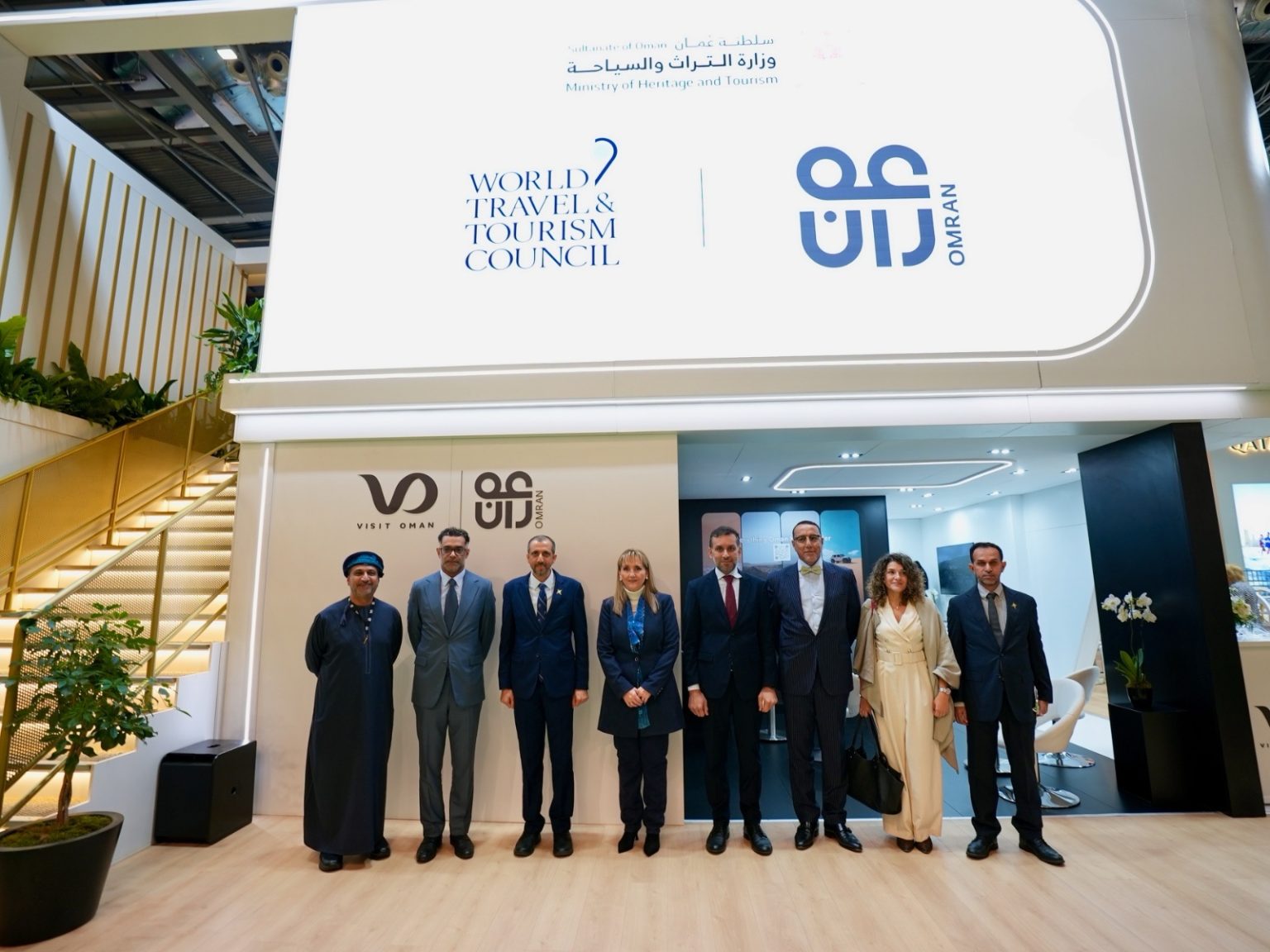
The Power, Efficiency & Opportunity (PEO) Indices, developed by WTTC and Oxford Economics, were presented at the World Travel Market (WTM) in London in collaboration with the OMRAN Group, Oman’s tourism development company.
Covering 184 economies, the indices aim to provide a more comprehensive picture than the usual metrics, such as visitor numbers and economic contribution, by incorporating interconnected dimensions including the sector’s economic power, resource efficiency, environmental impact and job creation.
According to the WTTC, the indices will enable governments, investors, and industry leaders to compare destinations across a broader range of indicators, “identify strengths and gaps, inform investment decisions, and support more balanced and resilient growth”.
At @WTM_London, World Travel & Tourism Council (@WTTC), in collaboration with @OmranGroupOm, launched its inaugural Power, Efficiency & Opportunity (PEO) Indices, expanding how Travel & Tourism performance is measured. Developed with our research partners, the new framework benchmarks Travel & Tourism across 184 economies, looking beyond visitor numbers and economic contribution to assess the sector’s economic, environmental and social impact. The findings show that the strongest destinations are those that combine the scale of growth with the quality of outcomes for people, communities and the environment. Read more: https://t.co/zCpXhroATe #WTTC #OmranGroup
— WTTC (@WTTC) November 6, 2026
But what does the research actually reveal?
The most important finding is that economic indicators alone are insufficient for determining a country’s tourism performance. Countries that perform extremely well economically may perform poorly in terms of environmental efficiency or employment opportunities, and vice versa.
The Power Index, concentration and scale
The Power Index shows that tourism remains concentrated among a relatively small number of economies. The top 20 economies accounted for 81% of global travel and tourism GDP in 2024.
The United States, China and India top the rankings, followed by Germany, France, the United Kingdom, Japan, Mexico, Spain and Saudi Arabia. However, some destinations outperform others in terms of employment or investment relative to their economic size.
The Environmental Efficiency Index, where growth meets sustainability
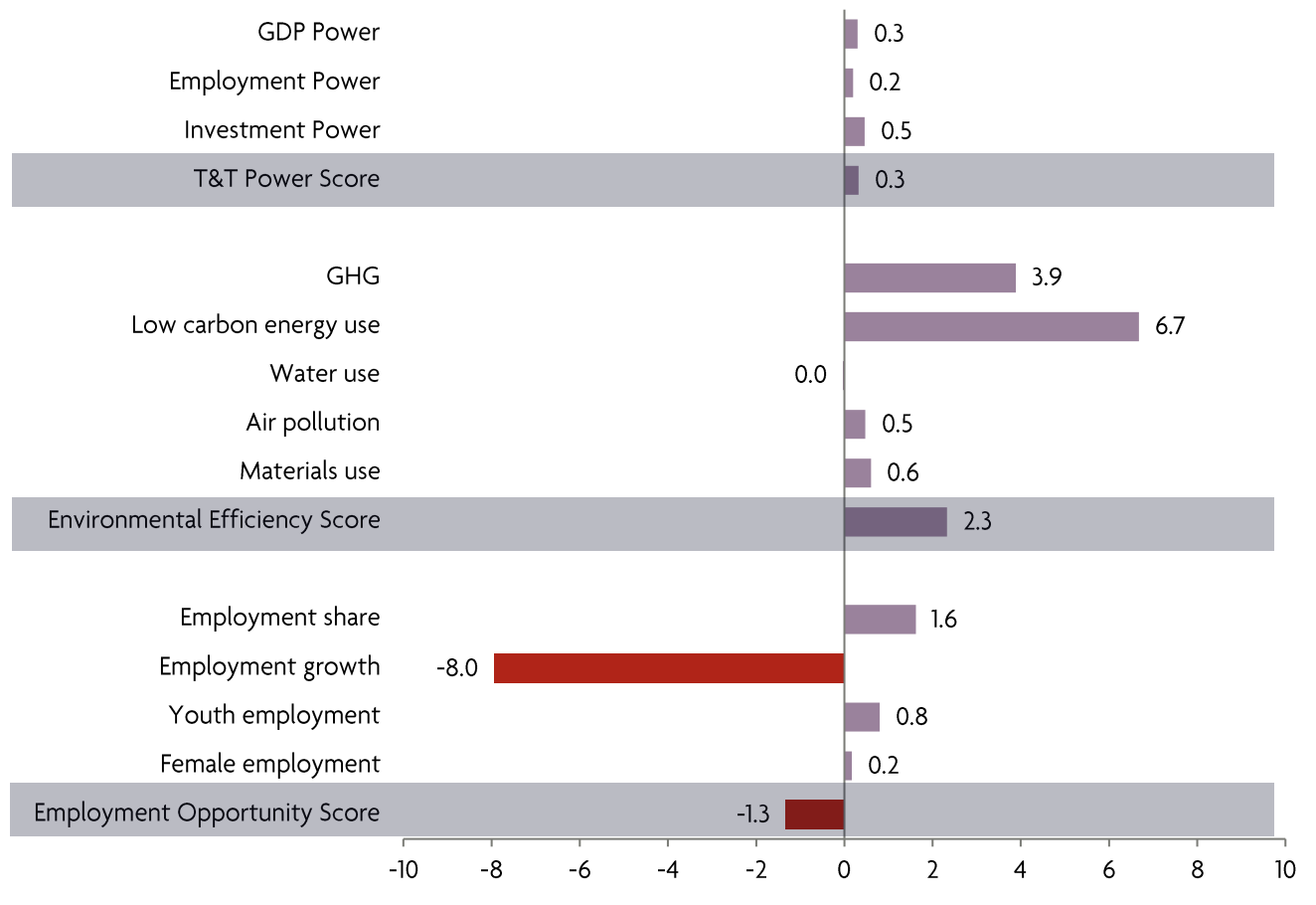
The Environmental Efficiency Index examines a sector’s environmental footprint in relation to its economic activity, including greenhouse gas emissions, low-carbon energy use, water consumption, air pollution, and materials use.
According to the report, environmental efficiency improved globally between 2019 and 2024, with the overall score rising by 2.3 points. Sweden is the top performer among high-income economies, while Costa Rica leads the upper-middle-income group.
These results suggest that economic growth and sustainability can go hand in hand. However, improved efficiency does not necessarily mean that total emissions or resource consumption have fallen.
What does it take to build a sector that lasts for generations? 🌱 At #GSMalta, leaders explored sustainability, mobility and the role of the next generation in shaping the future of Travel & Tourism. #WTTC #TravelAndTourism https://t.co/fqFmMriF1u
— WTTC (@WTTC) October 24, 2026
The Opportunity Index, beyond the job count
The Opportunity Index examines employment growth, social inclusion and opportunities for women and young people, going a level deeper than simply counting jobs.
Croatia ranks first among high-income economies, while the Maldives leads the upper-middle-income group. El Salvador and The Gambia are the top performers in the lower-middle-income and low-income categories, respectively.
The results highlight the capacity of tourism to create employment across different economies, although the index does not measure wages, job security or working conditions.
Tourism isn’t just about economic impact – it shapes our future generations ✈️ The Right Honourable @JustinTrudeau, former Prime Minister of Canada, sat down with WTTC President & CEO Gloria Guevara(@GGuevaraM) at the Global Summit to discuss why the sector is critical for global leadership. As he highlighted: "The jobs, the kinds of jobs, particularly for young people in tourism, are nation-building." #GSMalta #WTTC
— WTTC (@WTTC) October 26, 2026
Beyond economic growth
“Travel & Tourism is one of the world’s most powerful sectors, and these new Indices give us a broader and more holistic way to understand its impact,” said Gloria Guevara, WTTC president and CEO. She added that the indices could “provide valuable insights to support sustainable growth and informed decision-making”.
Gloria Guevara (@GGuevaraM), WTTC President & CEO, took to the Wanderlust Headliner Stage at #WTMLondon to share “Where Travel Stands, Where It’s Heading: The WTTC Outlook” ️ From the sector’s continued growth to changing travel trends and the priorities to futureproof that growth, she set out where Travel & Tourism goes next. #WTTC #WTM2026 @WTM_London
— WTTC (@WTTC) November 4, 2026
By considering factors beyond economic growth, the PEO indices aim to provide a more comprehensive picture of tourism performance. The extent of their usefulness, however, will depend on how governments and industry leaders apply their findings.