

An airspace closure is a security decision. Within hours, it is also an economic event.
Flights disappear from departure boards. Conference delegates cancel. Hotel operators revise forecasts. Small businesses, with little cash to absorb the shock, begin counting the cost.
Governments depend on tourism for jobs, investment and revenue. They should give the sector a voice in preparing for the disruptions that threaten all three.
The officials responsible for tourism revenues will eventually be asked to explain the damage. They should have a role in preparing for it.
Governments should give tourism ministers a standing place in national crisis and resilience planning, with formal access to security discussions that affect the visitor economy. In countries where tourism sustains a substantial share of employment and foreign earnings, that representation should be routine.
The economic exposure warrants it
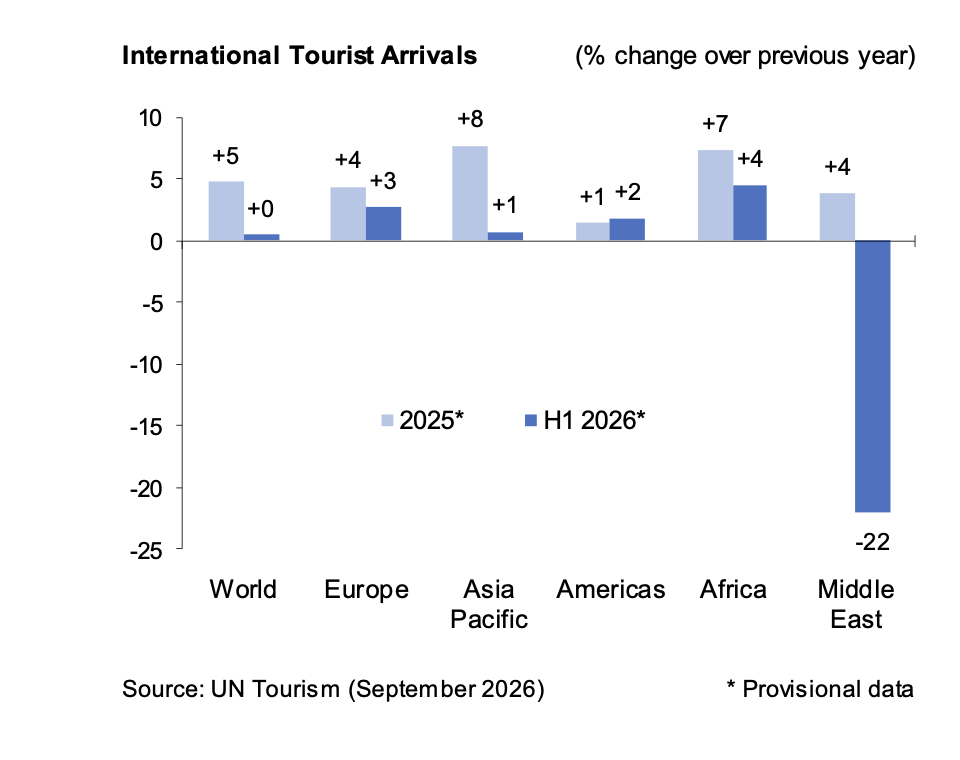
According to UN Tourism’s September World Tourism Barometer, international arrivals increased by just 0.4% in the first half of 2026. In the Middle East, they fell by 22%. The organisation cut its forecast for global arrivals growth this year to between 1% and 2%, citing geopolitical volatility and economic pressures.
Behind those figures lies an uncomfortable question for governments: who is responsible for protecting the economic system they have spent years encouraging investors to build?
Responsibility is dispersed. Transport ministries oversee connectivity. Interior ministries manage borders. Foreign ministries issue travel advice. Other agencies supervise energy, telecommunications and emergency response.
Tourism depends on all of them. A tourism minister needs a formal way to bring those dependencies into government planning before a disruption exposes them.
That does not require access to every classified briefing. It requires a clear institutional mandate: tourism officials should help assess economic exposure, prepare contingency arrangements and coordinate industry participation when a threat could interrupt travel or essential services.
Security authorities must remain free to close an airport or restrict movement when necessary. Better preparation would help governments manage the consequences of those decisions, including for the people least equipped to absorb them.
Start with contingency exercises
If a major airport closes for several days, which alternative gateways can handle arriving passengers? How will visitors reach them? Who coordinates emergency accommodation, medical assistance and reliable information? What happens when booking platforms or payment systems become unavailable?
Governments should have answers that have been tested with airlines, airports, accommodation providers and local authorities. Smaller operators need representation too. A family-run hotel cannot be expected to maintain the crisis response capacity of an international airline.
The investment agenda needs the same discipline
Ministers are quick to celebrate new resorts, terminals and convention centres. Those announcements should come with a credible account of the infrastructure and services on which the investment depends.
Water supply, backup electricity, emergency access, communications and alternative transport routes belong in the assessment from the beginning. Public authorities should identify shared weaknesses; developers and lenders should explain how their projects will operate when normal conditions break down.
This would give investors a better basis for judging risk. It would also force governments to confront gaps that can be obscured by ambitious construction targets.
Europe has a particular interest in getting this right
Its tourism economy crosses national borders every day. Visitors arrive through one country, connect through another and spend their holidays in a third. A disruption at a major hub can therefore become several governments’ problem at once.
National plans need to be coordinated. Aviation partners and neighbouring countries should agree on procedures for rerouting passengers, sharing operational information and assisting stranded visitors. Those arrangements should exist before ministers are called into an emergency meeting.
There is also a political boundary worth defending. Giving tourism a voice in security planning must support safe and predictable travel. It must not become a convenient argument for indiscriminate surveillance, unnecessary restrictions or border procedures that travellers cannot understand.
Digital systems require privacy safeguards, clear accountability and practical alternatives when technology fails. Emergency powers need scrutiny. The economic value of tourism strengthens the case for competent government; it does not remove the obligation to protect individual rights.
Credible communication matters just as much
During a crisis, tourism authorities will face pressure to reassure markets. Their first obligation should be to provide accurate information: what is operating, what is disrupted, what remains uncertain and where assistance is available. Promotional language cannot substitute for operational facts.
The OECD’s Tourism Trends and Policies 2026 calls for more anticipatory and coordinated policymaking. Governments should turn that recommendation into an institutional arrangement with clearly assigned responsibilities, regular exercises and accountability for preparedness.
A permanent seat will not prevent a conflict, a cyberattack or an infrastructure failure. It can ensure that the officials responsible for a major source of national income help prepare the response.
Governments already ask tourism ministers to deliver jobs, attract capital and generate revenue. They should give them a voice when those interests are at risk.