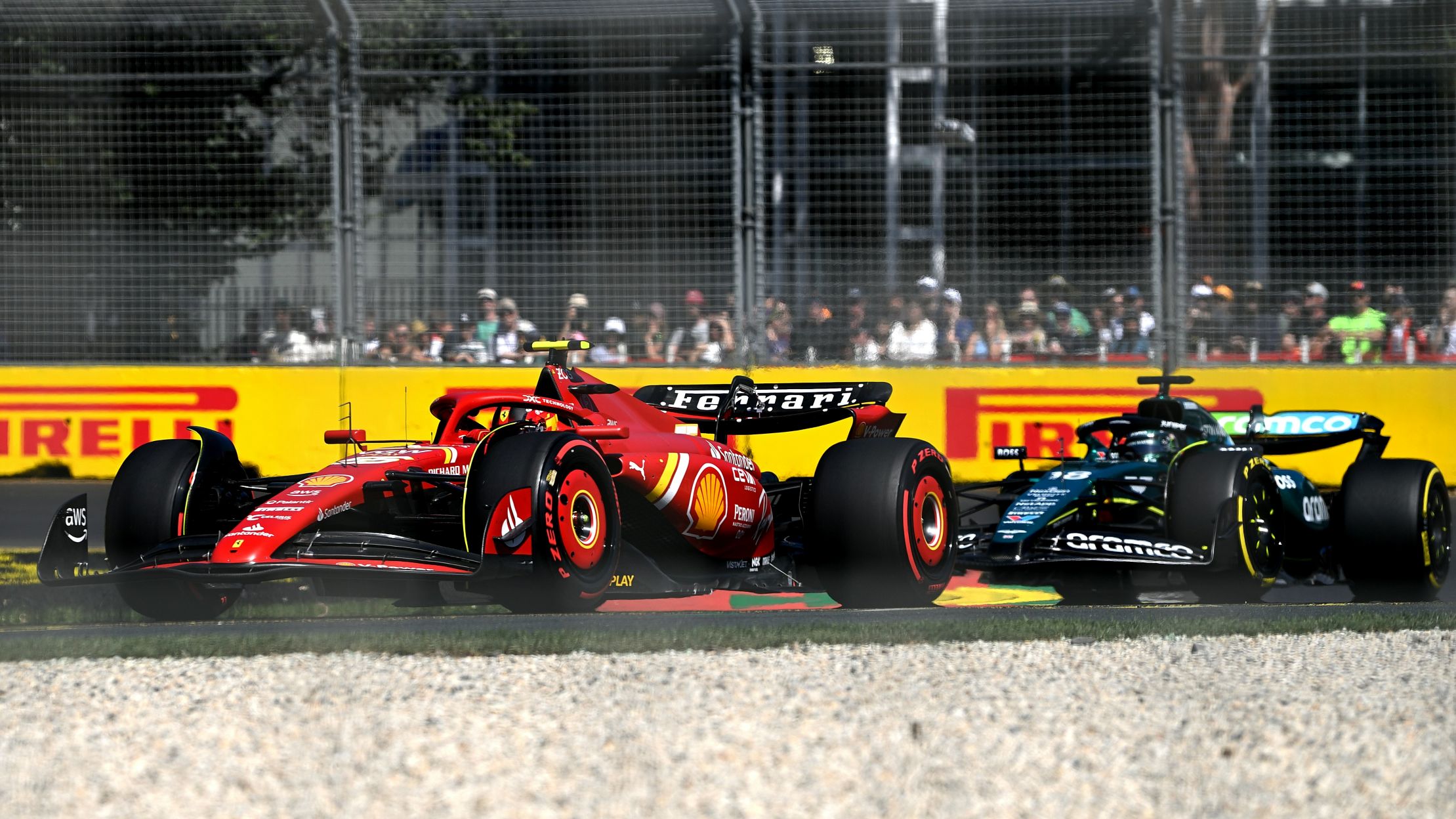

The African continent will see its first Formula 1 race in nearly four decades, according to an announcement from the competition’s governing body signalling a ten-year partnership with Rwanda. The successful candidate location is in Bugesera, “approximately 40 kilometres south of Kigali and adjacent to the new Kigali International Airport,” a press release said, claiming “the circuit will be designed to work in harmony with the natural landscape, using the area’s elevation changes to create a unique and challenging racing experience while delivering exceptional viewing opportunities for fans.”
A number of star drivers have expressed support for a Rwandan circuit joining the 2030 World Championship season, and officials in South Africa, which had been mooted as a potential host nation rival, acknowledged that Rwanda has done the job. “We are happy for Rwanda’s 2030 F1,” South African sports minister Gayton McKenzie wrote on social media. “They have worked on it longer than SA and deserve it.”
BREAKING: Formula 1 returns to Africa with 10 year agreement to race in Rwanda The African Grand Prix is set to join the F1 calendar in the early 2030s #F1 https://t.co/IlsKseMnNa
— Formula 1 (@F1) October 13, 2026
Champions Lewis Hamilton and Max Verstappen have both backed the idea of an African F1 host nation, as has multiple Grand Prix winner George Russell. “I’ve always said that we need to have a Grand Prix in Africa,” Hamilton said, adding: “It is, for me, the most important continent, and the most beautiful continent. We’re on all the other continents but that one and there should be no reason for it.”
Verstappen hailed the prospect as “great” and said, “We are all very excited if that would happen.” Russell said he had “really, really loved” the time he had spent in Africa and pointed out: “Formula 1 is a worldwide sport. Africa is the only continent we don’t race on, and it’s about time we had a race there.”
If the competition goes ahead, it will be the first time since 1993’s race at South Africa’s Kyalami circuit that F1 has visited the world’s second largest continent. There have been seismic shifts in that time. In 1994, South Africa completed its transition to a multi-party democracy, ending white supremacist rule. Many African nations have succeeded in sustaining economic growth, reducing poverty, and diversifying the middle class, and 54 nations have united under the African Continental Free Trade Area (AfCFTA), creating the world’s largest free trade zone by participant count.
Meanwhile, the worldwide travel sector is waking up to the continent’s untapped potential, as highlighted by this year’s Global Travel Forum in Angola. With the events industry now driving travel more than ever before, the advent of an F1 race on African soil again signals a significant economic opportunity. Business Traveller points out that “Through its Visit Rwanda campaign and collaborations with football, basketball and cycling organisations, the country has diversified from its reputation as a prime destination for gorilla visits and built a profile as a sporting destination, investing heavily in infrastructure. A permanent F1 circuit could anchor even wider tourism, entertainment, commercial and MICE development.”
Paul Kagame, President of the Republic of Rwanda, explained in a statement that young people “deserve to see the sport at home and to see themselves in it: as engineers, technicians, entrepreneurs and, one day, drivers.” He described the ten-year partnership as “an investment in Rwanda’s future” that “will bring jobs, skills, tourism and new business to our country and our region for decades to come.”
Echoing that sentiment, F1 President and CEO, Stefano Domenicali, said: “Together, we can create lasting economic and social benefits through tourism, investment, skills development and local business growth, ensuring the positive impact of this event is felt for generations.”
However, questions are likely to be raised in some quarters due to current travel advisories in place for Rwanda, particularly in view of armed conflict on the Democratic Republic of Congo (DRC) border and an outbreak of Ebola Bundibugyo in the North-Eastern Ituri Province. The US State Department’s advice is, at the time of writing, a “Level 3 – Reconsider travel” with some areas classed as “Level 4 – Do Not Travel.” The UK’s Foreign and Commonwealth Development Office “advises against all but essential travel to parts of Rwanda.” Similarly, the Dutch government categorises the border area with the DRC as orange, stating, “Only travel here if it is necessary. It is not safe to go on holiday there.” It adds: “The rest of Rwanda has a yellow color code. You can travel there. However, please note: there are specific security risks.”
For those considering an F1-inspired trip to Rwanda, it should be noted that the DRC border is approximately 140 to 190 kilometres away from Bugesera, depending on the specific crossing point. In contrast, the North-Eastern Ituri Province is 400 to 450 kilometres off.