

Virgin plans to begin cross-Channel passenger services in 2030, operating up to 20 daily return journeys from London to Paris, Brussels, and Amsterdam in a proposed expansion that would introduce a direct competitor to Eurostar, with an Alstom fleet that would add almost 7.5 million annual seats, as other prospective operators jockey for position.
The group has agreed with Alstom to acquire 12 Avelia Stream trainsets, each capable of speeds of up to 300km/h. Alstom would also maintain the fleet under a 30-year contract. In a press release, Virgin estimates that the planned timetable would add almost 7.5 million seats a year and support up to 1,000 jobs.
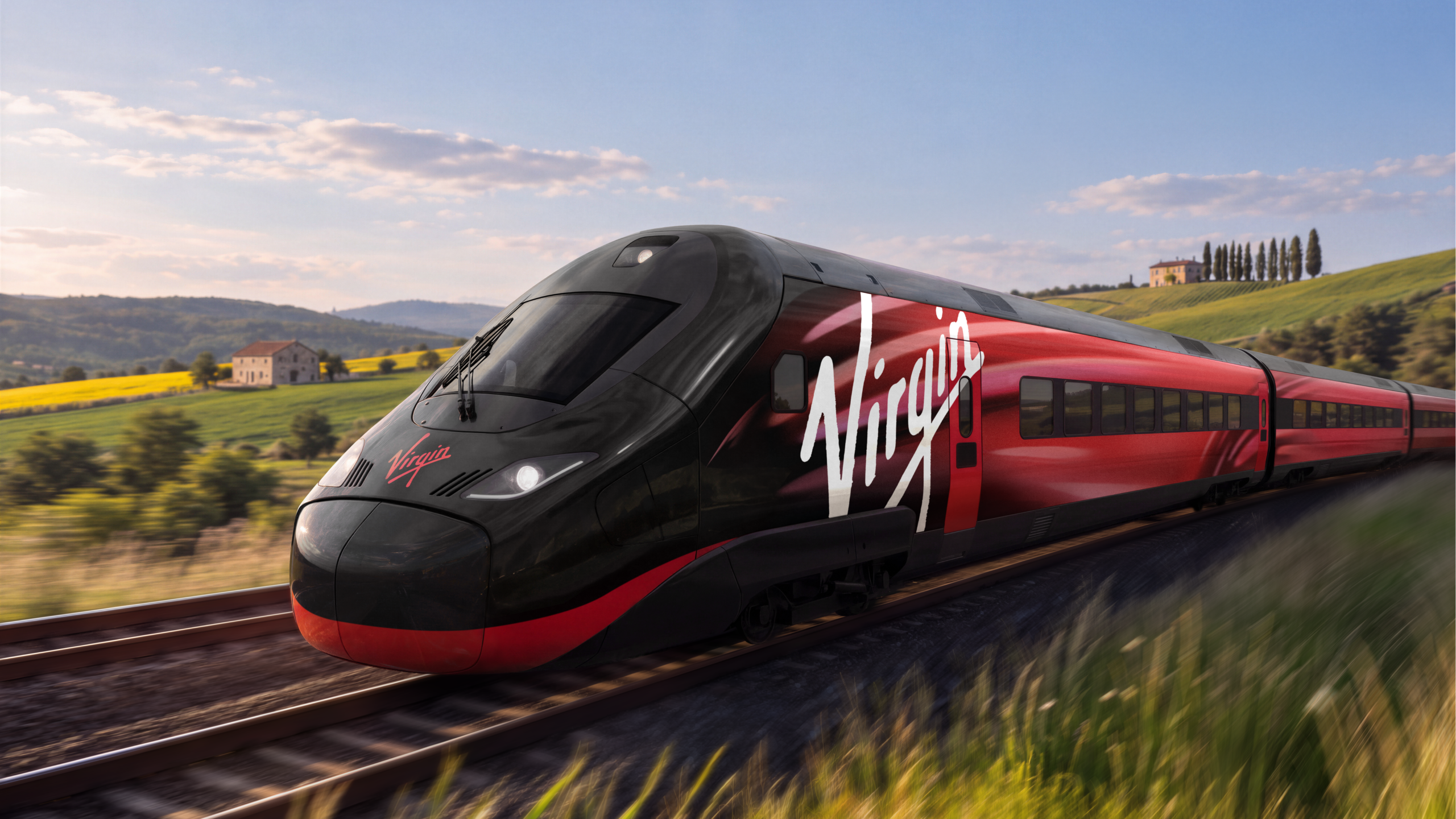
Early design material shows a black-and-red livery, while the proposed onboard product draws on concepts used elsewhere in the group’s transport portfolio. Virgin Atlantic lounges are expected to inform pre-departure and social areas, Virgin Voyages will shape the food and drink offer, and Virgin Hotels its seating and interior design. The company also plans to integrate the service with its Virgin Red loyalty programme and is examining links between the rail network and Virgin Atlantic flights.
Josh Bayliss, chief executive of Virgin Group, said the company expected more journeys between the UK and continental Europe to shift to rail. “We’re adding capacity for millions more international rail journeys each year, growing the market as a whole,” he said.
The proposal comes as policymakers and operators focus on spare capacity in the Channel Tunnel. About half of passenger-rail capacity in the Eurotunnel is currently unused but immediate constraints for new entrants include access to stations, border-processing facilities, maintenance depots, and connecting rail networks.
Virgin is currently the only prospective new Channel Tunnel passenger operator to have secured track access in the UK. The Office of Rail and Road has approved access to High Speed 1 from 1 October 2030 to 31 December 2040. Virgin has also signed an agreement with Eurostar to use the Temple Mills International depot in east London, the only maintenance facility directly accessible from High Speed 1.
Those agreements give Virgin a clearer UK operating pathway than other proposed challengers, although further permissions are still required for the Channel Tunnel and mainland European networks, together with relevant safety approvals.
Competition is nevertheless hot. Italy’s state-owned FS Italiane Group has ordered 19 Hitachi high-speed trains through Trenitalia France as part of an approximately €2 billion programme covering rolling stock, maintenance, and technical support. The trains will serve its wider French and European network as well as its planned Paris–London route, which the company says is scheduled to start in 2029. FS Italiane has not secured the same UK track-access position as Virgin, and its launch remains dependent on infrastructure arrangements, and regulatory authorisations.