

A leading Belgian animal park is playing its part in efforts to protect one of the world’s most endangered great apes.
International Orangutan Day, marked annually on 19 August, aims to raise global awareness about the plight of orangutans and the urgent need to protect their natural habitats.
All three species, the Bornean, Sumatran and Tapanuli orangutans, face a high risk of extinction, with habitat loss among the biggest threats to their survival. Widespread deforestation linked to palm oil plantations, illegal logging and mining, as well as the illegal pet trade, continue to put populations under pressure.
Orangutans mainly eat fruit and play an essential role in dispersing seeds throughout the rainforest, helping the wider ecosystem flourish. This has earned them the nickname “gardeners of the forest”.
For every captive orangutan sold through the exotic pet trade, up to 11 others can be killed during the capture process. Many animals taken from the wild also fail to survive the journey.
Two orangutan families at Pairi Daiza
Pairi Daiza, an animal park and botanical garden in Brugelette, Hainaut, is contributing to efforts to preserve the species through conservation, breeding and public awareness.
The park held a special “orangutan weekend” on 15 and 16 August, giving visitors the opportunity to meet its two orangutan families, take part in activities and learn about conservation work protecting their relatives in the wild.
“Through encounters with the animals and their keepers and a special guided tour, visitors learned more about these remarkably intelligent great apes, their way of life and the growing threats facing them in the wild,” a park spokesperson said.
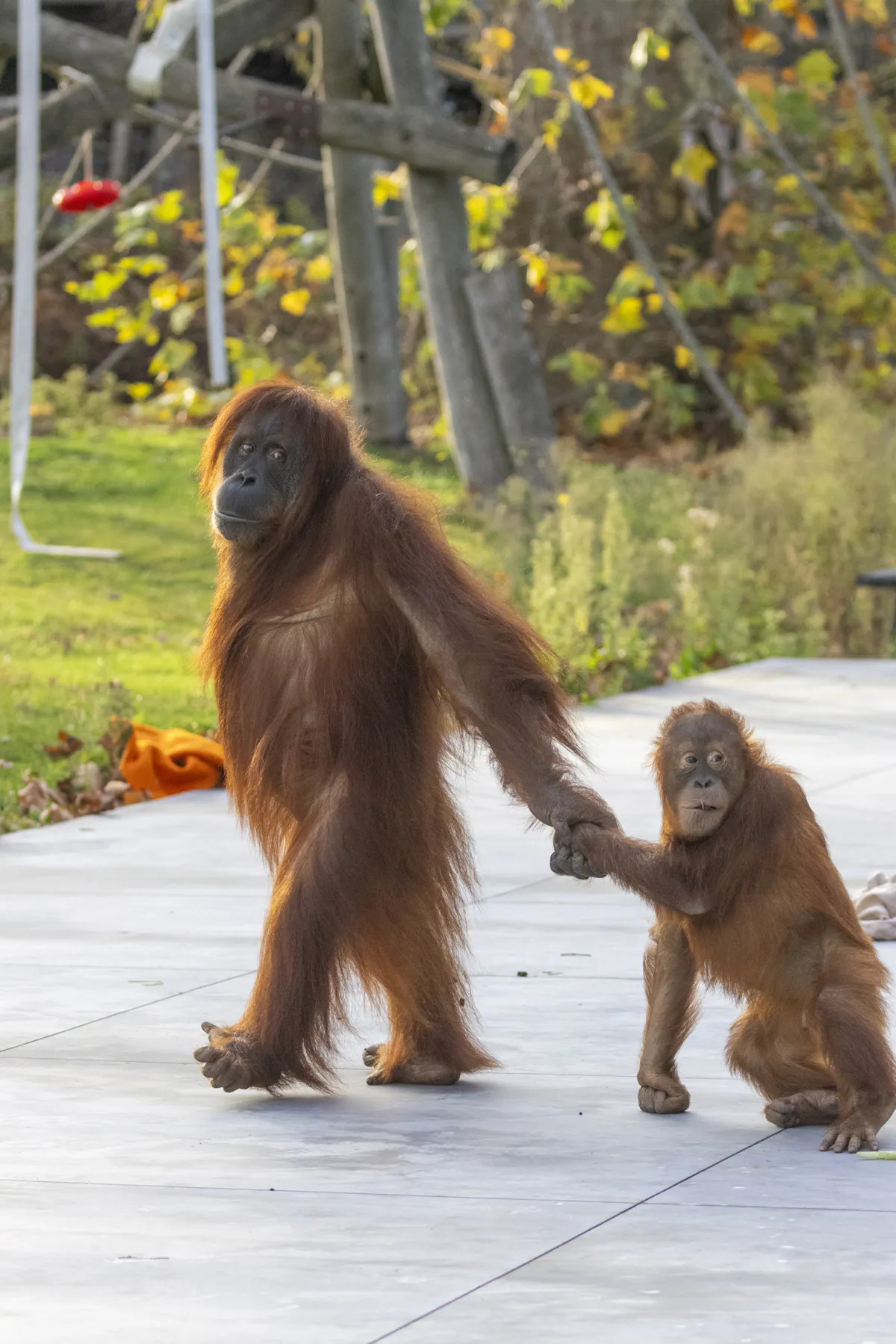
“The weekend also highlighted the urgent work being carried out in Borneo, where the 2026 forest-fire season has begun and the forests on which orangutans depend are once again under severe pressure.”
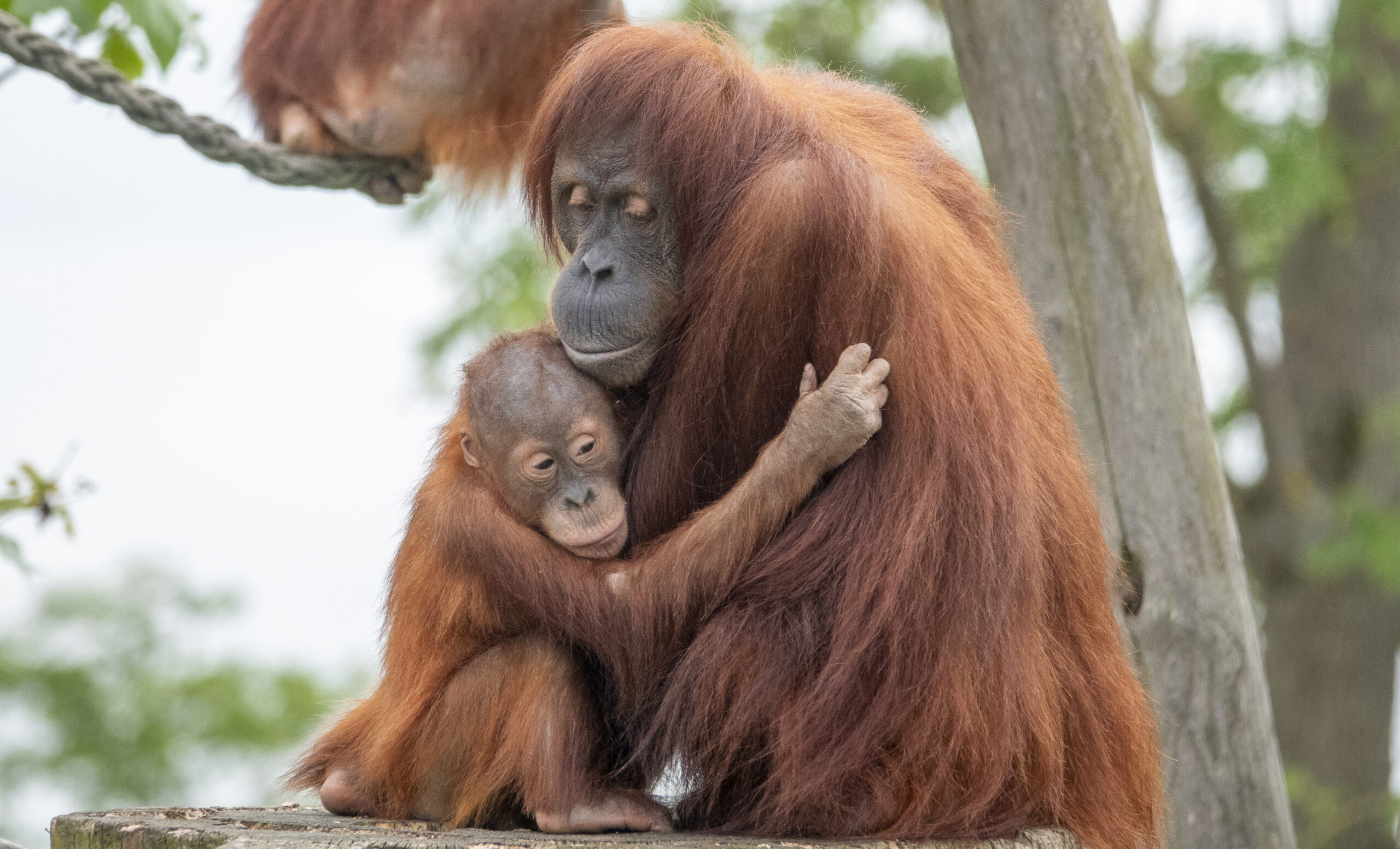
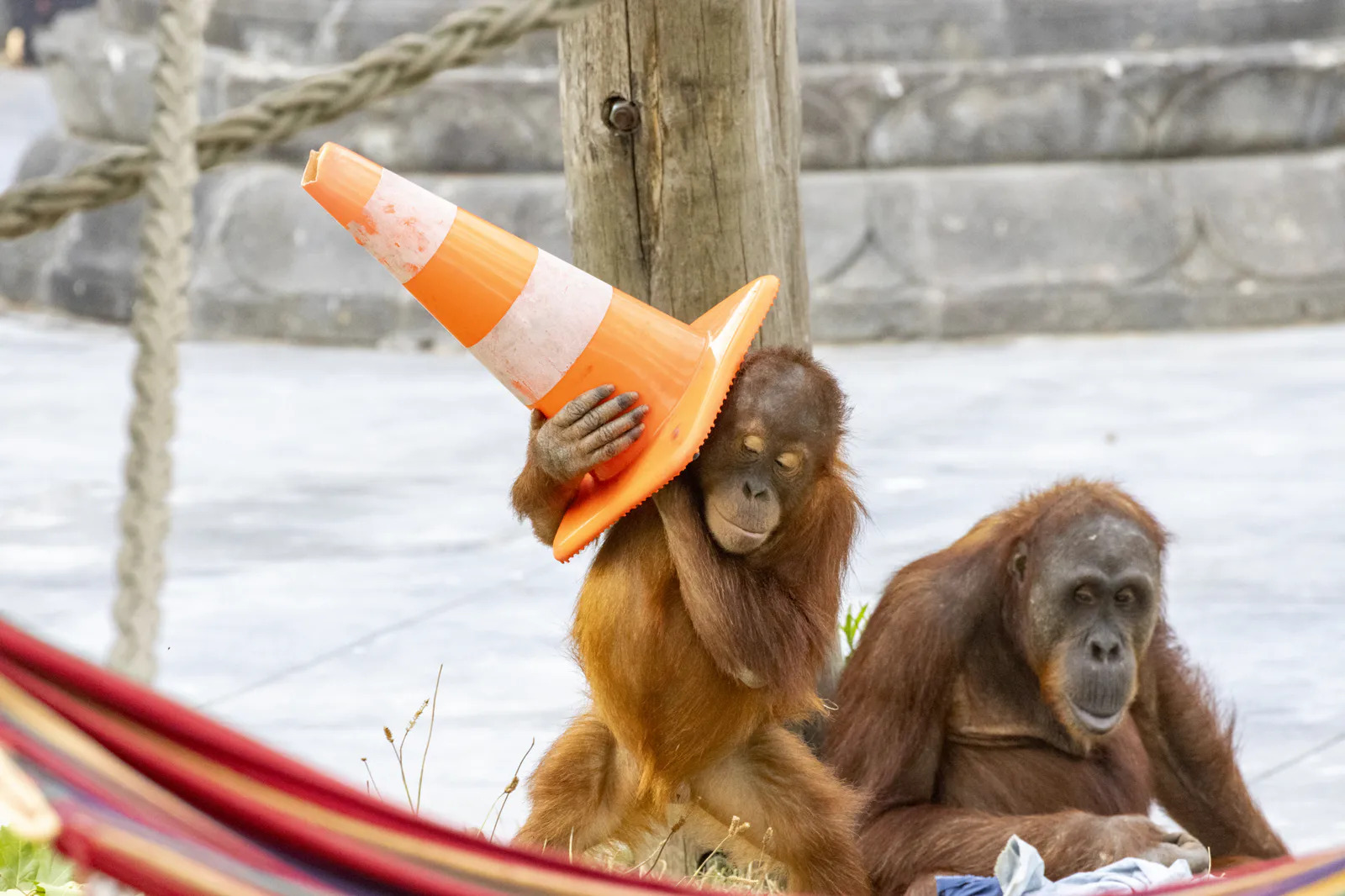
The award-winning park is home to nine Sumatran orangutans living in two family groups in its Kingdom of Ganesha.
Ujian, Sari, Berani and Mathaï live in the Flower Temple. Just opposite, Kembali, Rosa, Indah, Yori and Bukit live in the House of the Artisan.
The second family arrived at Pairi Daiza from Frankfurt Zoo in November 2025 as part of the European Ex Situ Programme coordinated by the European Association of Zoos and Aquaria.
Their arrival allowed the five orangutans to remain together while contributing to the responsible management of a healthy European population of this critically endangered species.
First encounter between the two families
In July, both orangutan families were outside at the same time for the first time, a moment Niels Vandemeulebroucke, orangutan caretaker at Pairi Daiza, described as “a wonderful milestone”.
“For Kembali and his family, almost everything was new: trees to climb, ropes and branches to explore, birds, toys, places to rest, and an entire world of movement around them,” he told Travel Tomorrow.
“You could really see how stimulating their new environment was.”
Their neighbours in the Flower Temple were equally intrigued.
“At first, the whole family climbed high into the trees to get a better look at the newcomers. Interestingly, there were no striking vocalisations or direct interactions, and the initial curiosity quickly settled down,” Vandemeulebroucke said.
“Today, both families are once again mainly focused on the relationships within their own group.”
As ambassadors for their species, Pairi Daiza’s orangutans can help visitors understand the extraordinary intelligence of the great apes while providing a connection with their wild relatives and the rapidly disappearing forests on which their survival depends.
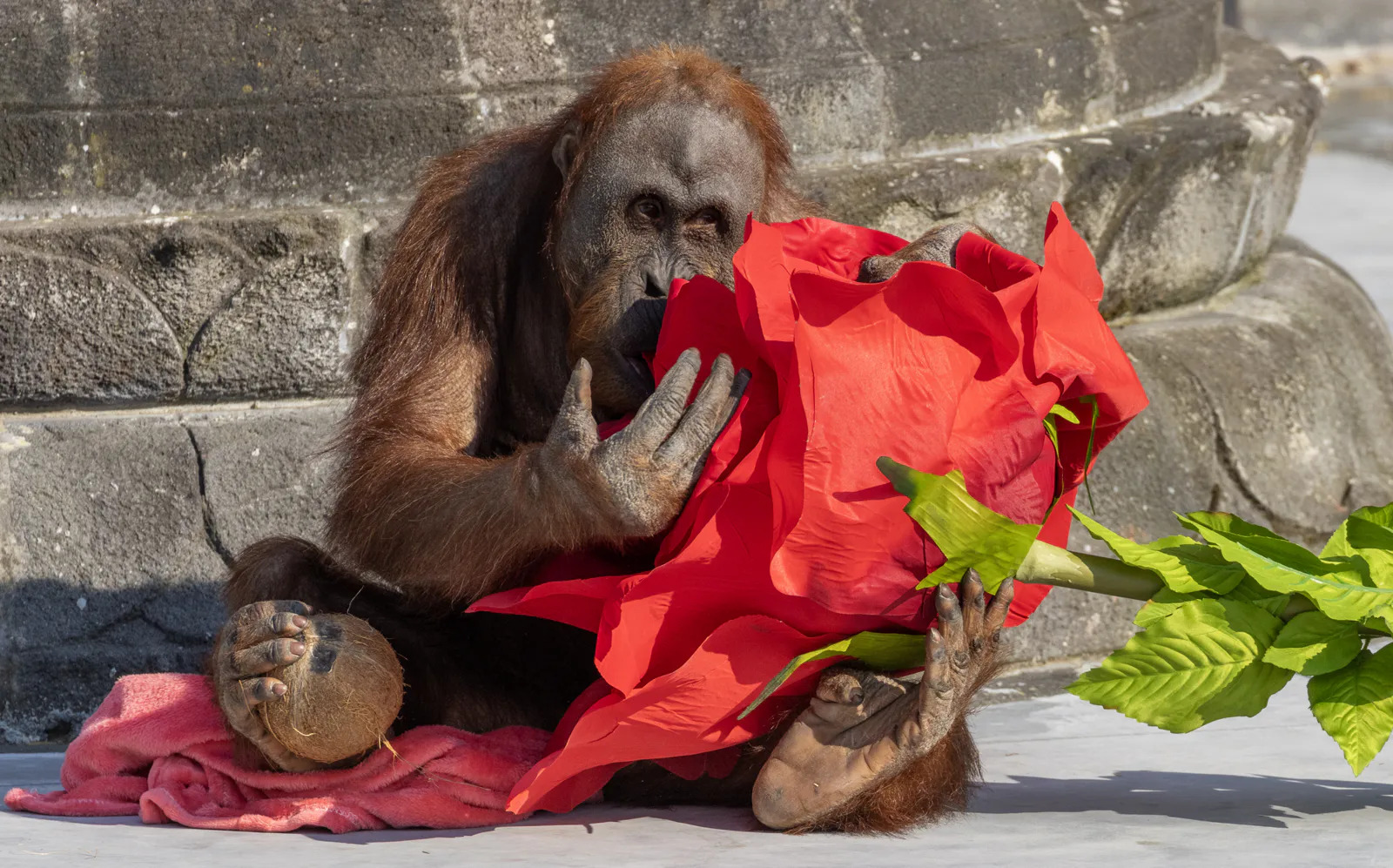
“Our role is to keep challenging them,” Vandemeulebroucke said.
“We continuously create new enrichments and opportunities to explore, think and interact, because orangutans are exceptionally intelligent animals.”
Pairi Daiza covers 75 hectares on the site of the former Cistercian Cambron Abbey and is home to more than 7,000 animals.