


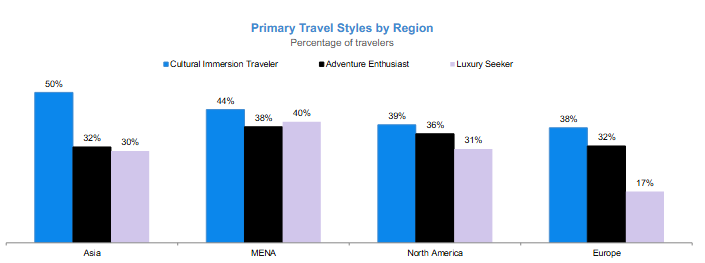
Despite the relative strength of the premium travel segment, cultural immersion is emerging as a stronger priority for consumers, according to Skift’s State of Travel 2026 report which reveals that the trend is happening across world regions.
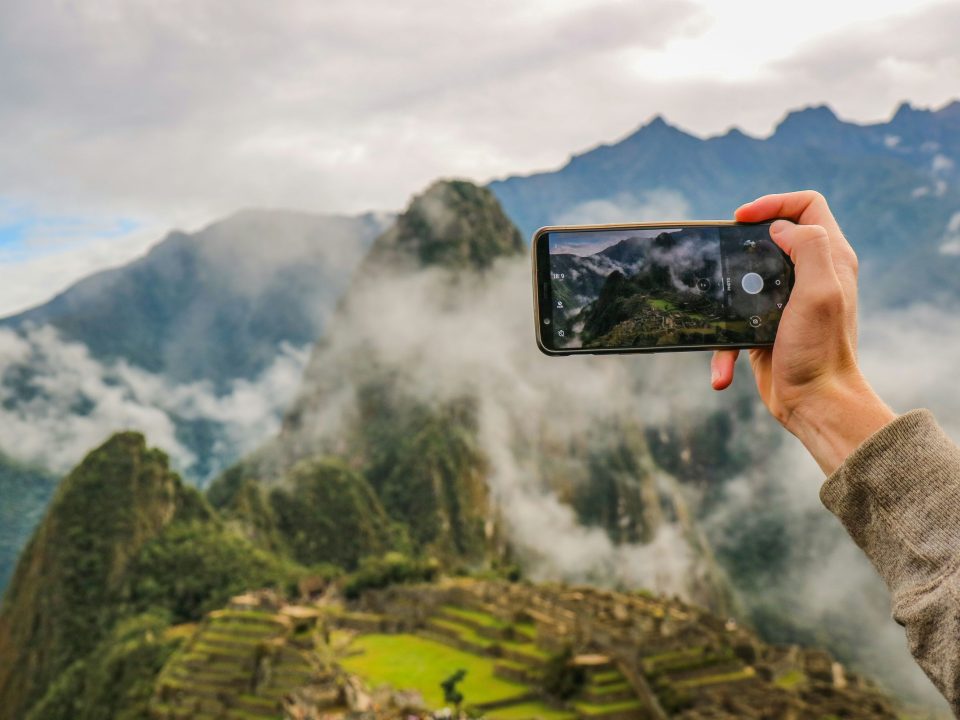
Skift’s findings for Asia show that half (50%) of travellers are seeking cultural immersion, while just under a third (32%) can be categorised as adventure travellers, and 30% are driven by luxury experiences.
Cultural immersion also came out ahead of other travel priorities in the Middle East and North Africa, where it is a motivation for 42% of travellers, as well as in North America (39%) and Europe (36%).
As destinations around the world compete to boost tourist spending rather than sheer visitor numbers, the Skift report provides insight into the experiences that are most likely to make travellers part with their money, with the highest-ranked offerings blending culture, luxury, nature and wellness.
Food tops travel spending priorities
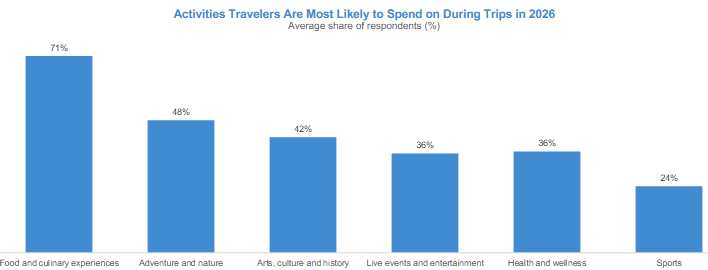
For 71% of respondents, food and gastronomic experiences were the most likely to feature in their spending. Some way behind were adventure and nature experiences at 48%, followed by arts, culture and history (42%). Live events and entertainment and health and wellness scored equally on the spending scale (36%), while sports attracted just 24%.
A feeling of genuineness and legitimacy is also becoming an important factor in any experience, Skift says, calling authenticity the new “North Star” of travel. The report notes that 43% of respondents said “experiences” are what they value most about travel. Perhaps ironically, perhaps understandably, that very search for authenticity comes at the same time as travellers are increasingly using AI and smart tools to shape their trips.
“Traveller behaviour is evolving, marked by rising demand for AI-driven personalisation and a shift toward more sustainable choices,” said Jean-Jacques Morin, group deputy CEO at Accor, commenting on the findings.
Social media reshapes travel discovery
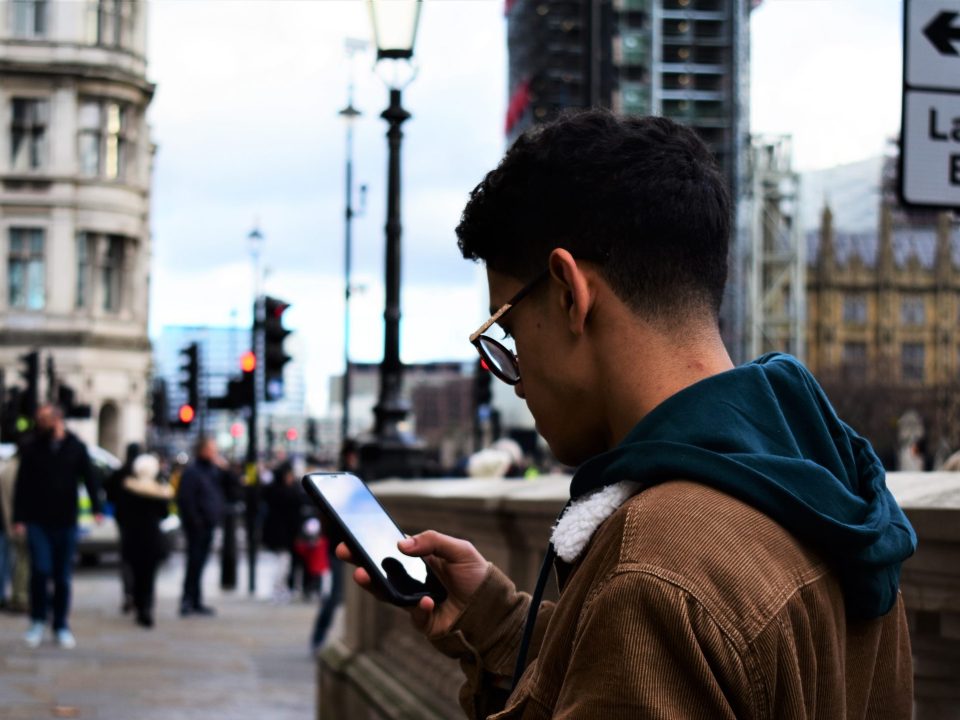
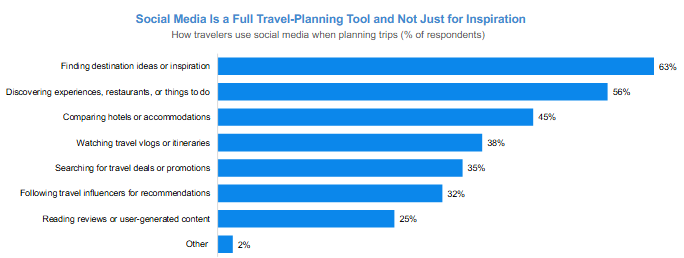
Around 63% of travellers told Skift they now use social media as a source of travel inspiration. Over half (56%) get ideas for activities, experiences and places to eat from social media, while 45% now use it as a comparison tool for accommodation providers.
However, this can result in a vicious circle, with a race to find the latest hidden gem before it becomes saturated with visitors. Any perception that a destination is suffering from overtourism can be off-putting, Skift points out. “Social media has destabilised the discovery cycle,” the report says. “The same platforms that make an unknown destination famous in weeks also make it feel overexposed within months.”