

Severe weather across the US is causing a series of cancellations and delays. Combined with reduced available seat capacity, many travellers are forced to wait days before they’re able to reach their destination.
Since the outbreak of the US-Israel war on Iran in February, the airline industry has been forced to adapt itself to a new global situation. While some airspaces are closed or restricted, leading to rerouted flights, jet fuel prices have been on the rise. All factors combined have led airlines to reduce their flight schedules, leading to reduced available seat capacity.
While the reduced seat offer was initially adapted to meet the demand more aptly, thus maximising the efficiency and potential benefit, the limited number of available seats has recently been adding to the long waiting times for those whose flight was heavily delayed or cancelled. This has particularly bee the case for the US, which have been facing severe summer weather over the past few weeks.
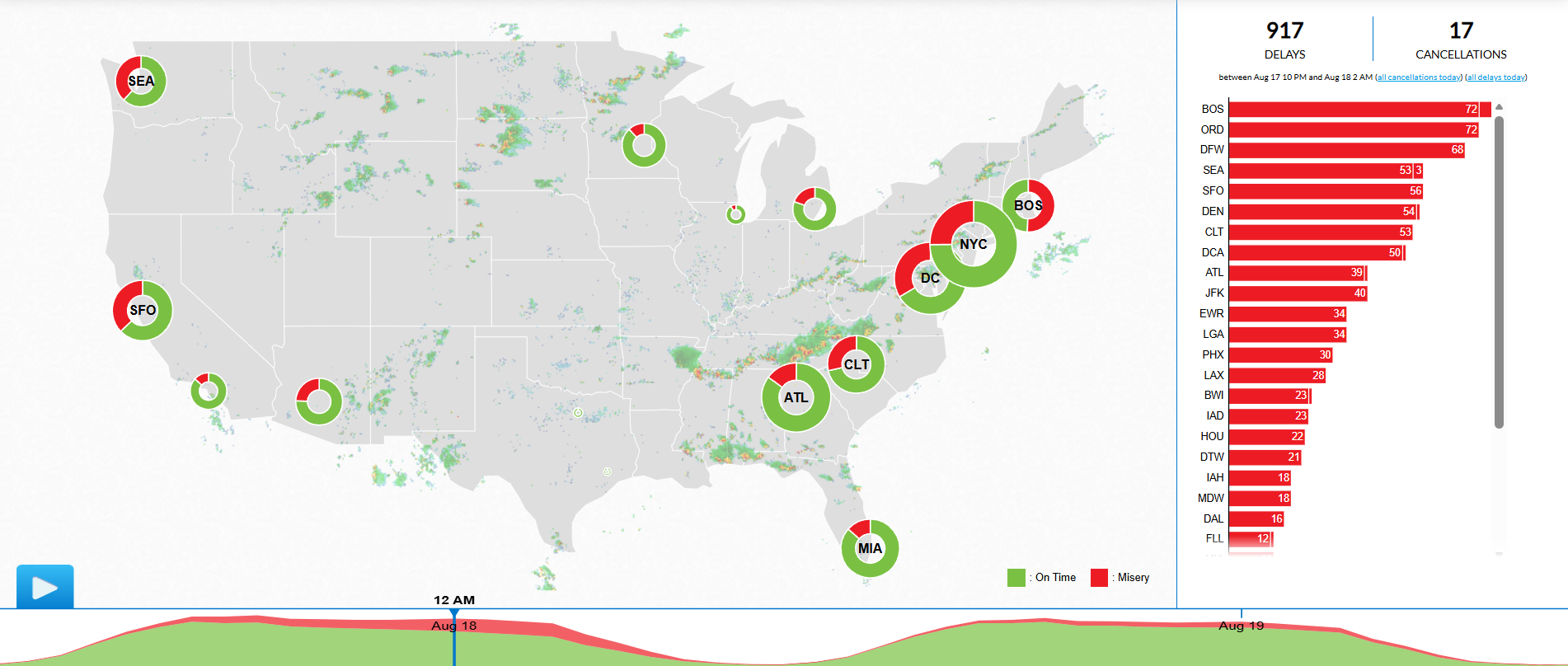
Many eastern transit hubs, such as Boston, New York, Philadelphia, Washington D.C., and Orlando, have been experiencing unfavourable weather. Storms, as well as low cloud cover and reduced visibility, have sparked a series of delays and cancellations. The US domestic flight network in particular has been struck by the issue. Moreover, the effects of the heavy weather have been amplified by air traffic controller shortages.
On Saturday 15 August 2026, for example, 6,120 flights within, into, or out of the United States were delayed and 419 were cancelled according to data by flight-tracking platform FlightAware. On Sunday 16 August, those numbers respectively amounted to 9,641 and 455, while Monday 17 August saw 7,409 delays and 238 cancellations.
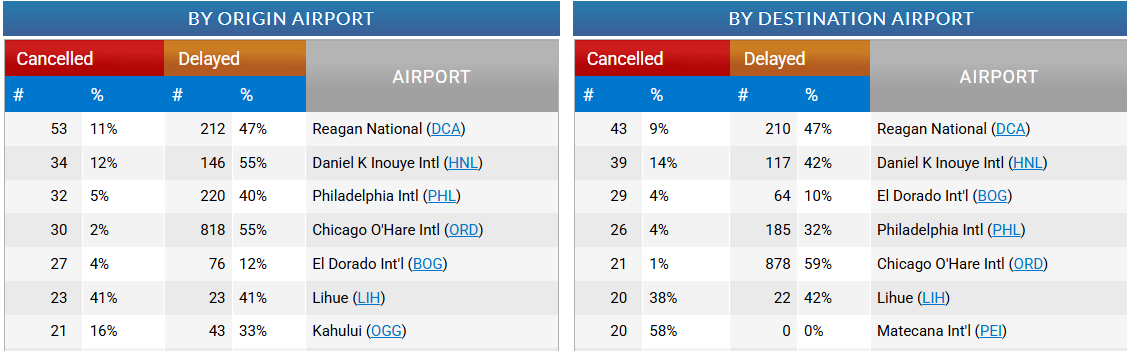
During the high summer season, when traveller numbers are high and many flights are (almost) fully booked, the severe weather, personnel shortages, and reduced number of available seats have been leading to heavy disruptions. Especially when flights are cancelled, travellers are given a very reduced number of options, often forcing them to wait days before being able to take another flight.
“The accommodation problem is a very real problem, and you run out of options very quickly,” Robert W. Mann Jr., airline industry analyst and former airline executive, told The Washington Post.
Although it is impossible to completely avoid flight delays or cancellations, there are, however, a couple of reflexes to keep in mind when a flight is being threatened by severe delays or cancellation.
1. Monitor airline travel alerts.
Severe weather often causes airlines to issue alerts beforehand, giving passengers the option to rebook before the flight is delayed or cancelled. If possible, try to change flights as soon as possible, as some seats are usually still available at this point.
2. Allow extra layover time.
The shorter the layover time, the higher the risk of missing a connection due to a previously delayed or cancelled flight.
@carryonritual Travel plans don't always go to plan. ✈️ A few things I always recommend when delays or cancellations strike. Save this one- you'll thank yourself later. #TravelTips #TravelAdvice #BusinessTravel #FrequentFlyer #AirportTips #TravelSmart #WomenWhoTravel #TravelHacks #BusinessWoman ♬ original sound – The Aileen Edit
3. Act quickly after a cancellation.
Once a flight has officially been cancelled, the number of available seats in the following hours or days will quickly diminish. Try to get in touch with your travel agent or airline as soon as possible in order to make arrangements, whether it is a refund or a rebooking.
4. Be flexible.
In order to increase your chances of quickly reaching your destination, it helps to be flexible. When talking to a customer officer, try to be open to the idea of an alternative flight route or transportation option.
5. Be prepared.
Always pack your essentials in a carry-on in case of a missed flight or lost luggage.
Rebooking and refund policies do tend to change from one airline to another. Knowing what (not) to expect from your airline, travel insurance, or travel agent may make all the difference when time if of the essence.