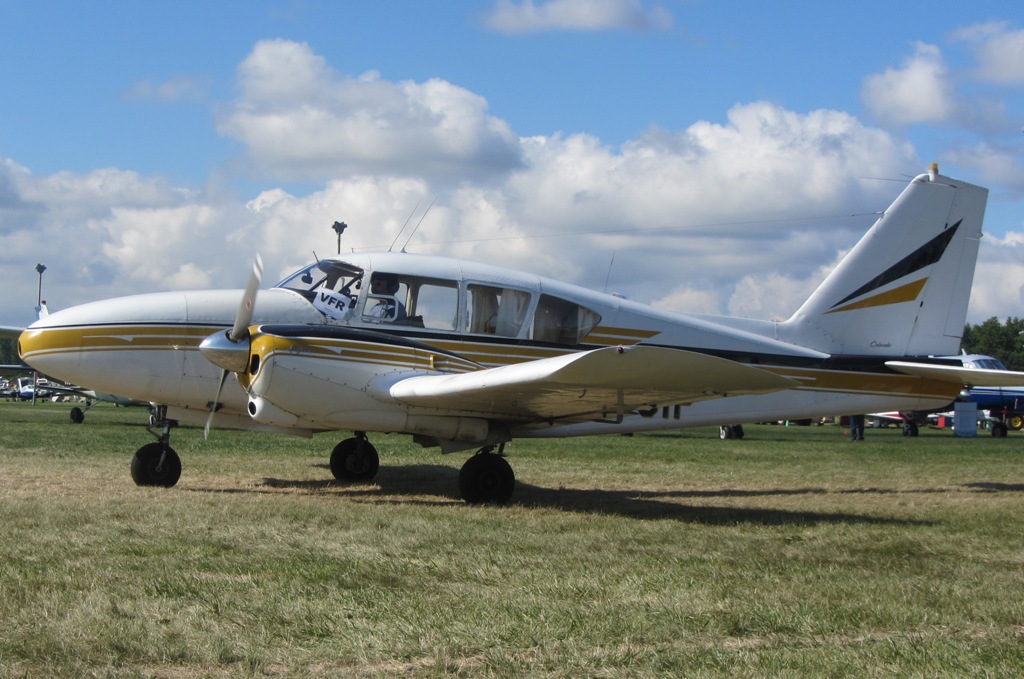



Seville Airport is selling off an abandoned Piper PA-23 Apache at a bargain price after eight years of failed attempts to reach the aircraft’s owner.
The four-passenger Apache model hails from the 1950s and was one of the first twin-engined tourist aircraft, built by American firm Piper, considered one of the “Big Three” general aviation manufacturers, alongside Cessna and Beechcraft. Nearly 7,000 PA-23 Apaches were produced in total between 1952 and 1981.
Now, one lucky aviation enthusiast has the chance to acquire an example of the aircraft for the price of a round of coffees. The plane, which has been at the southern Spanish airport since 2018, has been officially declared abandoned, allowing it to go up for auction, with bids starting at just €10.
European aviation law states that authorities must try to contact aircraft owners to recover the costs of storing the aircraft. Those avenues have been exhausted, officials said.
“We have tried to contact the owner many times,” a spokesperson for Seville Airport said. “Since we didn’t manage to reach anyone, the airport announced the situation of this aircraft three times in the Official State Gazette, in case the owner came forward to claim it.”
The plane has been described by Spanish airport authority AENA as in “bad condition, with the agency confirming to Euronews that it “cannot fly.” That means would-be purchasers will have to be prepared for potentially costly repairs, and even shipment.
Despite those liabilities, AENA is reported to have received numerous expressions of interest in the plane by email. Prospective buyers could include aviation fans, collectors of aviation memorabilia, and even people looking for an interesting real estate project.
But the Apache in question will have to compete in what is a crowded marketplace. Aircraft carcasses are a familiar scourge on airport tarmac, taking up valuable room in a pressured environment.
Like AENA, the Kenya Airports Authority (KAA), in charge of East African hubs, Wilson Airport and Jomo Kenyatta International Airport (JKIA) in Nairobi, has had to hold mass aircraft auctions to recover its costs. Meanwhile, one of the eeriest aircraft “boneyards” in the world sits in the Arizona desert within Davis-Monthan Air Force Base in Tucson. The Aerospace Maintenance and Regeneration Group (AMARG) is a large plot of land where more than 4,000 airplanes are kept and cannibalised for parts. At 10.5km2 in size, it is the largest aircraft graveyard in the US.