


A Mastercard survey conducted across 28 European countries in February revealed that nearly half of the 27,000 holidaymakers surveyed planned to acquire or improve a skill during their holiday. Gen Z travellers are leading the trend: 57% of 18–24-year-olds and 52% of 25–34-year-olds reported having already planned a dedicated skill-based trip this year.
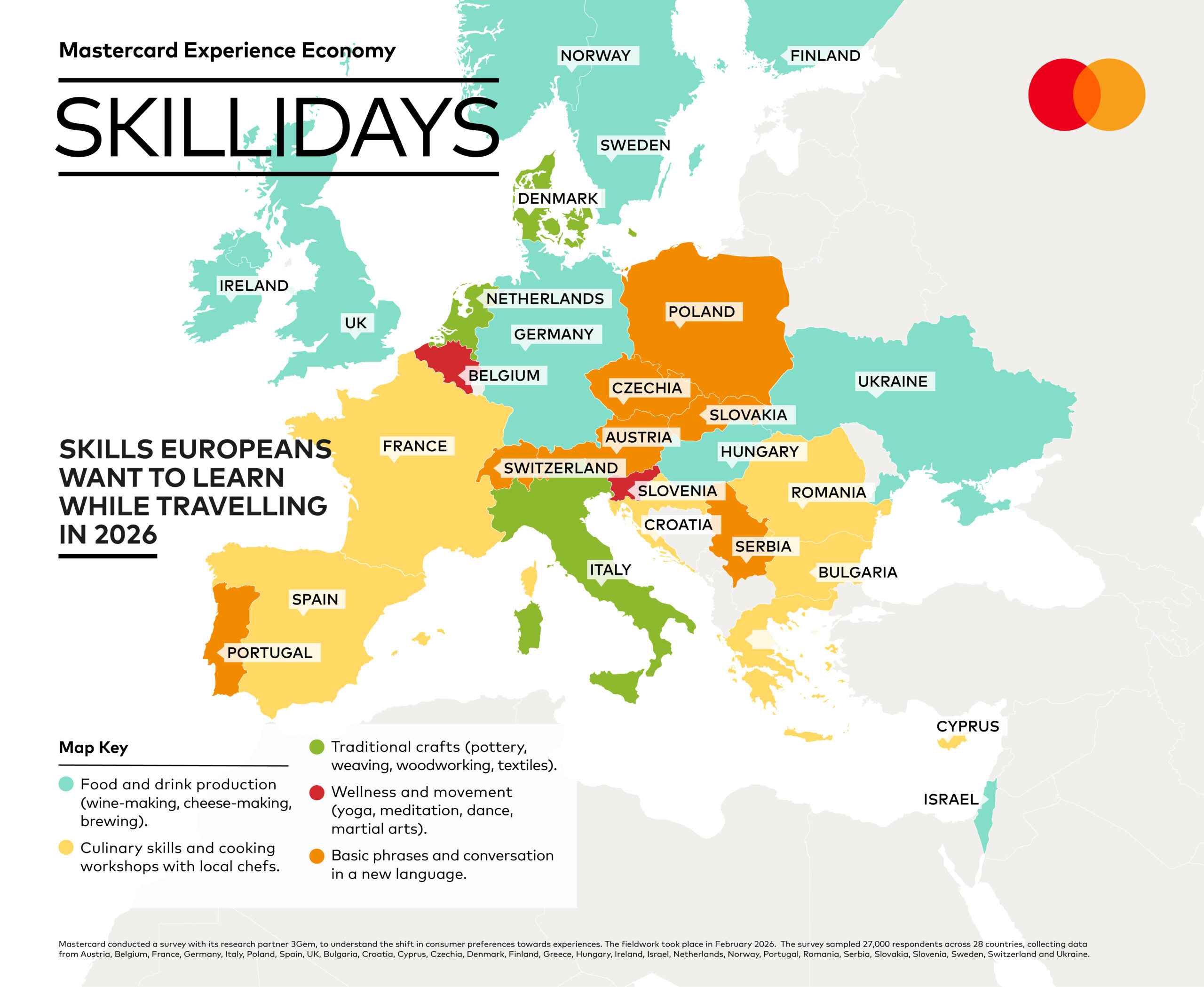
As the graphic shows, these are leisure or “soft” skills. This provides strong evidence of Jost Krippendorf’s forecast in The Holiday Makers, published in 1987, almost 40 years ago. Drawing on Maslow’s Hierarchy of Needs, Krippendorf wrote: “…we shall increasingly see emancipated tourists, tourists who have, so to speak, come of age. Their need for physical recreation (sleeping, eating, drinking) will decline in favour of the need for ’emotional recreation’ through activities and experiences which are not possible in everyday life. Many tourists are becoming more demanding. They take the satisfaction of their elementary needs, for instance, good food and comfortable lodging, more or less for granted. What they want to find now, in addition to this, is the satisfaction of social needs: contact with other people and self-realisation through creative activities, knowledge and exploration.”
As Krippendorf anticipated nearly four decades ago, tourists are increasingly seeking meaningful travel experiences. Mastercard’s survey found that 51% of travellers said holidays feel more meaningful when they learn something new, while 48% believe new skills are now “a more valued memento than souvenirs.”
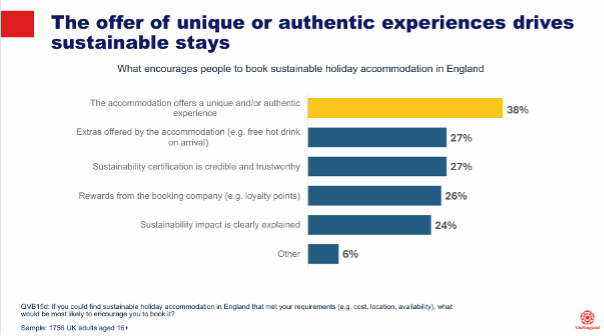
VisitEngland research published last year also investigated what encourages people to book sustainable holiday accommodation. The factor mentioned most frequently was the opportunity to enjoy “authentic experiences.”
Attractions can also provide opportunities for learning and skill development. The Scottish Crannog Centre, on the banks of Loch Tay, is a reconstructed Iron Age defensive dwelling built on stilts. Responsible tourism lies at the heart of the centre’s work, earning it Gold and Global Finalist recognition in the 2024 Responsible Tourism Awards.
“People come to learn about the past and find out what role it can play in our future. Aside from the crannog itself, we have a number of thatched buildings in which our team demonstrates traditional skills, such as weaving, blacksmithing and woodworking, to our visitors, keeping these crafts alive and introducing them to new generations,” explains Mike Benson, director of the Scottish Crannog Centre.
Emily Downes, a sustainable tourism consultant and former tour operator specialising in responsible tourism, argues that travellers are increasingly seeking “experience for money” rather than simply “value for money”. As she puts it, “Local knowledge, creativity and authentic experiences are often what create the greatest value for travellers – and these are precisely the areas where DMCs play a critical role.”
The focus is shifting from volume to value, from selling as many trips as possible to delivering the most meaningful experiences possible. In her ethical partnership guidelines, Downes argues that tour operators should recognise that destination management companies (DMCs) possess deep knowledge of logistics and the local landscape, acknowledge that itineraries are co-developed with local expertise, respect their intellectual property, and treat them as genuine partners.
For destinations, the challenge is no longer simply to attract more visitors, but to create the conditions for meaningful encounters that benefit both travellers and host communities. As Manisha Pande, Board Director of ICRT.global and Co-founder and Managing Director of Village Ways, argues, “a responsible tourism initiative is all about a community and the people with whom tourists will interact; the immersive experiences they will facilitate; and the memories they will help to create.” Ultimately, she concludes, “being able to instil trust, transparency, a sense of pride in local cultural practices, quiet confidence, and ensuring overall well-being are the building blocks that lay the foundation of any successful community-based responsible tourism ecosystem.”