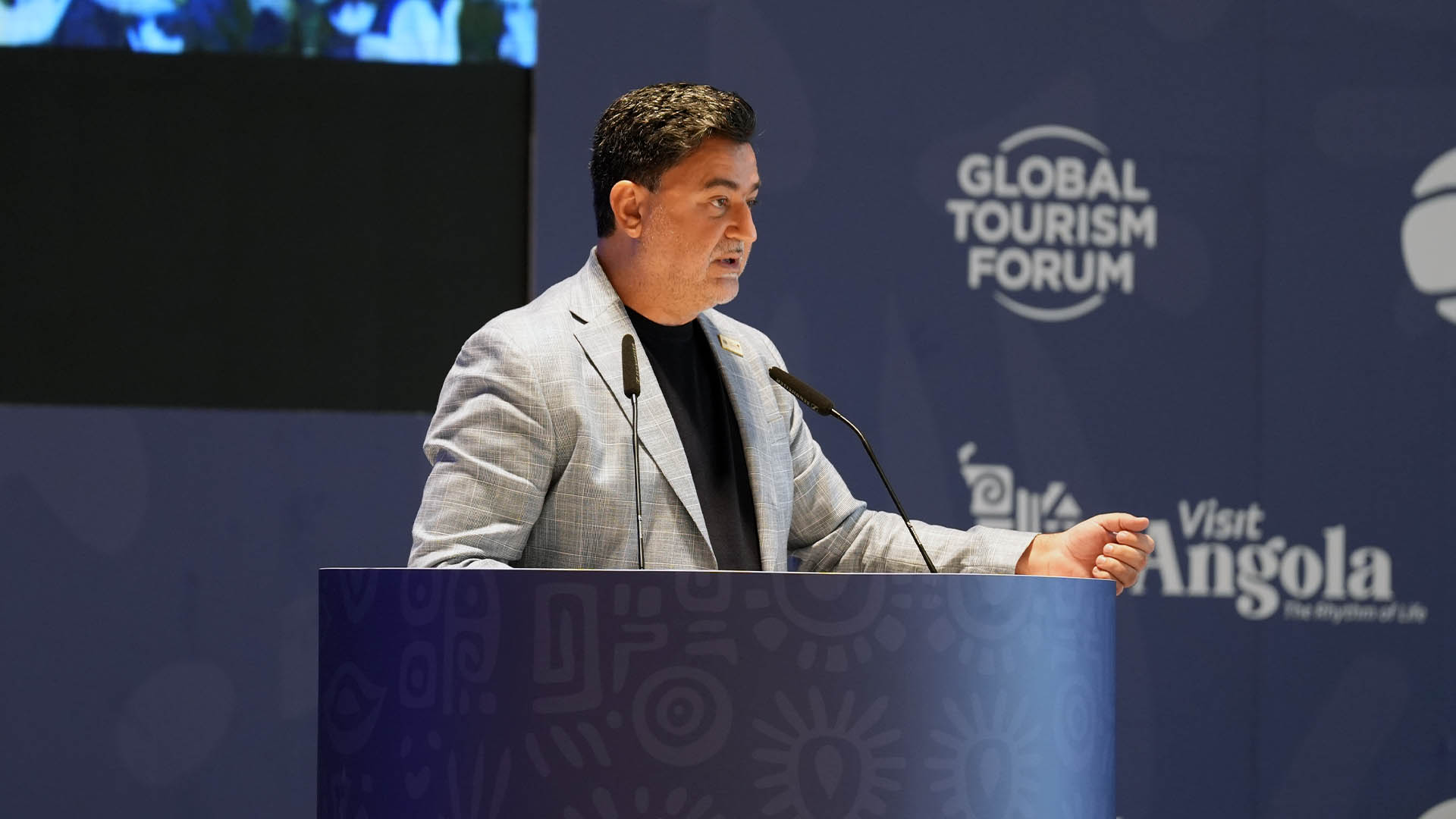

Yachts, floating destinations, and nautical tourism could unlock a new “blue economy” opportunity for the African continent, according to V-Marine Bahrain Founder and CEO Wael Joujou, speaking at Global Tourism Forum Angola.
During his keynote presentation, “Yachts & Floating Destinations: The Missing Tourism Asset of Africa,” at the summit in Luanda, Joujou said marine tourism remains underdeveloped around the world, despite strong demand.
For Angola, tourism has sometimes been described as “green oil,” but Joujou suggested that a country with one of Africa’s longest and most diverse coastlines, at 1600km, should also look to its “blue oil,” tapping into its ocean, coastline, and water-based resources.
Pointing out that if tourists were asked whether they would like to spend a night on a yacht, most would say yes, Joujou noted that only a small proportion of travellers have actually done so, highlighting that the tourism industry could better structure nautical tourism as an accessible, scalable product.
Yachting, he said, is still too often seen as exclusive and tricky to arrange, associated with private charters, marina operators, technical arrangements and “high barriers to access,” but booking a yacht-based overnight experience could and should become as simple as booking a hotel, villa or resort room.
Nautical tourism could become “simple, visible and bookable,” Joujou said, moving from a niche luxury segment into a major new category of global tourism. Yet, his words come as premium and luxury travel experiences are seeing a surge, meaning there is a balance for stakeholders to strike between creating an offer that can be seen as aspirational, while making it attainable.
Continuing on the theme of accessibility, Joujou said tourism developers have tended to treat the ocean as a backdrop, entering into what he called a “vertical paradox,” where a small strip of waterfront becomes expensive and desirable, while the marine environment that lies beyond remains underused.
Instead, he said, floating hotels, yacht stays, overwater villas, floating beach clubs, marina destinations, and water-based terminals could all generate tourism value, permitting destinations to expand their hospitality capacity beyond conventional land-based development. The Maldives, Venice, Amsterdam, and Monaco all provide prime examples of a “water-based signature” that can solve land limitations and avoid overbuilding on fragile coastlines, and that Angola could emulate.
The technology and concept for such floating assets already exist, Joujou noted, but now need to be designed in varied sizes and styles, with diverse investment formats, depending on the market, to facilitate commercialisation.
Connectivity was another challenge identified by Joujou during the speech, but emerging marine transport technologies could change that, he said, pointing to new battery-powered vessels and seaglider-style technologies that are as practical and speedy as a taxi service.
For Africa, avoiding the perception that complex transfer services are required to reach remote nautical destinations could be transformative, Joujou said, underlining the work his firm, V-Marine, is doing in relation to floating terminals as part of the next phase of marine tourism infrastructure that means beach clubs and resorts no longer have to be attached to land.
For Angola, Joujou said, floating terminals present an opportunity to avoid copying traditional resort models and to innovate from the start as a nation capturing attention and capital through a coastline that is vast, visually powerful, and largely unknown to international travellers.
Joujou called on policymakers and investors to see blue water not as the “end of the land” but “the beginning of a new tourism activity” that could become a pillar of Angola’s tourism future.