



International tourism across OECD countries reached a new record in 2025, but the sector faces mounting pressure from geopolitical instability, climate-related disruptions and changing traveller behaviour, according to the latest OECD Tourism Trends and Policies 2026 report.
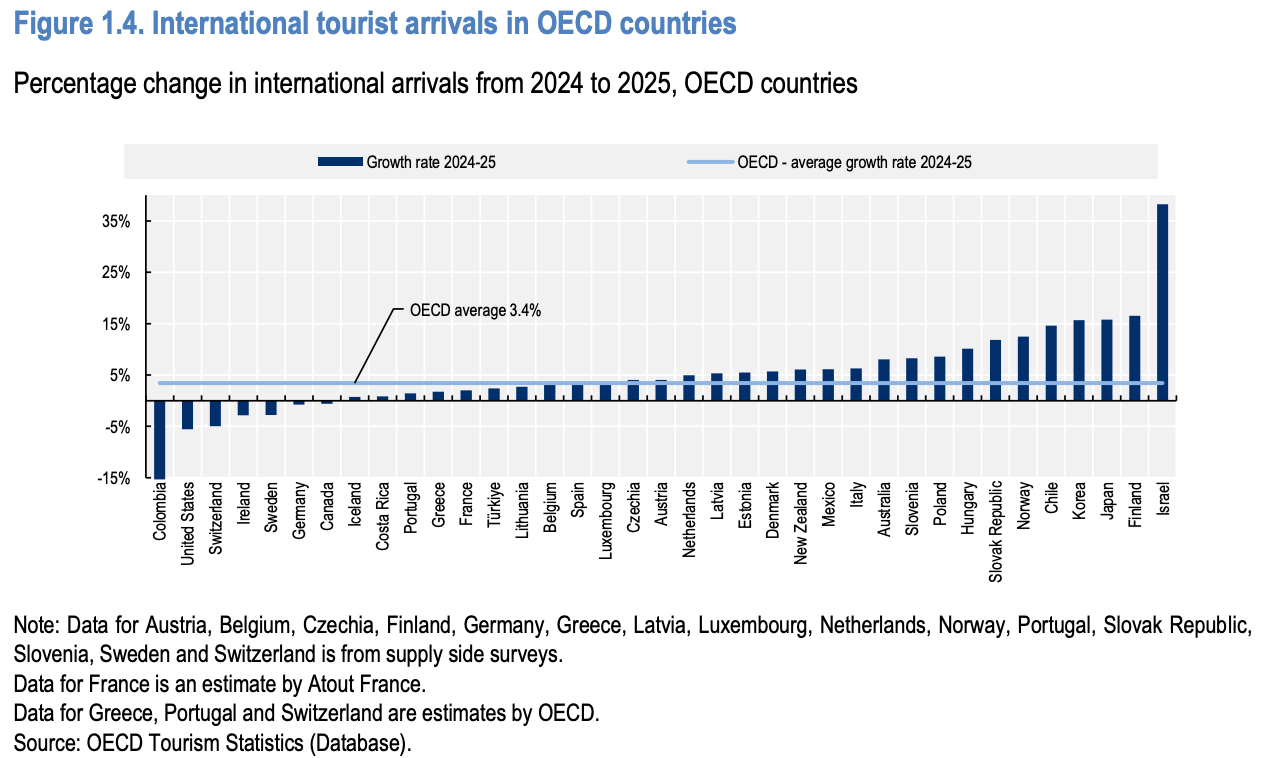
International tourist arrivals to OECD countries increased by an estimated 3.4% in 2025, reaching a record 847 million visitors, following an 8.1% increase in 2024 when arrivals surpassed pre-pandemic levels for the first time.
While demand remains strong, the report warns that tourism is entering a period of heightened uncertainty, requiring governments and businesses to shift their focus from simply attracting more visitors to managing destinations more sustainably and building resilience against future shocks.
“Tourism continues to grow, generating business opportunities, jobs and tax revenues across the OECD,” said OECD Secretary-General Mathias Cormann.
“Governments and businesses need to work together to sustain this growth and build resilience. This means applying the lessons of the pandemic and the conflict in the Middle East to strengthen crisis preparedness, and managing tourism and visitor flows to ensure the sector delivers lasting benefits.”
Geopolitical tensions reshape travel patterns
According to the report, the conflict in the Middle East has already disrupted international travel flows, increased operating costs and weakened traveller confidence.
Countries in the region have been the hardest hit, alongside destinations that rely heavily on Gulf aviation hubs for connectivity. The OECD expects these effects to continue in the near term, despite recent diplomatic efforts to restore confidence.
Safety concerns, affordability and the risk of cancellations are increasingly influencing travellers’ decisions. As a result, many tourists are opting for destinations perceived as safer and more familiar, choosing shorter holidays and lower-cost travel options.
The OECD says airlines, tour operators and destinations will need to anticipate these changing patterns as they plan for 2027 and beyond.
Strong performers and lagging markets
Performance varied considerably across OECD countries in 2025.
Finland recorded the strongest growth in international arrivals, up 16.5%, followed closely by Japan (15.8%), South Korea (15.7%) and Norway (12.5%).
Japan and South Korea continued to benefit from the momentum created in 2024, when inbound tourism surged by more than 47% in both countries, supported by expanded air connectivity and the weak Japanese yen.
Not every destination shared in the recovery.
International arrivals declined in Canada (-0.6%), Germany (-0.8%), Ireland (-2.8%) and the United States (-5.5%), with all four countries remaining below pre-pandemic levels. Tourism to Israel continues to be severely affected by regional conflict, with inbound arrivals still down more than 70% compared with before the pandemic.
From tourism promotion to tourism management
Beyond the headline figures, the report argues that tourism policy is undergoing a fundamental shift.
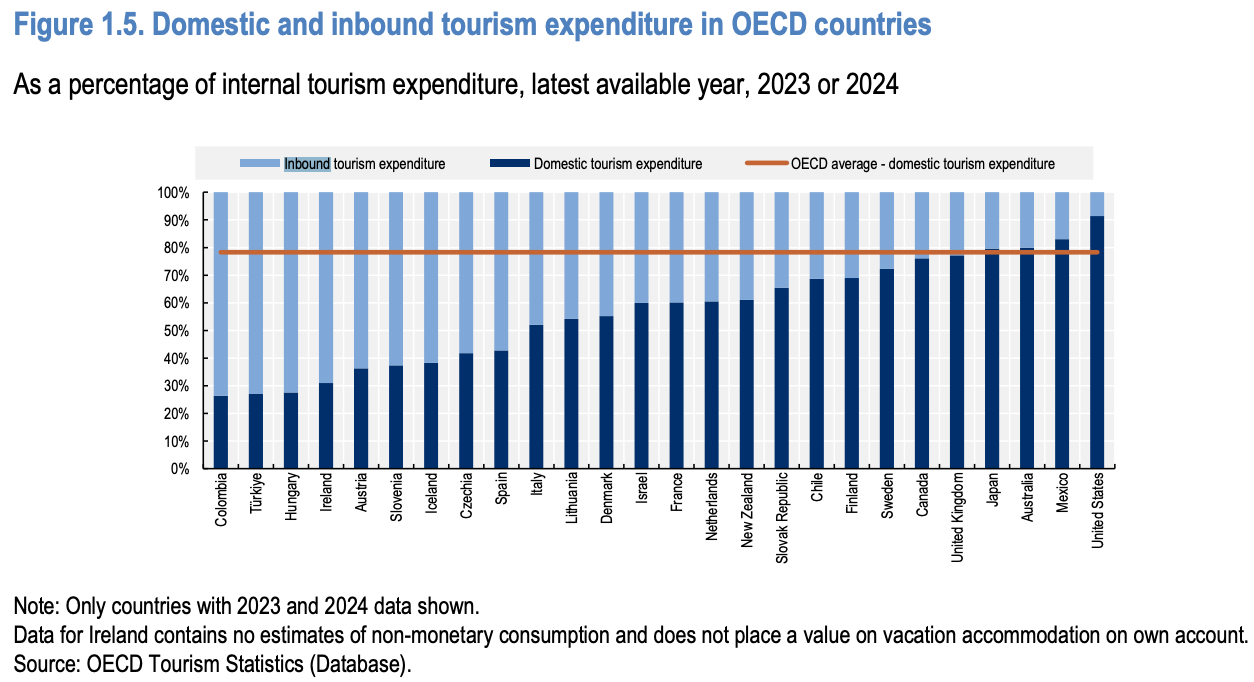
Rather than measuring success purely by visitor numbers, governments are increasingly focusing on how tourism can deliver lasting economic benefits while protecting local communities and the environment.
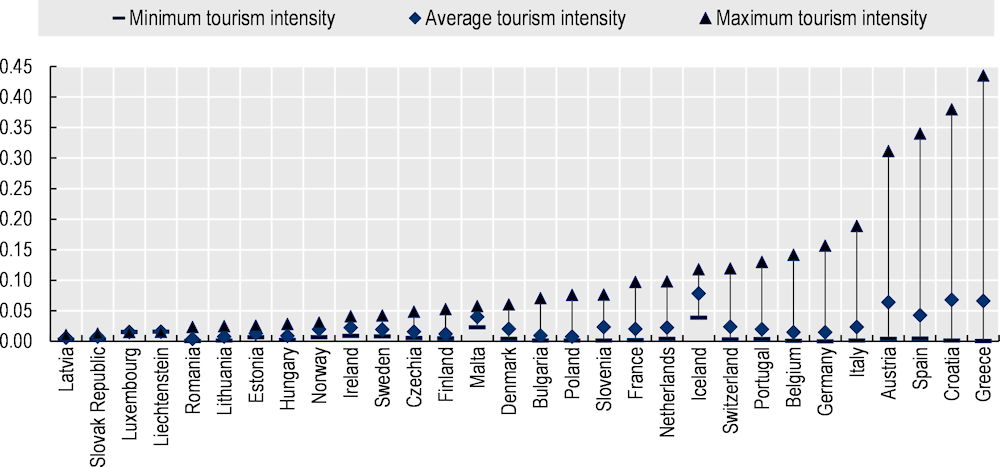
Destination management, visitor flow distribution and resilience are becoming central policy priorities, particularly as overtourism places increasing pressure on infrastructure in some locations while other regions remain under-visited.
The report also highlights the growing importance of digitalisation and artificial intelligence, which are enabling destinations to improve planning, analyse visitor flows in real time and provide more personalised travel experiences.
Governments are also investing in more sophisticated tourism data systems to support evidence-based decision-making.
To support businesses, the OECD recommends reducing regulatory burdens, improving access to finance, investing in workforce skills and accelerating both digital and sustainable transitions.
Climate resilience moves up the agenda
The report identifies extreme weather-related events as one of the sector’s most significant long-term challenges.
As heatwaves, floods, wildfires and storms become more frequent, governments are being urged to integrate climate risk assessments, early warning systems and crisis planning into tourism strategies.
The OECD also calls for greater investment in resilient tourism infrastructure, including nature-based solutions, while helping tourism businesses develop the skills needed to adapt to changing environmental conditions.
EU prepares new sustainable tourism strategy
The report was launched with support from the European Commission, as the institution prepares its upcoming EU Strategy for Sustainable Tourism.
In a statement accompanying the publication, the Commission stressed that tourism is “no longer just about attracting visitors” but about managing destinations in ways that benefit residents, businesses and the environment alike.
Speaking at the report’s launch, European Commissioner for Sustainable Transport and Tourism Apostolos Tzitzikostas and Deputy Director-General Maja Bakran highlighted the need to move from tourism promotion towards smarter destination management.

According to the Commission, this includes balancing economic growth with environmental protection and residents’ quality of life, improving the use of data and digital tools, strengthening governance across all levels of government and building a more resilient tourism sector that preserves Europe’s natural and cultural heritage while benefiting local communities.
The OECD concludes that maintaining tourism’s strong economic contribution will depend less on attracting ever-growing visitor numbers and more on managing growth effectively, improving resilience and ensuring that tourism delivers long-term value for destinations and the people who live there.