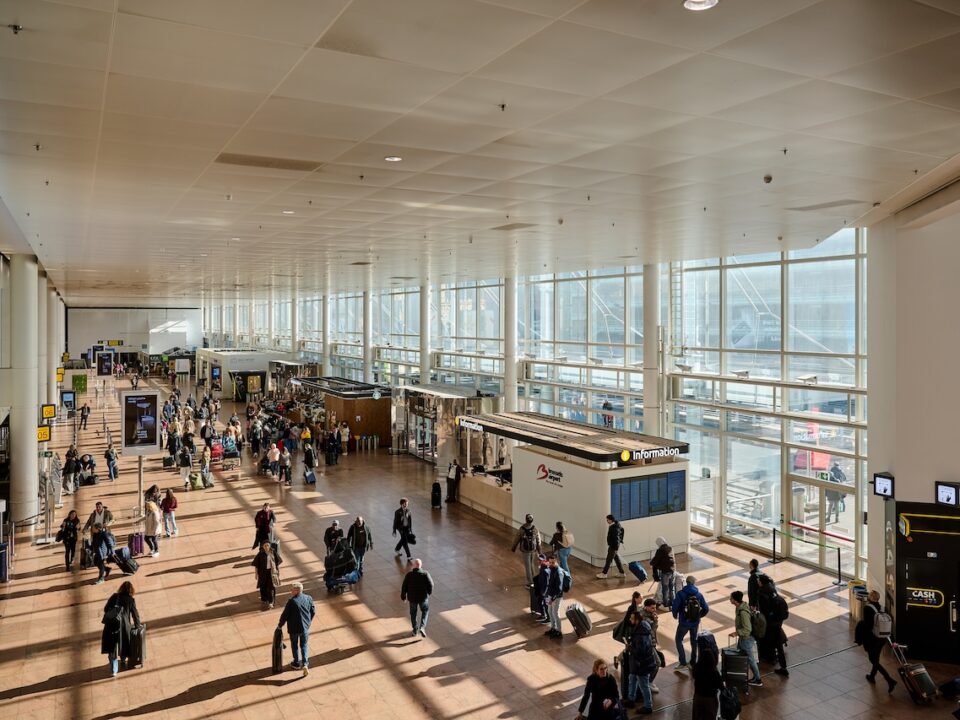



Rome could become the latest destination to press pause on the European Union’s new border controls, due to concerns over their impact on airport operations and holidaymakers during the height of the summer season.
The Entry/Exit System (EES) was phased in between autumn 2025 and spring 2026, and is now supposed to be in force at border checkpoints all over the bloc, requiring travellers from third countries to register biometric information such as facial images and fingerprints so that their movements can be easily tracked and security is enhanced.
Palermo airport has just 1 border policeman processing hundreds of passengers and only just opened the e-gates for EU passport holders after huge queues – make sure you have at least 3 hours in hand! #brexit #EES pic.twitter.com/8rJ5RRsMaa
— Rajeeb Dey MBE (@rajdey) June 28, 2026
But the introduction of the EES has seen episodes of chaos at airports and ports across the union, including Humberto Delgado airport in Lisbon, where extra law enforcement has had to be deployed to manage mass queues, and in Milan, where a flight to Manchester hit the headlines for having to leave over 120 passengers behind when they were delayed by EES processes.
In May, after the official 10 April deadline for full implementation, the European Commission extended the period of flexibility for hubs to pause EES registrations temporarily to ease operational challenges until September 2026.
But with even European security stakeholders such as Frontex director Uku Särekanno warning that EES-related disruption could last as long as two years, and industry bodies warning the cost to the European sector could be over €45 billion in visitor spending, Greece has already taken the unilateral decision to suspend EES checks in an effort to ensure its tourism sector and border points continue to operate smoothly over the summer.
Now the head of Rome’s airport management has said the Italian capital will do the same, in order to avert disaster. “We are very worried for the summer,” said Marco Troncone, the chief executive of Aeroporti di Roma, which operates Fiumicino and the smaller Ciampino airport, speaking to the Financial Times. “The process proves to be incompatible with the peak volumes that we are going to face. So the only way is to open up the valve. There is no way that we can deliver 100% of the enrolment.”

However, Stefan Schulte, president of the European airports trade body, ACI Europe, has said in comments to the BBC that any suspension of the border system should be a matter for governments to decide, not individual transport hubs.
To make matters worse, with such conflicting statements emerging from actors across Europe’s travel industry and increasingly inconsistent application of the rules from country to country (and even between hubs in the same nation), the disruption, inconvenience, and lack of clarity to travellers risks getting worse.