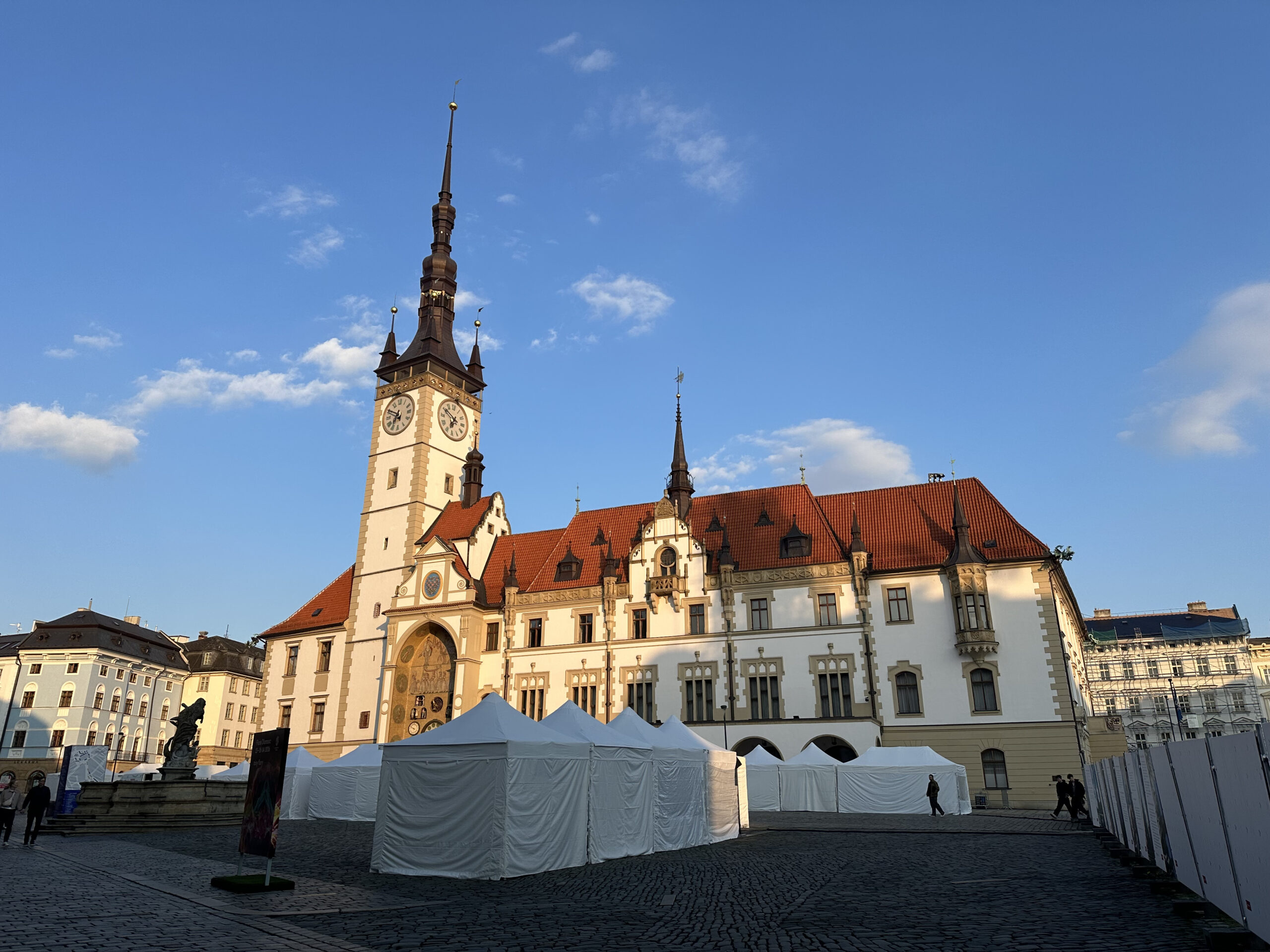



“Swedish destruction and Italian reconstruction” — that’s how the guide started our city tour around Olomouc, a former royal capital of Moravia and a jewel of Czech history.
Olomouc was designated as the official capital of Moravia by King John of Luxembourg in 1314, and back then it was the centre of religious and royal power. From 1642 to 1650, when Swedish armies conquered and devastated Olomouc during the Thirty Years’ War, the city lost its capital status, but the destruction ultimately paved the way for a remarkable architectural rebirth.
While preserving the medieval street layout, the city gradually developed a new visual identity, as impressive churches, palaces and civic buildings rose across the historic centre in a distinctive local interpretation of the Baroque style later known as “Olomouc Baroque.”
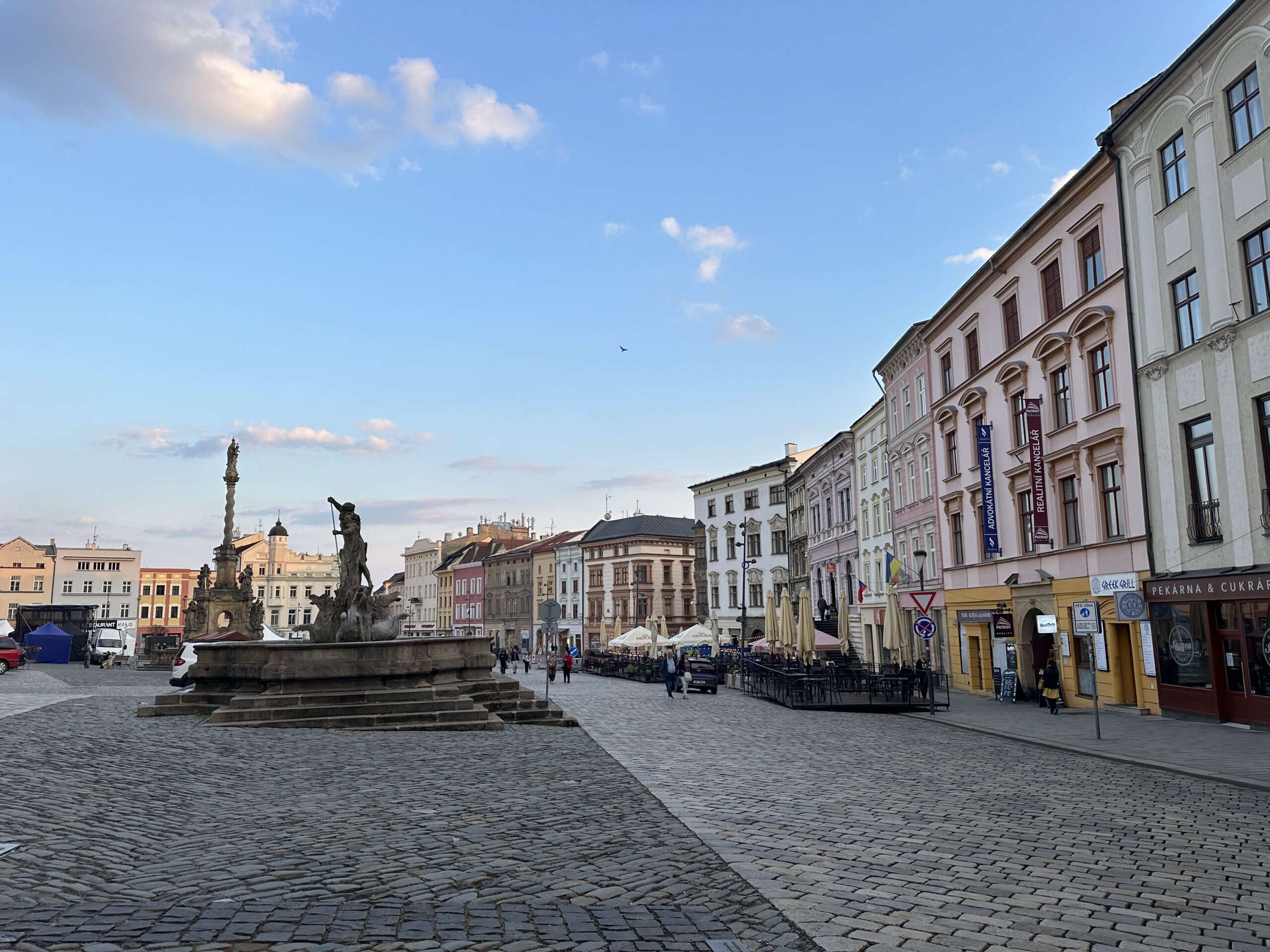
In the centuries that followed, city streets and squares were reshaped through religious, academic, and civic development, reflecting Moravia’s historical evolution. That legacy remains visible today, with UNESCO-listed landmarks forming part of an urban landscape. Here, travellers can trace history through the streets and explore centuries of architecture within a walkable centre.
Arriving in the historic core, the sense of scale is immediately distinct, as the streets reveal a layered mix of Gothic, Renaissance and especially Baroque influences.
One of the most prominent landmarks at the main square is the Holy Trinity Column, a monumental baroque structure recognised by UNESCO as a World Heritage Site. Built in the early 18th century, it stands not only as an artistic and religious statement but also as a symbol of civic pride and post-plague devotion.
The monument features three tiers. The top features the Holy Trinity, while lower levels depict archangels, saints associated with Jesus’ earthly life, and local Moravian patrons. Built over nearly four decades between 1716 and 1754, the Holy Trinity Column became both a masterpiece of local craftsmanship and a symbol of Moravian faith, gratitude and patriotism, as the citizens of Olomouc insisted on employing local artisans and honoured Czech identity through statues of Saint Wenceslas and Saint Adalbert.
From the square, a short walk leads toward Olomouc’s distinctive collection of Baroque fountains, another defining feature of the city’s historic identity. Created in the 17th and 18th centuries, this rare ensemble of six monumental fountains is adorned with elaborate stone sculptures depicting figures from classical mythology, including Neptune, Jupiter, Hercules, Mercury, Triton and the historical figure Julius Caesar.
The Caesar Fountain (Caesarova kašna) is closely tied to a long-standing local legend. Although Julius Caesar never visited Moravia, local elites and intellectual circles promoted the idea that the city traced its origins back to him, using this origin myth to elevate its prestige and shape the historic centre around the symbolic concept of a “Moravian Rome.”
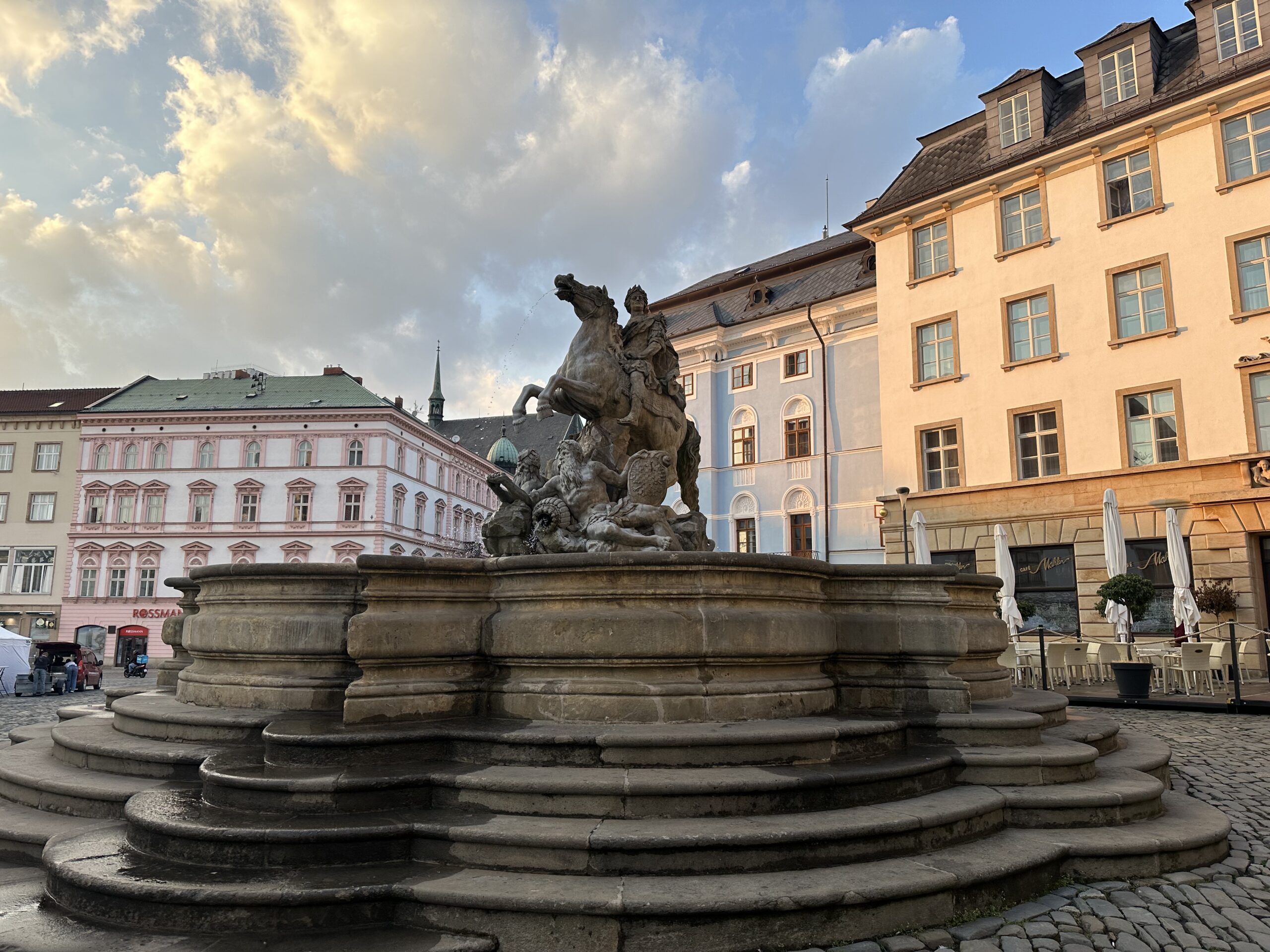
Created by sculptor Jan Jiří Schauberger, the fountain features a striking depiction of Gaius Julius Caesar on a rearing horse. The dynamic composition draws inspiration from Gian Lorenzo Bernini’s equestrian statue of Emperor Constantine the Great in the Vatican. As the largest and most complex fountain in Olomouc, it presents Caesar prominently facing Michael’s Hill, traditionally associated with a supposed Roman camp.
Religious architecture is one of Olomouc’s key highlights. The silhouette of the Saint Wenceslas Cathedral stands among the city’s most prominent landmarks, with its soaring Neo-Gothic towers dominating the skyline. Originally founded in the 12th century as a Romanesque basilica, the cathedral was extensively rebuilt in the Gothic style following a major fire in the 13th century before acquiring its present Neo-Gothic appearance during a major reconstruction between 1883 and 1892, reflecting centuries of architectural evolution and Moravia’s enduring religious significance.
Its southern tower rises to 100.65 metres, making it the tallest church tower in Moravia and the second tallest in the Czech Republic, while the cathedral itself is also remembered as the site linked to the assassination of King Wenceslas III in 1306.
Just a short walk from the Cathedral of St. Wenceslas, the Archbishop’s Palace houses its largest and most architecturally significant hall, known for its richly decorated interior. The space is distinguished by 18th-century Baroque stucco ornamentation on the ceiling, designed by Josef Hladík, complemented by gilded detailing and a monumental portrait of Cardinal Rudolph Johann Habsburg.
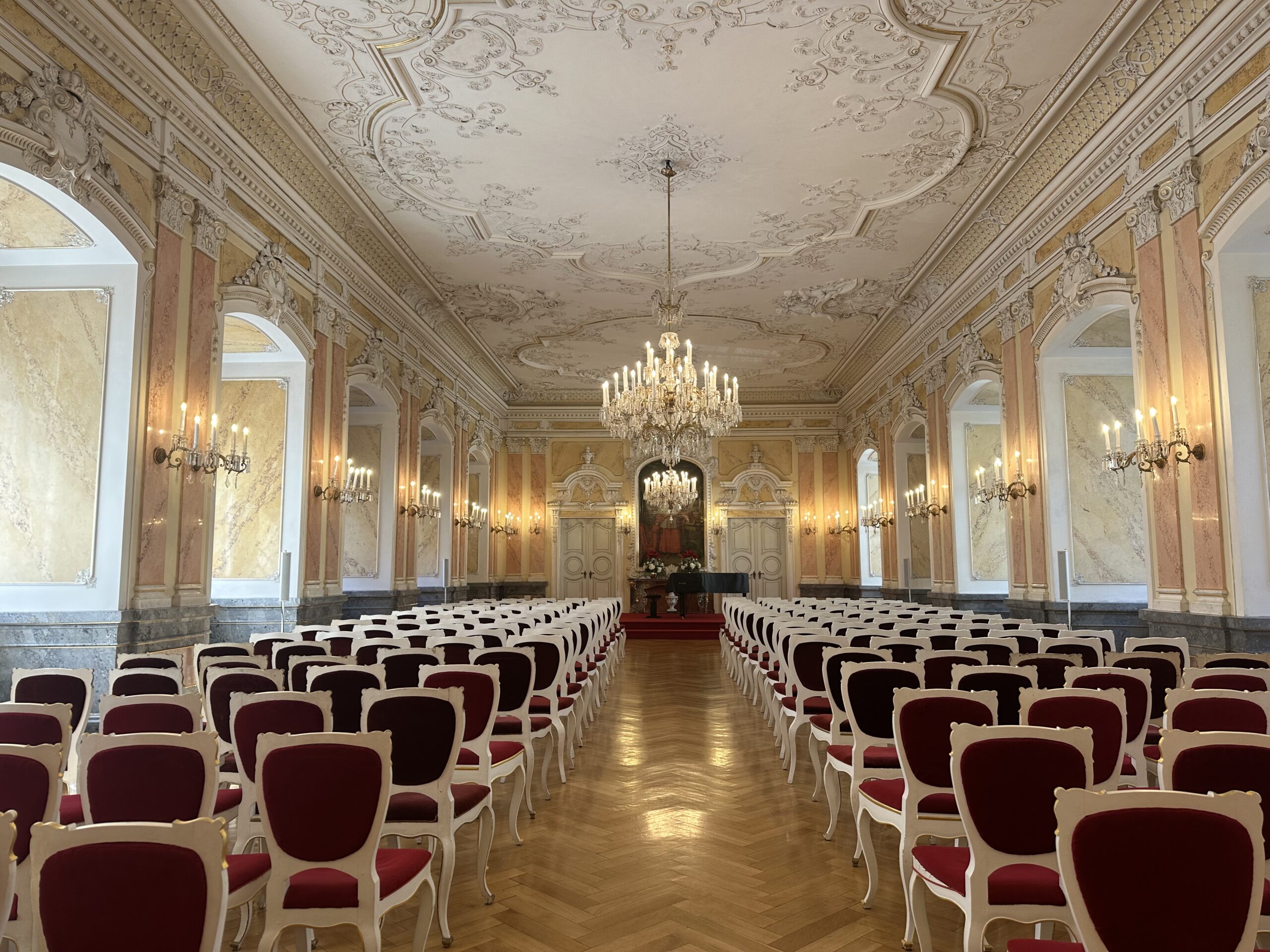
The hall also carries notable historical associations, having hosted prominent European figures, including Empress Maria Theresa, Emperor Franz Joseph I and Pope John Paul II, reflecting the palace’s long-standing role in political and ecclesiastical life. Today, it continues to serve a public function, hosting classical music concerts, university graduation ceremonies and official city award events.
Walking through the old town, visitors encounter the astronomical clock on the town hall facade, a reminder of the city’s historical civic identity, which reflects a blend of craftsmanship and public storytelling tradition. Created in the 15th century, the clock was heavily damaged during the Second World War and later rebuilt in the 1950s in the Socialist Realist style, making it one of the few astronomical clocks in Europe to feature workers, athletes and ordinary citizens instead of religious figures.
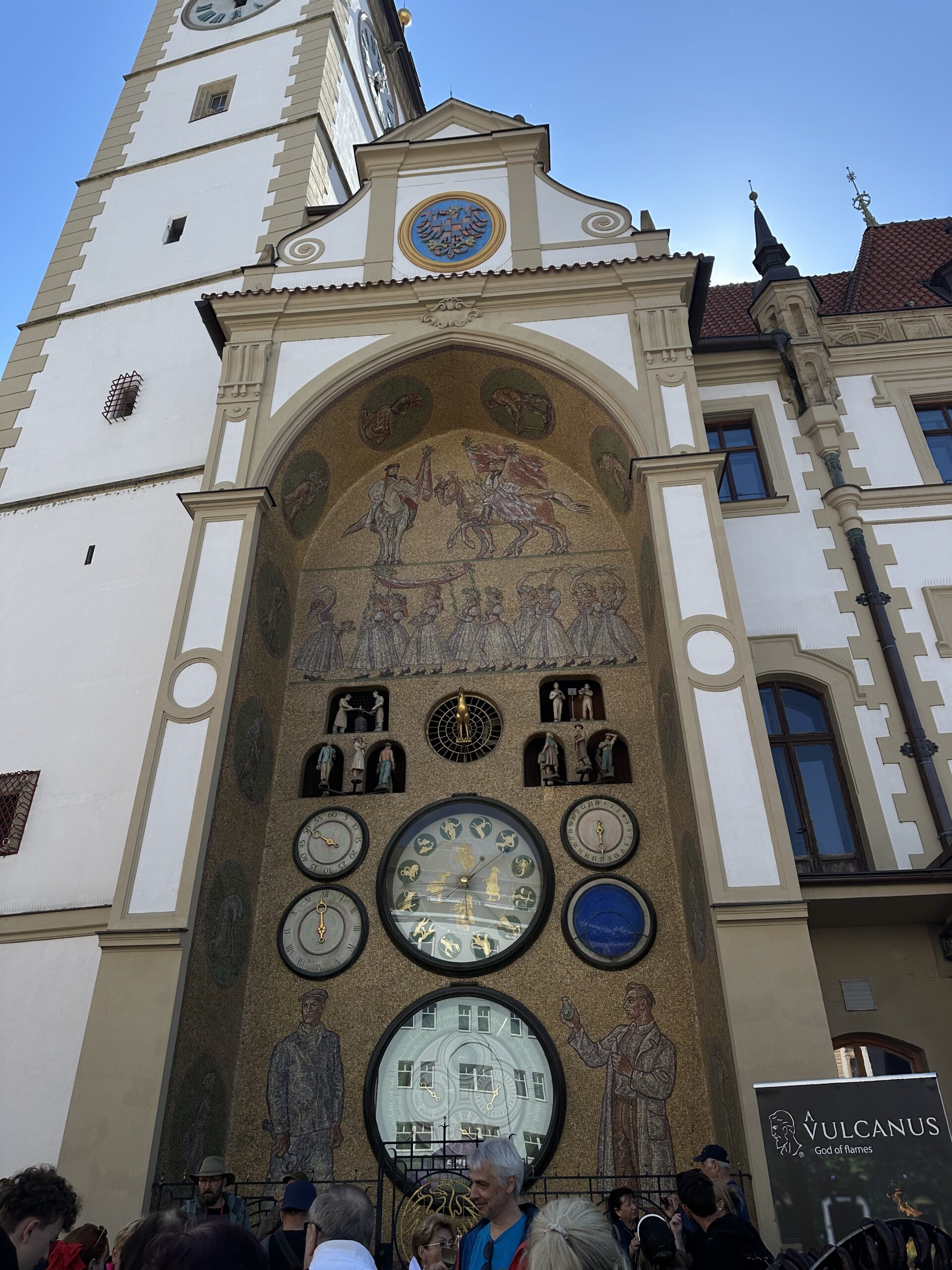
The surrounding town hall complex, with its Gothic origins and later modifications, reinforces the civic importance of the square as both an administrative centre and a public gathering point. Even today, it remains a venue for markets, celebrations and seasonal events, including local festivals.
The region is also known for its distinctive culinary tradition, most notably Olomoucké tvarůžky (Olomouc cheese), a strongly aromatic ripened cheese with deep local roots that is widely regarded as a regional specialty and cultural symbol of Moravia. It was surprising to learn that even McDonald’s offers a special burger featuring this cheese.
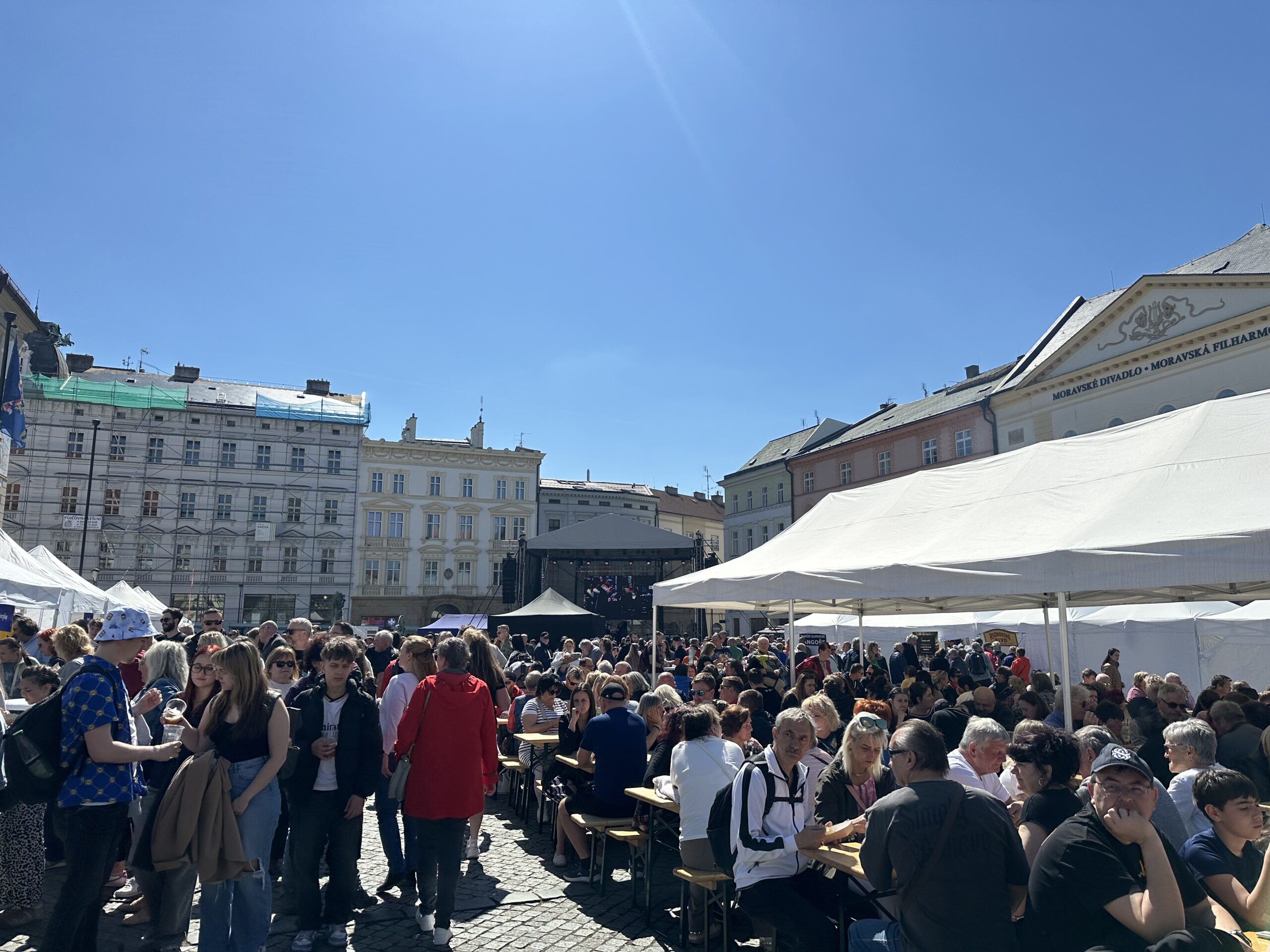
During an April visit, tourists can experience the Tvarůžky festival at Upper Square, a large open-air gathering where locals set up food stalls to celebrate Olomoucké tvarůžky cheese, which is featured across a range of dishes. On this day, the area is filled with locals, music and dancing, creating a lively public atmosphere.
Close to Olomouc, and conveniently located for travellers on the way to and from Prague, Bouzov Castle is another popular stop for exploring central Moravia. Rising above the surrounding forests, Bouzov Castle is one of the most picturesque medieval-style castles in the country, although its current romantic appearance largely comes from a later Neo-Gothic reconstruction. With its towers, drawbridges, and carefully restored interiors, it has long been associated with a fairytale atmosphere and is frequently used as a filming location for Czech fairy-tale films and historical productions, including Princess Jasnenka and the Flying Shoemaker.
Bouzov Castle was built in the late 13th century, with its earliest recorded owners linked to Moravian noble families. Its first recorded owners were the minor aristocratic Bůz of Bludovec family (from whom the castle derives its name), followed by other powerful Moravian dynasties like the Lords of Kunštát. Over the centuries, it changed hands several times and was extensively rebuilt in a Neo-Gothic style at the turn of the 19th and 20th centuries, giving it its current romantic, fairytale appearance.
A day in Olomouc does not attempt to compete with larger European capitals in scale or spectacle. Instead, it offers density of meaning, where architecture, history and culture are tightly intertwined. From its Baroque fountains and grand religious architecture to its civic squares and culinary traditions, the city reflects centuries of cultural, spiritual and political change in Czechia. For visitors looking to avoid the crowds, it also offers a quiet escape and a starting point for exploring the Moravian region and its surrounding areas.