


Some countries are blessed with beauty. Others are defined by strategic potential. Nepal is increasingly becoming both.
For decades, Nepal has occupied a rare place in the global imagination. It is a country synonymous with Mount Everest, spiritual depth, Himalayan majesty, and a sense of wonder that few destinations can replicate. But in a global tourism economy now shaped as much by long term value as by natural appeal, Nepal deserves to be viewed through a far more serious lens: not simply as an extraordinary place to visit, but as one of Asia’s most intriguing tourism investment frontiers.
What gives Nepal this edge is not only its iconic geography. It is the country’s unusual ability to combine adventure, spirituality, culture, heritage, wildlife and community based hospitality within a single national identity. Very few destinations can credibly serve so many travel motivations at once. Nepal can appeal to the trekker, the pilgrim, the wellness traveller, the cultural explorer and the investor looking beyond saturated tourism markets. That breadth is not just a branding advantage. It is an economic one.
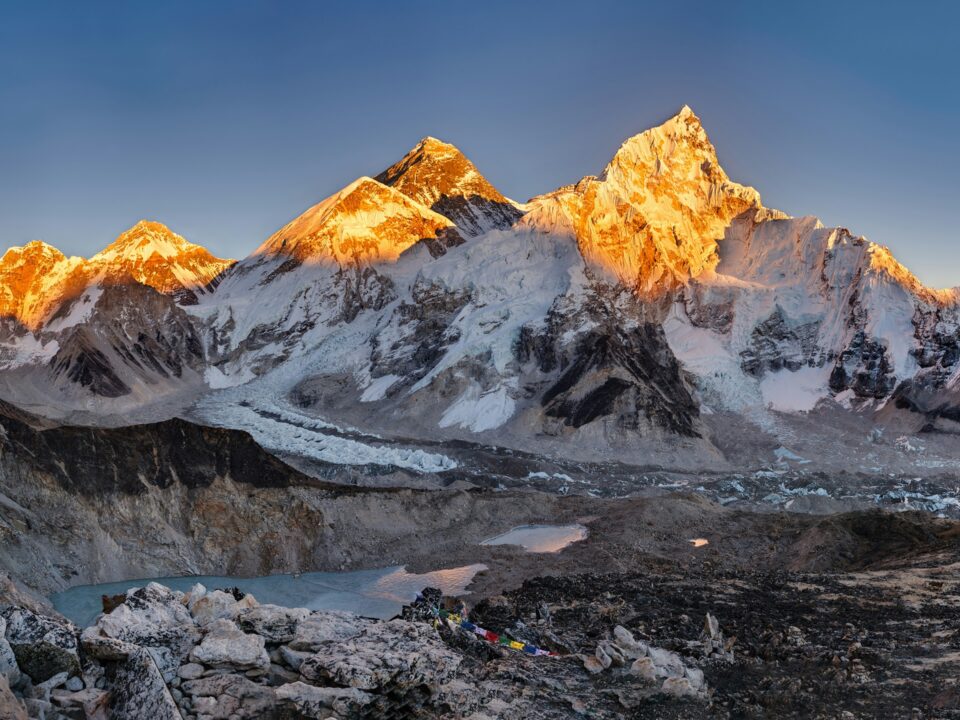
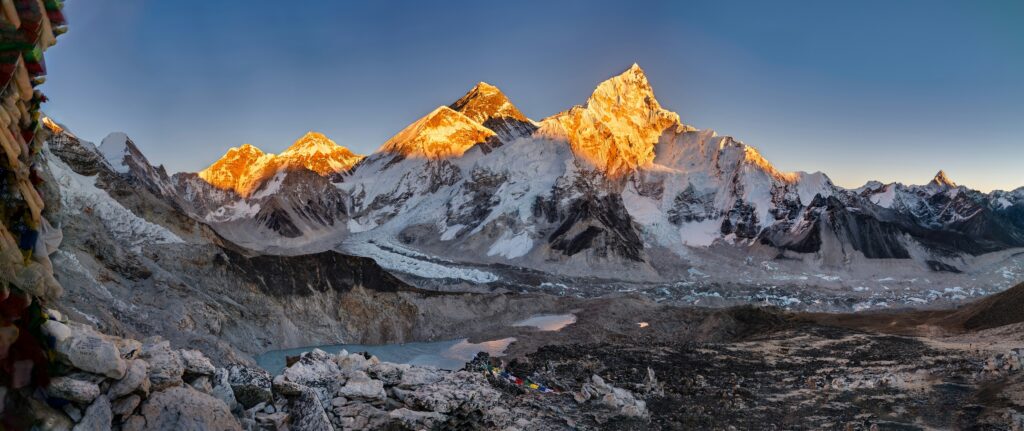
Lumbini and Mount Everest alone would already give Nepal a powerful position in world tourism. One is among the most spiritually significant places on earth, recognised as the birthplace of Lord Buddha. The other remains the ultimate global symbol of exploration, endurance and human ambition. Together, they form a rare duality: a destination grounded both in transcendence and aspiration. That kind of symbolism matters in tourism because the strongest destinations do not merely attract travellers. They command emotional meaning.
Yet Nepal’s real depth goes beyond landmarks. Nepal Tourism Board describes the country as home to about 101 ethnic groups speaking over 92 languages, an extraordinary degree of diversity for a nation of its size. This is one of Nepal’s most underappreciated tourism assets. Diversity here is not a slogan; it is embedded in festivals, architecture, cuisine, ritual life, crafts, music and local hospitality traditions. For modern tourism, that creates something immensely valuable: authenticity with layers.
Its geography adds another strategic dimension. Within a relatively compact national footprint, Nepal stretches from lowland environments to some of the most dramatic alpine terrain in the world. This physical range helps explain why Nepal can support such a wide tourism spectrum, from nature and wildlife to trekking, pilgrimage and mountain wellness. In an age when travellers increasingly seek multidimensional experiences rather than single purpose holidays, Nepal’s geographic diversity becomes a business advantage as much as a scenic one.
@breterlop One of those places I never stop thinking about 🇳🇵 From trekking in the Himalayas to completing a silent retreat, seeing wild rhinos on a walking safari, & exploring Kathmandu- Nepal was one for the books • #travel #traveltok #traveltiktok #nepal #nepalitiktok #nepaltravel #trek #mardihimaltrek #himalayas #annapurna #silentretreat #backpacking #solotravel #solofemaletravel ♬ original sound – 🤍
Crucially, momentum is no longer hypothetical. Nepal Tourism Board reported that April 2025 was the strongest April on record for international arrivals, with 116,490 visitors, while the first four months of 2025 brought total arrivals to 415,048. Just as notably, April 2025 surpassed the pre-pandemic April 2019 benchmark. These figures suggest that Nepal is no longer simply recovering. It is reasserting itself.
That matters because investment stories become compelling when narrative meets timing. Nepal already possesses global recognition, emotional brand equity and clear differentiation. What it still has, and what many mature destinations no longer do, is room to build. In much of the world, premium tourism investment now means entering crowded, expensive, highly competitive markets. Nepal offers a rarer proposition: global fascination paired with underdeveloped upside.
Its medium term direction reinforces that promise. Public facing sources point not to a formal “Tourism 2040” doctrine, but to the Nepal Tourism Decade 2023–2032 vision, under which the country aims to attract 3.5 million annual visitors by 2032. That target is significant not because it signals scale alone, but because it reflects intent. Nepal is positioning tourism not as a passive byproduct of beauty, but as a structured national growth engine. For investors, 2040 is therefore best seen not as an official policy label, but as a strategic horizon built on the country’s current trajectory.
For foreign investors, the attraction is clear. Investment Board Nepal explicitly identifies tourism as a priority opportunity area, particularly across adventure, cultural, religious and MICE tourism. It also stresses the need for private sector participation in closing infrastructure and service gaps. That is the language investors pay attention to. It signals that Nepal’s next tourism chapter will not be built by promotion alone. It will be built through capital, design, execution and confidence.
This is where the real opportunity lies. Nepal is not simply looking for more visitors. It is implicitly making the case for better products, stronger infrastructure and higher value experiences. Premium hospitality, wellness and spiritual tourism concepts, pilgrimage linked infrastructure, destination mobility, resort led development and upgraded visitor services all sit naturally within that opportunity set. That is an inference from official priorities rather than a quoted government checklist, but it is a commercially logical reading of where value can be created.
The institutional story also matters. Nepal’s Department of Industries states that foreign investment is governed by FITTA 2019 and the Industrial Enterprises Act 2020, while Investment Board Nepal presents itself as a high-level body chaired by the prime minister and tasked with creating an investment-friendly environment. No emerging market is without friction, of course. But serious investors are more likely to engage when opportunity is anchored in institutional architecture rather than promotional rhetoric alone. Nepal appears increasingly aware of that distinction.
Political leadership may add further momentum. Nepal’s current prime minister, Balendra Shah, took office on 27 March 2026, amid a broader atmosphere of reform expectations and generational change. It would be too early to claim that he has already articulated a fully developed tourism doctrine. But youth in leadership can matter, particularly in emerging economies where symbolism and speed often move together. A younger prime minister can project dynamism, urgency and stronger alignment with the aspirations of a rising generation. If that energy is matched by policy execution, Nepal’s tourism and investment narrative could gain an added layer of confidence and credibility.
That reformist tone is already visible in tourism sector messaging. On 6 April 2026, Nepal Tourism Board reported Tourism Minister Khadak Raj Paudel calling for a new working style centred on quality, innovation, long term planning and results oriented strategy. These are not abstract buzzwords. They are signals that Nepal understands an increasingly competitive truth: tourism success today cannot rest on image alone. It must be supported by delivery.
This is why Nepal now deserves more serious attention from the global investment community. It is globally recognised, culturally layered, emotionally resonant and institutionally engaged, yet still early enough for investors to help shape the market. That combination is rare. In many destinations, the brand is strong but the upside is already priced in. In Nepal, the brand is global, but the investment story is still being written.
The most compelling tourism opportunities of the next decade may not come from places the world has overlooked. They may come from places the world has admired for years, but not yet fully built around. Nepal fits that description perfectly. Its next great ascent may not be on its mountains alone, but in its ability to transform extraordinary identity into investable scale.