
One of the guiding principles of the 2002 Cape Town Declaration on Responsible Tourism is to “endeavour to make tourism an inclusive social experience and to ensure that there is access for all, in particular vulnerable and disadvantaged communities and individuals”.
The differently abled are very like you and me; they are you and me with “disabilities” which make them or us differently abled. In the Responsible Tourism Awards, we have not looked specifically at holidays for the differently abled for a while; we will in 2027.
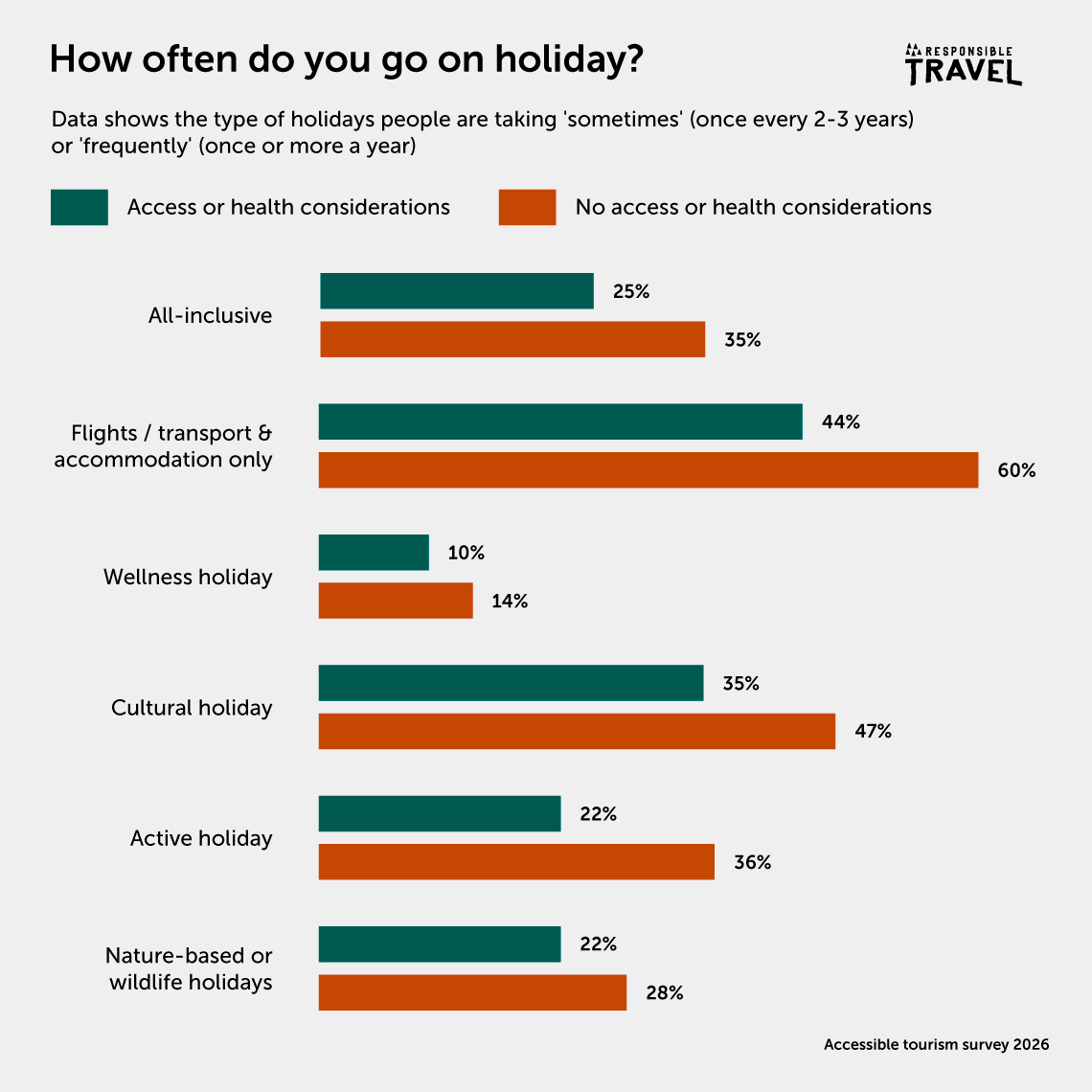
Responsible Travel commissioned YouGov to survey accessible adventure travel. The survey revealed that accessibility is a mainstream, not niche, part of travel. Two in five UK adults – 41% – now travel with accessibility in mind, including those who regularly travel with or care for someone with access needs. There’s more than a moral and social responsibility to making travel more accessible – it’s a business imperative. And it benefits everyone. The survey shows that after cost, it is confidence, not a lack of interest, that is holding back millions of people who travel due to access or health considerations. Their accessible holidays survey report is here. It’s the first of an annual study they will conduct to compare the travel experiences of people with, and without, health and accessibility needs.
Campo and Parque de Sonhos hotel have shown that people with disabilities can take part in nearly all activities typically offered to able-bodied visitors at adventure resorts. Awarded Gold at the 2014 Responsible Tourism Awards, Campo and Parque dos Sonhos demonstrate what is possible when accessibility is placed at the heart of an activity-based resort. By prioritising inclusive design and a mindset that values ability over limitation, the team creates an environment where everyone can participate and enjoy shared experiences.
As José Fernandes, who developed the adventure park for all, explains, “A 2-year-old child descended the shorter Tyrolese in total safety, while an 84-year-old lady broke the age record in the 1-km long Tyrolese”. The Park of Dreams attracts novices, adventure sports enthusiasts who want to try several experiences in one day, school groups, corporate team building groups, and those who want to make commercials. Being accessible for all makes commercial sense.
I asked José why he had pushed the boundaries of what is possible for people with disabilities so far. It was, he said, because we all have disabilities in our lives, we all start life being pushed, in a pram or pushchair, and most of us will live with or develop disabilities. Pushchairs and wheelchairs need the same ramps.
The resort offers a wide range of activities, including five zip lines, a canopy walkway, rappelling, climbing, a rope swing, caving, trekking, fishing, cycling with 10 types of accessible bikes, river tubing, horse riding, and swimming in natural pools and beneath waterfalls. Visitors can come for the day or stay for several days or weeks in fully accessible accommodation. People with disabilities are able to take part in all activities at no extra charge.
This makes commercial sense
“Our non-disabled clients also create a great admiration and loyalty to the hotel just by knowing how we go the extra mile for the disabled and people with reduced mobility. Furthermore, the non-disabled visitors also benefit from the adaptation for all types of disabilities. For example, the built-in kennels for guide dogs (for blind people) at the accommodations encouraged families who own a pet to stay at the hotel. All the equipment (light switches, towel hanger, telescopic mirror, etc) at an accessible height for wheelchairs also served to children who could become more autonomous, which caused them to love the place and encouraged their parents to return to the location. Ramps were also vital for parents with strollers, and we also began to receive groups of elderly people during the weekdays to enjoy the comfort and security of accessibility,” José explained.
“The biggest challenge of all was to overcome the prejudice that most people had about having ‘crippled’ people involved anyhow in any business. From our team to our clients, and even from business partners and competitors, everyone doubted accessibility could bring sustainable growth to the business,” he added.
When I visited, I watched an 86-year-old lady use the vest for a paraplegic or quadriplegic to be able to do rafting and zip lining. Humbled, I could not summon up the courage to do as she had done.
Differently Abled Indians
There has been a great deal of progress in India, where the language of the differently abled is increasingly used and provision for those with disabilities is being extended.
Inclusivity in tourism applies to both consumers, the tourist, and those working in the industry. Lemon Tree Hotels won Gold and were also the Overall Winners in the 2016 Responsible Tourism Awards.
Lemon Tree Hotels in India is by no means a niche operator; Lemon Tree has defined mainstreaming “Opportunity Deprived Indians” (ODIs) into its workforce as a core goal. ODIs include those who are speech and hearing impaired, orthopedically handicapped, acid survivors, visually impaired, or with low vision, Down syndrome, or autism.
Different abilities, shared purpose.
— Lemon Tree Hotels (@LemonTreeHotels) March 21, 2026
This #WorldDownSyndromeDay , we celebrate those who bring care, dedication and pride to hospitality.
More than teammates, they shape a culture of dignity, trust and inclusion, where everyone thrives.#LemonTreeHotels #RefreshinglyDifferent pic.twitter.com/tfZaqJAEPd
Their barrier-free employment strategy is at the heart of their CSR programme, but not of their marketing strategy. Patu Keswani, Chairman & Managing Director of Lemon Tree Hotels, challenged his managers to find ways to employ the differently-abled and disadvantaged Indians because “the brand should stand for more than ‘just profit’.” Lemon Tree is a large, successful and growing company encompassing several brands, 8,000 rooms in 91 hotels across 49 destinations, and it is committed to barrier-free employment.
The commitment to employing ODIs, Opportunity Deprived Indians, is clearly stated on the website – if you look for it, you have to hunt for it.
“We believe that persons with disabilities (which can be physical, social or economic disabilities leading to an opportunity deprivation) must be provided the same opportunities as others to realize their full potential and live with dignity. By creating a supportive environment in the organization that allows them to deliver their best, we are able to play a part, however small, in social inclusiveness, opportunity/livelihood creation and therefore nation-building.”
Watch the video here, Aradhana explains how they have transformed employment opportunities at Lemon Tree Hotels
Report by Skyscanner, Inclusive Travel: What Travellers with Disabilities Need to Know About Their Rights, breaks down the current landscape of accessible travel in Europe; dives into the rights of disabled travellers spanning different areas such as mobility, service animals, and travel insurance; and offers practical advice for accessible holidays.