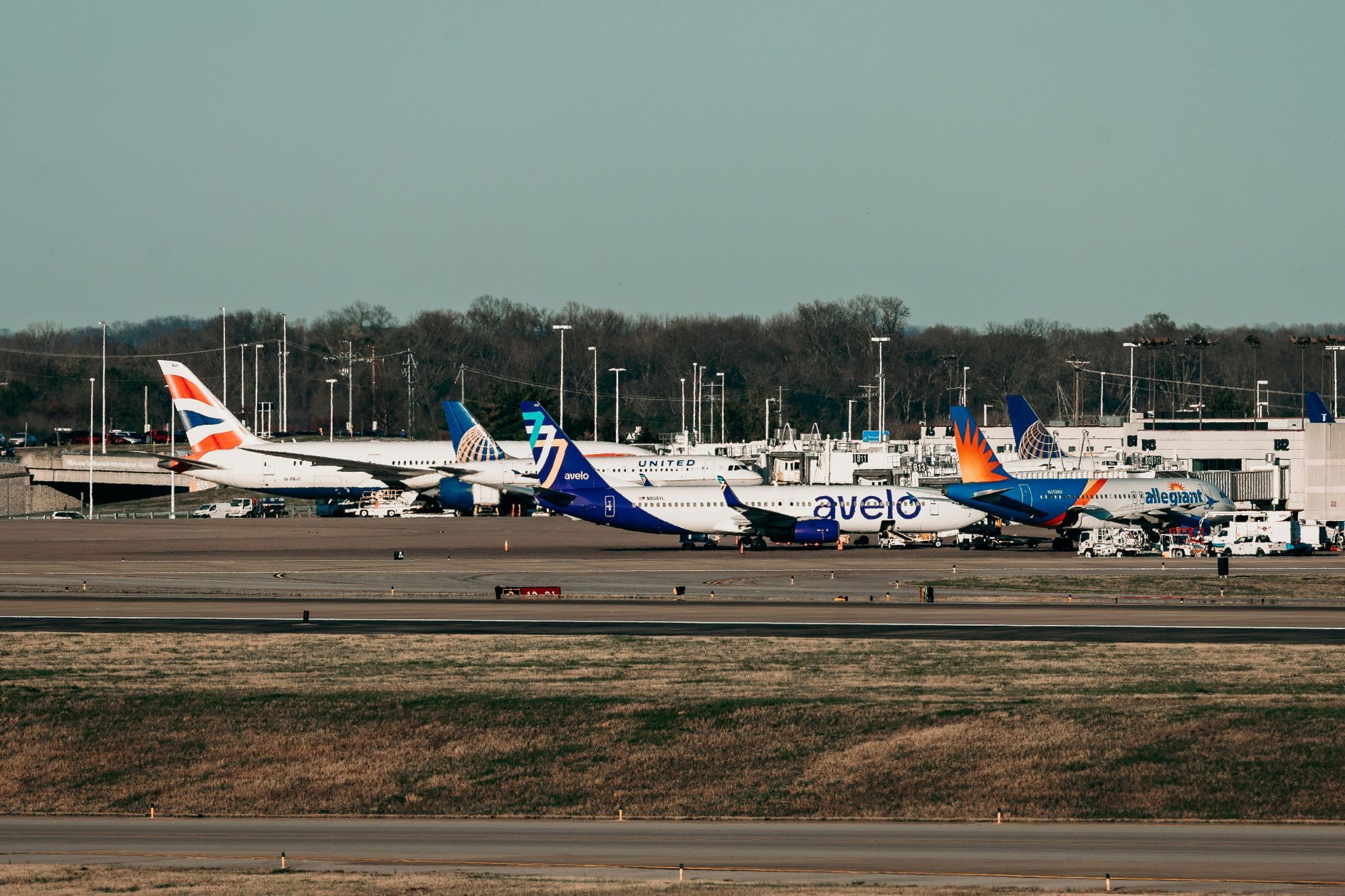


On 23 July 2026, the commercial airline sector recorded its busiest-ever day in history. As Flightradar24 registered no less than 153,359 flights in 24 hours, 2026’s summer rush was at an absolute high.
Between 00:00 UTC and 23:59 UTC on 23 July 2026, flight tracking service Flightradar24 registered a whopping 153,359 commercial flights. That number was a record high which beat the previous record, set on 13 July 2023 with 137,225 commercial flights, by no less than 16,134 flights. The data can partly be explained by the Northern Hemisphere’s summer travel season, which is currently at its peak.
“The last week in July is often the busiest week for air travel, and this year is no exception. On Thursday we tracked 153,359 commercial flights: the most we’ve ever tracked,” Flightradar24 stated on X.
The last week in July is often the busiest week for air travel and this year is no exception. On Thursday we tracked 153,359 commercial flights — the most we’ve ever tracked. pic.twitter.com/GXJEMxY3A0
— Flightradar24 (@flightradar24) July 26, 2026
Moreover, when taking into account cargo, private, and military air traffic as well, the number rose even higher. When adding those, Flightradar24 registered 287,364 flights overall, resulting in the second-busiest day ever for air traffic.
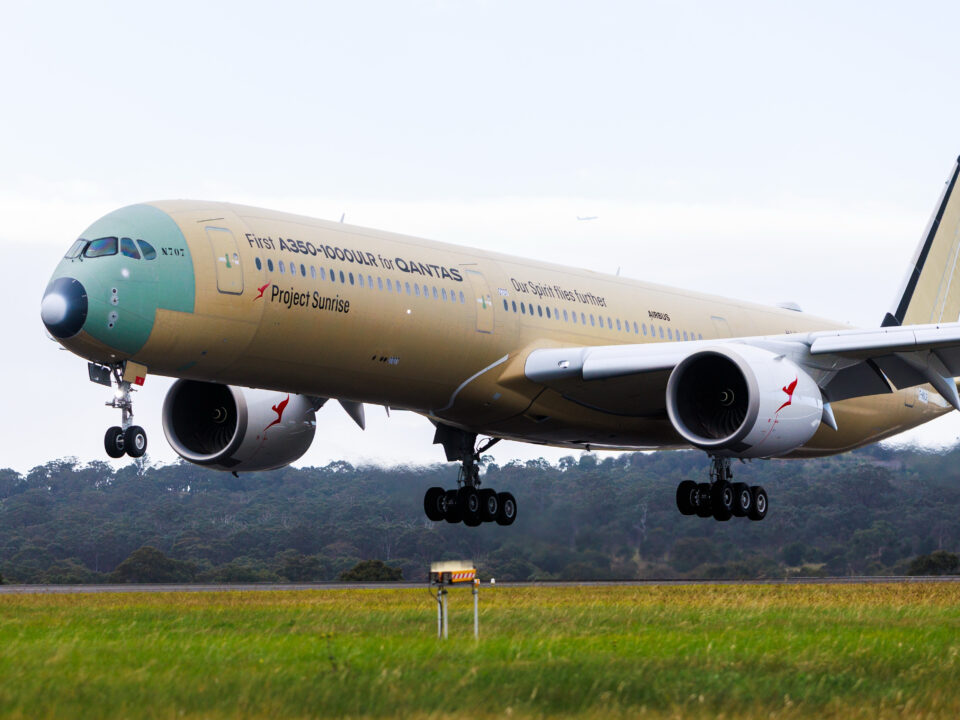
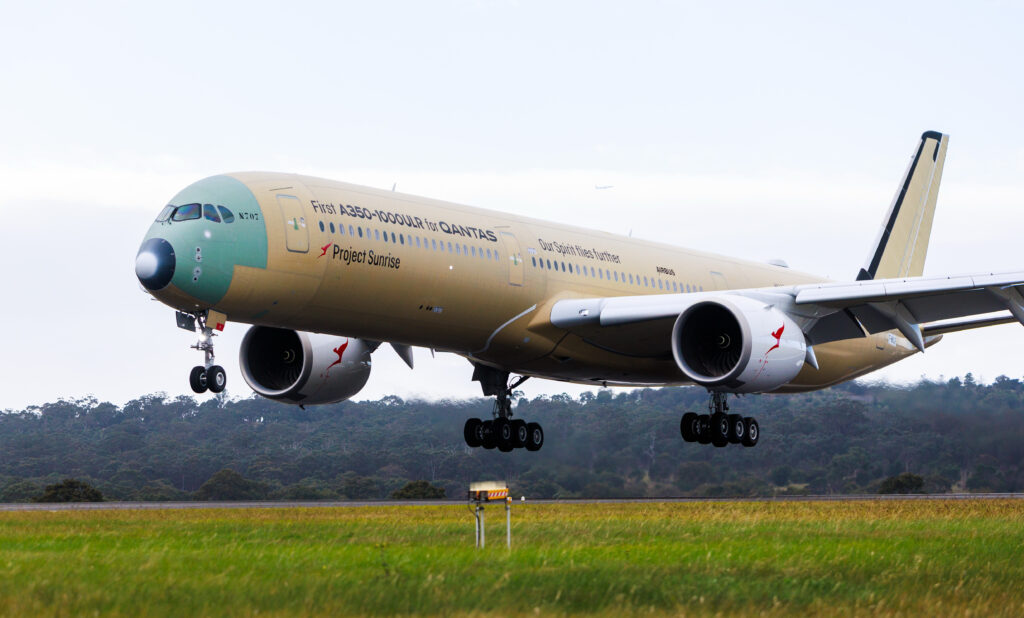
The most-tracked flight of the busiest day on record regarding commercial flights was without a doubt the Qantas nonstop test flight from Toulouse Blagnac (TLS) to Melbourne Airport (MEL). During its 19 hours and 13 minutes in the air, the Airbus A350-1000ULR was followed by some 9,000 users at any given time.
The A350-1000ULR has crossed the equator. If the current ETA holds, it'll spend around 24 hours in the air. 😮 pic.twitter.com/gQhgAq1tei
— Flightradar24 (@flightradar24) July 27, 2026
The all-time record comes at a strange time for the aviation industry. At the end of 2025, the International Air Transport Association (IATA) projected that the aviation industry would reach a record total net profit of $41 billion in 2026 (up from $39.5 billion in 2025), while passenger numbers were expected to rise 4.4% to 5.2 billion. However, the IATA report highlighted that the sector’s net profit margin was predicted to be unchanged from 2025 at 3.9%, with net profit per passenger static, and cargo yields down 0.5%.
“In 2026, we expect an industry profit of $41 billion. Any large oil company can realize a similar profit in a single quarter, but this is for the entire industry for the entire year”, said IATA’s Chief Economist.
This, however, was even before the start of the US-Israel war on Iran late February 2026, which has caused a global fuel crisis, as well as a large amount of flight cancellations, deviations, and delays.
In May 2026, for example, the International Air Transport Association noted a 2.2% decrease in global passenger demand compared to 2025. That number was mainly driven by a 28.4% drop in traffic in the Middle East, as global passenger demand outside the Middle East was up 0.7% year over year.
“Global passenger demand is adjusting to this supply driven shock. Higher fuel costs, airspace disruptions, and longer routings are weighing on growth, yet underlying willingness to travel has not collapsed, only moderated. Passenger traffic is now forecast to grow by 2.1% in 2026, a material slowdown from recent years, with pronounced regional divergence: the Middle East faces a deep contraction due to airspace restrictions, while Africa and Asia Pacific grow thanks to traffic rerouting”, the IATA said in its Global Outlook for Air Transport June 2026, adding that cargo demand is expected to grow by just 0.7% in 2026.
At the time of writing, it is yet unclear what the summer of 2026 as a whole will have done for the global aviation industry. The record high in commercial air traffic registered on 223 July 2026 does not necessarily align with the overall summer trend, nor with passenger traffic.