


What do Romeo and Juliet, Valpolicella wines and nuclear weapons have in common? Fans will soon be able to discover it while combining their passions on a single trip to northern Italy, where a most unusual underground museum is set to welcome visitors.
Located in the hills near Lake Garda, outside Verona, the attraction is situated below the vineyards and not far from the world’s most famous and romantic balcony. It occupies a former nuclear bunker codenamed West Star, hinting at the Soviet Union’s five-pointed red star.
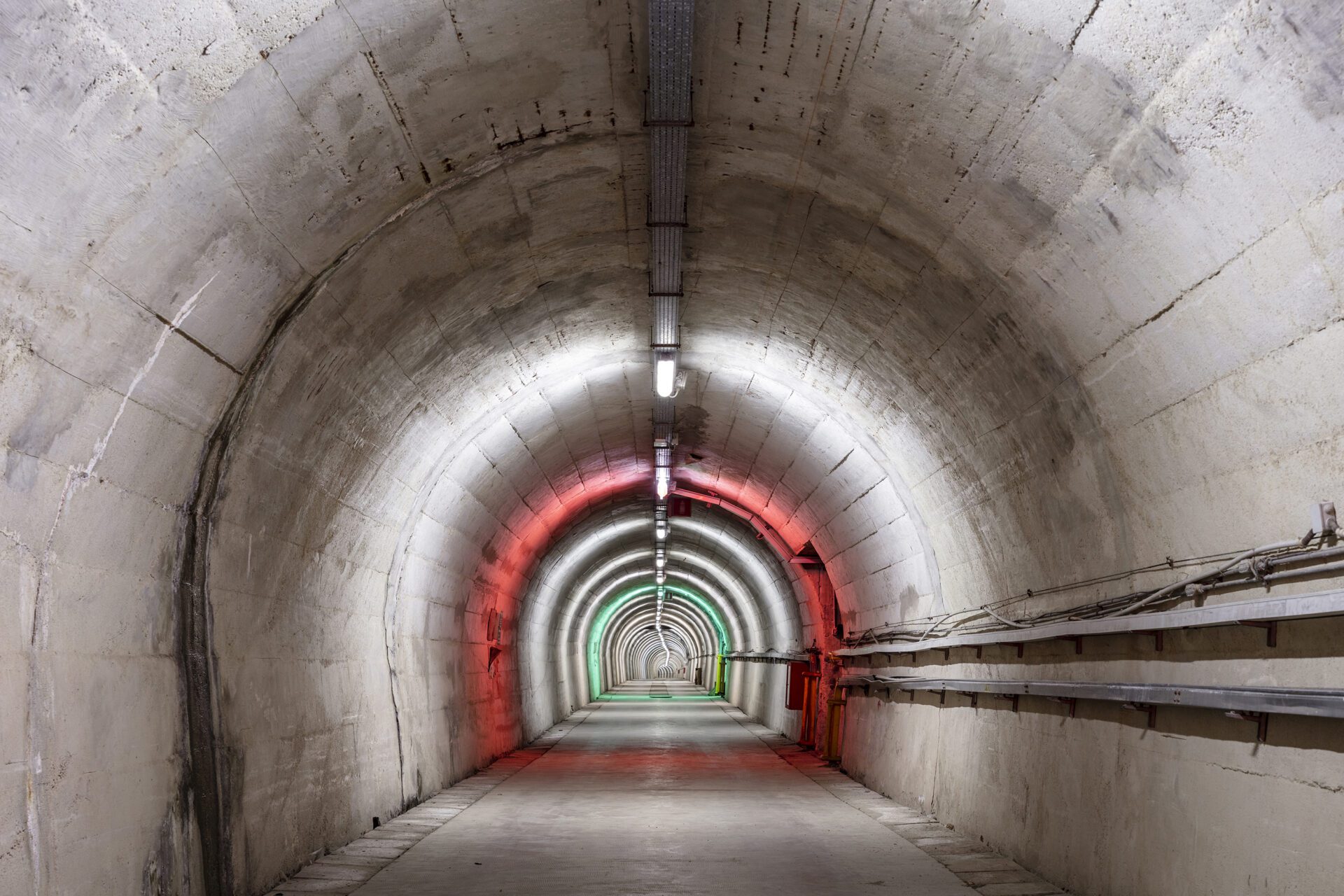
Spanning 13,000 square metres and connected by a kilometre-long network of tunnels, the underground complex was constructed between 1960 and 1966 near the town of Affi, at the height of the Cold War. It served as a key NATO command-and-control centre until 2004, coordinating military operations across southern Europe and hosting exercises.
The bunker was designed to withstand nuclear, chemical and biological attacks, and it has all the facilities needed to survive a nuclear war for a month. Its 100 rooms were designed to accommodate 300 personnel and were equipped with kitchens, water tanks, filtration systems and protected showers, as well as an infirmary.
In addition to the war room and communications centre, the complex featured a gym, a bar and a mechanics’ workshop. The latter contained everything one would expect in such a space, including erotic posters put up by the military staff, which will continue to work their “magic” on visitors as they will be left untouched.
West Star was decommissioned in 2007 and ownership of the complex was transferred from Italy’s Ministry of Defence to the municipality of Affi in 2018. Plans to transform the site into a museum began to take shape in 2022, when a team of researchers from the University of Florence started to map it.
The bunker’s history was investigated by researchers, who spoke to former employees who shared their experiences while West Star was still a military facility. They also digitised technical documents about the bunker’s construction.
The Italian parliament has now approved €7 million to transform the site into a museum by 2029, although part of it is expected to open to the public as early as next summer.
Once the work is complete, 70 to 80 per cent of the site will be accessible to visitors, including the original war room, infirmary, canteen and kitchen.
Michelangelo Pivetta, the University of Florence architecture professor who led the research project, told the The Art Newspaper (TAN), the museum would offer “an opportunity to start speaking again about the Cold War – which is not spoken about enough today – in a historical sense.”
Beyond the military history, the museum will showcase some ingenious Cold War technology, including huge electricity generators and evaporation towers that collected humidity and recycled it into water. It will also display some of the most advanced computers of the ’60s and ’70s, such as Europe’s earliest ARPANET system, the pioneering computer network that preceded the modern internet, according to Pivetta.
Original maps will also be on display. “They are special because they don’t make them like that anymore. They tell the story of a world that no longer exists”, Pivetta added.
The site is expected to eventually attract 100,000 visitors a year. Marco Sega, the mayor of Affi, called the approval of the funding a historic moment for the community.
“We now have a great responsibility: to make the best use of these resources and reopen the NATO base as soon as possible,” he said.
Besides West Star, Italy has a number of smaller Cold War museums. The Bunker Museum in Dobbiaco, in the far north of the country, is one of them. Opened in 2023, it was part of a network of bunkers that operated between 1951 and 1993 to counter a potential Soviet invasion.
Once open, West Star will add a very different attraction to a region better known for Lake Garda, Valpolicella wines and Verona’s Romeo and Juliet.