Air passengers in the United States are being hit by the now fortnight-long federal government shutdown, after Republicans failed to pass a vital spending bill for the third time in Trump’s two terms in office, bringing many of the country’s services to a another standstill.
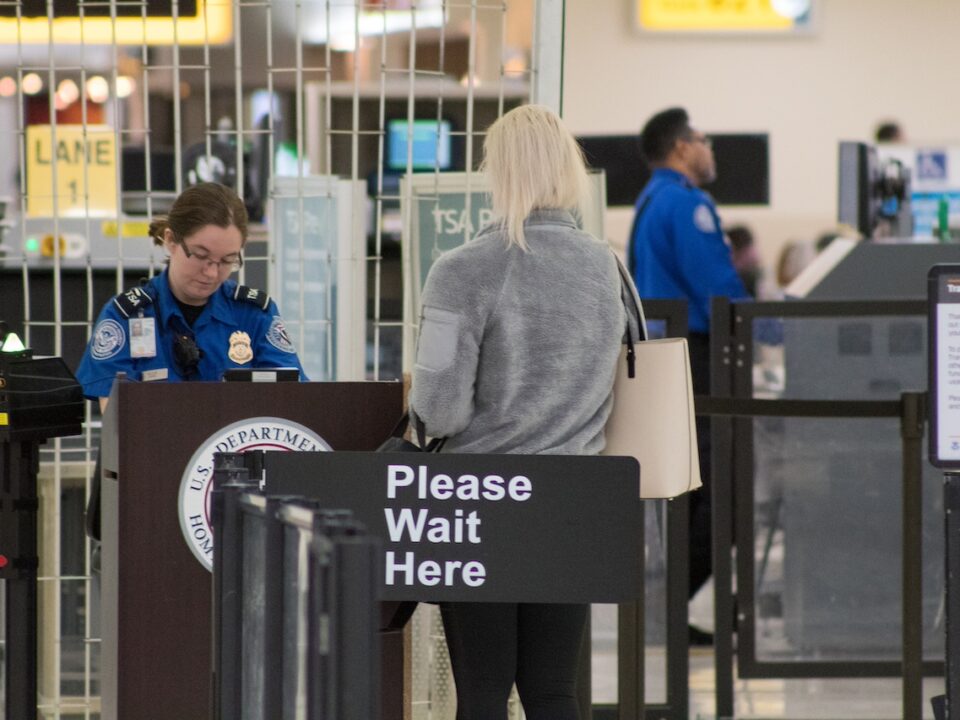
For the US aviation and travel sector, already beleaguered by consecutive months of falling visitor numbers, the shutdown coincides with what should be the busiest US corporate travel season, as well as autumn holidays such as 13 October’s Columbus/Indigenous People’s Day. With air traffic controllers and security workers receiving no pay due to the shutdown, staff absences are on the increase, putting pressure on a network that has not yet recovered from COVID-19.
Disruption has occurred at airports as far and wide as Burbank, California; Chicago, Illinois; Denver, Colorado; Nashville, Tennessee; Newark, New Jersey; and Reagan International in Washington DC. There were 12,000 flight delays between Monday 6 and early Wednesday 8 October 2025 alone, as well as around 200 flight cancellations.
The uncertainty is doing the struggling US travel and tourism industry no favours, according to Geoff Freeman, president of the US Travel Association, who warned: “If we introduce concern into the system — concern about delays, concern about cancellations, concern about TSA being less efficient — we’re leading people to stay in the office.” The last thing the US sector needs, Freeman argued, is “another reason for people to stay home, whether it’s Americans staying home or foreign travellers avoiding the United States.”
While some travellers will decide to postpone or cancel flights until the shutdown has been resolved (which took 35 days in 2018 for Trump’s second shutdown, the longest in history), others might try to find alternative transport. Booking with airlines that have a wide partner network is a good de facto insurance against problems, but where a shutdown is concerned, problems are likely to affect all airlines out of certain departure zones, making it hard to find flights with a different carrier.
Interestingly, and problematically for US travel and tourism stakeholders, there is a built-in incentive for travellers to cancel trips altogether, rather than hanging on to see if alternative flights become available. This is because airlines are not obliged to rebook travellers with competitors (although they should offer to put passengers onto later flights of their own where possible). Conversely, for those who decide not to travel at all after a cancellation, airlines are obliged by law to refund their ticket, as well as any extras they paid for.