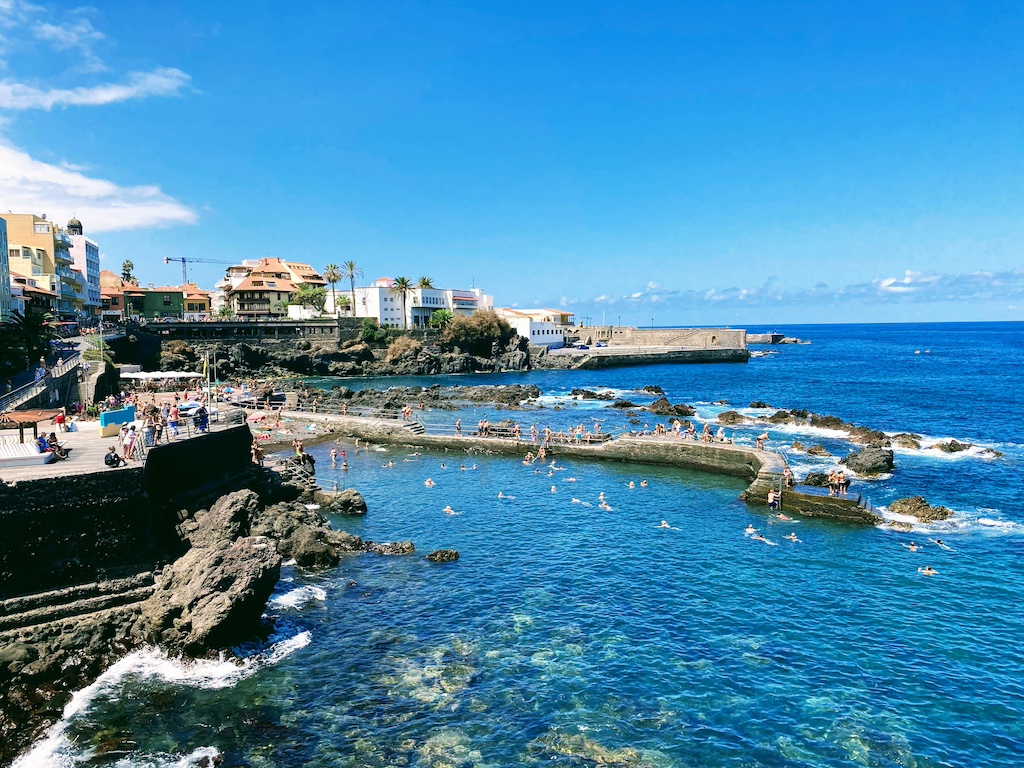


The Spanish province of Tenerife is set to invest tens of millions of euros in coastal clean-up, sanitation systems, and zero-waste approaches as part of efforts to improve the island’s environment and reputation.
The largest of the Canary Islands autonomous community, situated in the Atlantic Ocean around 300 km off the coast of Morocco, West Africa, Tenerife is well-known as a winter sun destination for many in northern Europe. Over another record year for Spanish tourism, the archipelago welcomed 16.3 million foreign visitors (89%) in 2025, and recorded strong tourist spending of €23.2 billion, an increase of 3.9%, according to the islands’ Institute of Statistics (ISTAC).
However, Tenerife’s reputation has suffered amid criticism from the European Union Court of Justice in January 2026, with Spanish authorities slammed for uncontrolled urban wastewater discharges.
What’s more, Ecologists in Action gave two Tenerife beaches “black flags” in its 2025 report, signalling “the most serious environmental impacts on the Spanish coast.”
The beaches in question were Playa Jardín, which was closed between 2024 and mid-2025 due to E coli contamination concerns and wastewater pollution caused by inadequate infrastructure. Puertito de Adeje was also condemned for “poor management” in the light of “luxury” housing development Cuna del Alma and an underwater garden project, which critics say pose a threat to endangered species.
The situation also endangers Tenerife’s position as a tourist Mecca and potentially puts its economy in jeopardy. Tourism accounts for one-in-four jobs there, employing over 237,000 people by the end of 2025. The Canarian Weekly has pointed out that coastal water quality is a huge issue for UK visitors, who make up the island’s largest source market for tourism.
@kate.and.dave.travel Most beautiful beach on Tenerife 🌴💙 #travel #tenerife #foryou #decembervacation ♬ Still Don't Know My Name (From "Euphoria: Season 1" Soundtrack) – Labrinth
As a result, a plan estimated to be worth €81 million has been created, with the intention to modernise outdated wastewater networks, boost treatment capacity, prevent coastal discharges, and improve coordination between municipalities. Lope Afonso, Vice President of the Island Council, is calling for all local municipalities to pull together on the 2027–2030 Cooperation Plan and zero waste initiatives, in a bid to “project the island onto the national and international stage as a territory that controls its waste environmentally.”
Sonia Hernández, Tenerife’s Councillor for Municipal Cooperation, has backed the proposals, describing the draft plans as an “ambitious strategic document.” Meanwhile, the island’s Association of Friends of Nature is pushing for further transparency over the issue of coastal pollution and has demanded more “honest information” for visitors.