

Spain’s record tourism numbers show no sign of abating, and with a total solar eclipse set to be visible from 40% of Spanish territory in August 2026, the country is braced for a spike in visitors that could be unprecedented.
Coming on 12 August 2026, the total eclipse of the sun will be the first that some viewers in Europe have ever had the chance to witness. The region has not seen a so-called “totality” since 1999. Much of its path will travel remote areas like Siberia, the North Pole and Arctic, and Atlantic, so Spain offers eclipse tourists the most accessible view and has a more developed hospitality offer than the other territories involved.
@areyoustupidordumb core memory wow #solareclipse #eclipse ♬ original sound – noelle
However, the availability of that accommodation is already fast diminishing. Spain’s eclipse.info website warns that “It is advisable to plan your holiday to Spain well in advance to avoid complications, as this series of eclipses is a historic event.” It also clearly is trying to spread the footfall and revenues the eclipse is bound to bring, urging people to book “a trip of at least seven days.” It’s also worth noting that Spain is set to see two more years of eclipses before 2030, so there is still time to plan ahead for 2027 and 2028.
The path of totality will sweep across Spain from northwest to Valencia on the east coast, and beyond to the Balearic Islands. The Balearics in general are expected to be at the epicentre of the tourism surge, due to the rare romance of being able to watch the eclipse as the sun sets over the Mediterranean.
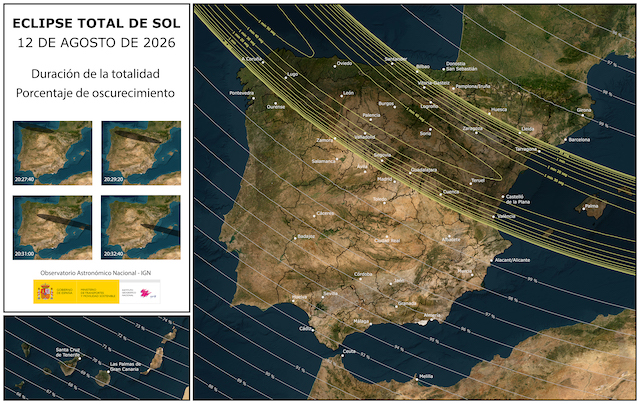
Expedia says demand for flights to Palma de Mallorca for the week of the eclipse has more than tripled already compared to last year, and some industry stakeholders, such as José Molina of Vestige Collection, speaking to Condé Nast Traveler, have estimated that Mallorca’s two million annual visitors could swell by another million arrivals in that week alone.
Despite fears of cloudy skies ruining the eclipse in northern Spain, it is perhaps for that reason that it could remain a better bet for finding available accommodation and car rentals. Still, Hotels.com has reported room searches for the Spanish north on eclipse day and the day after were already up 125% year-on-year by January 2026. That’s an average. A Coruña, which juts into the Atlantic on a sweeping promontory and is the vanguard, giving kilometres of potential eclipse viewing spots, has seen a 435% increase in hotel demand.
In fact, A Coruña is at the vanguard of the Spanish eclipse, with the phenomenon starting there earliest, at around 19:30 in the evening, leaving plenty of post-eclipse time for aperitifs, tapas, and evening revels. Tourists thinking of heading to this provincial capital, however, might want to consider the fact that A Coruña also boasts a taller mean height of buildings than anywhere else in Spain, according to Land Registry data. Tall buildings block eclipse vistas, unless of course, the spectator happens to be inside one with an unobstructed view of the sea.
@explorationplace What to look for before you look at the solar eclipse on April 8! #solareclipse #foryoupage #eclipse #wichita #wichitaks #science #museum #stem #explorationplace ♬ Sunrise – Official Sound Studio
Central inland Spain offers places like Castilla y León and Zaragoza, which trade potentially clearer skies than the north of the country for a lack of coastline, and in general a less developed tourist offer—meaning that local experts say demand could still outstrip availability. Camping could be a good option here, if one can find enough shade to shelter one’s tent or RV at the height of August in a country that has marked record temperatures and wildfires in recent summers.
Lovers of the outdoors could also take advantage of another option that will not be for everyone, but could present a unique kind of magic. Why not plan to be walking through the Pyrenees and along the famous pilgrim’s route of the Camino de Santiago de Compostela at precisely the moment of totality? “It promises something extraordinary: a moment of stillness and awe within a journey already steeped in reflection,” says hikers’ info site, caminoways. “Astronomers expect totality to last around two minutes and ten seconds in northern Spain. For those walking westward, it will occur in early afternoon, a perfect pause to rest, reflect and watch the sky change,” the site notes. Just don’t fall down the mountain during the heart of darkness.