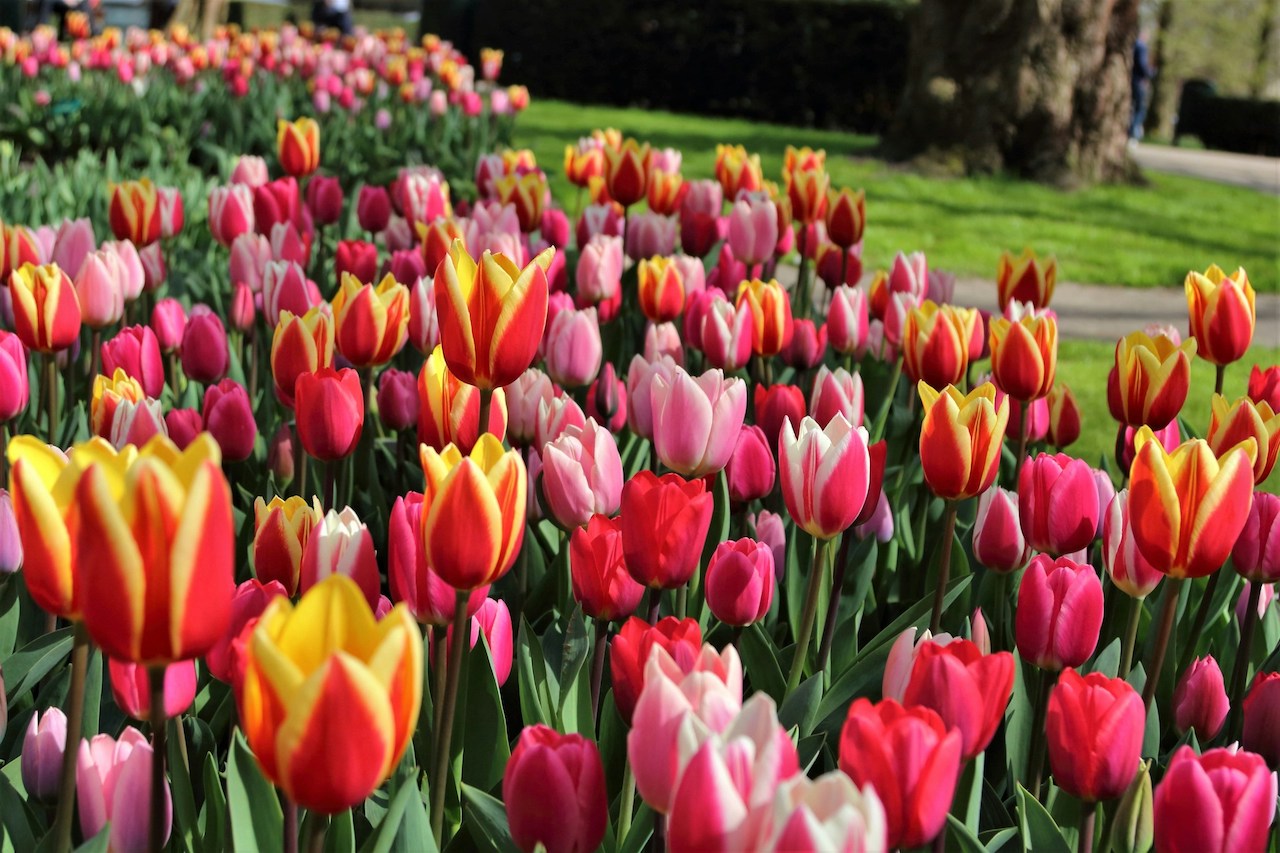



Keukenhof, one of the Netherlands’ most celebrated flower destinations, opened its 2026 season on 19 March. Sunny spring weather across the Netherlands is attracting many visitors, with lines forming to enter the park in the morning. The park is open daily for eight weeks, and this year the season will run until 10 May. Early blooms are already visible, giving visitors a colourful preview of what’s to come.
Keukenhof showcases around seven million spring-flowering bulbs, grown by more than 100 flower bulb companies. Over 500 growers present an enormous variety of cut flowers and pot plants in more than 20 flower shows. Every autumn, a team of around forty gardeners carefully plants millions of bulbs, arranging colours, patterns, and layers to create the park’s displays, making sure that visitors can enjoy a perfect blend of colours and textures throughout the season.
The gardens cover 32 hectares in the province of South Holland, in the “Dune and Bulb Region” south of Haarlem. Castle Keukenhof, a 17th-century estate at the heart of the park, provides a historic backdrop to the gardens, connecting visitors to the Netherlands’ long tradition of tulip cultivation.
Keukenhof’s history stretches back to the 15th century, when the land was part of the hunting grounds and kitchen garden for nearby Teylingen Castle. Herbs, fruit, and game were gathered for the castle kitchen, which is how the name “Keukenhof” (literally kitchen garden) came about. In 1641, a manor house called Keukenhof Castle was built on the estate, and the gardens were redesigned in the mid-1800s by landscape architects Jan David Zocher and his son Louis Paul Zocher in an English landscape style, with winding paths and open vistas. Keukenhof opened as a public flower park in 1949, with its first season in 1950 attracting over 236,000 visitors.
Tulips, the flowers most associated with the park, have their own long journey to the Netherlands. Originally from Central Asia, they travelled through Persia and the Ottoman Empire before arriving in the Netherlands in the late 16th century, largely because of botanist Carolus Clusius. Tulips became extremely popular during the early 17th century, leading to the famous “Tulip Mania,” when rare bulbs were traded at very high prices. After this period, cultivation continued to grow, and the Dutch climate proved ideal for bulbs. Today, the Netherlands is the world’s centre for tulip breeding and trade, producing thousands of varieties and exporting them globally, a tradition that Keukenhof continues every spring.
The park features more than 800 varieties of flowers across the 32-hectare site, including tulips, irises, lilies, daffodils, orchids and hyacinths. Among the highlights was the Tulip and Hyacinth Show at the Oranje Nassau Pavilion, held from 19 to 24 March, where Dutch growers presented their finest blooms, giving visitors a chance to see the rarest and some of the award-winning varieties.
Keukenhof is open daily from 8:00 am to 7:30 pm until May 10, 2026. Tickets are best bought online in advance to avoid long lines, especially on sunny days, as Keukenhof can see up to 26,000 visitors per day. The park is located in South Holland, south of Haarlem and southwest of Amsterdam, in the “Dune and Bulb Region.” Visitors can reach it by car, bus, or a combination of train and shuttle, making it easy to plan a day trip.
The Netherlands’ long tradition of flower cultivation is highlighted in Keukenhof, while also marking the arrival of spring. The opening day brought a lively, colourful start to the season, and over the eight-week period, the gardens offer a constantly changing display of blooms. From early crocuses to towering tulips and carefully arranged floral patterns, the park provides visitors with a variety of sights and experiences throughout their visit. Curious when each flower reaches its peak? See the full schedule of blooming dates here to make the most of your visit.