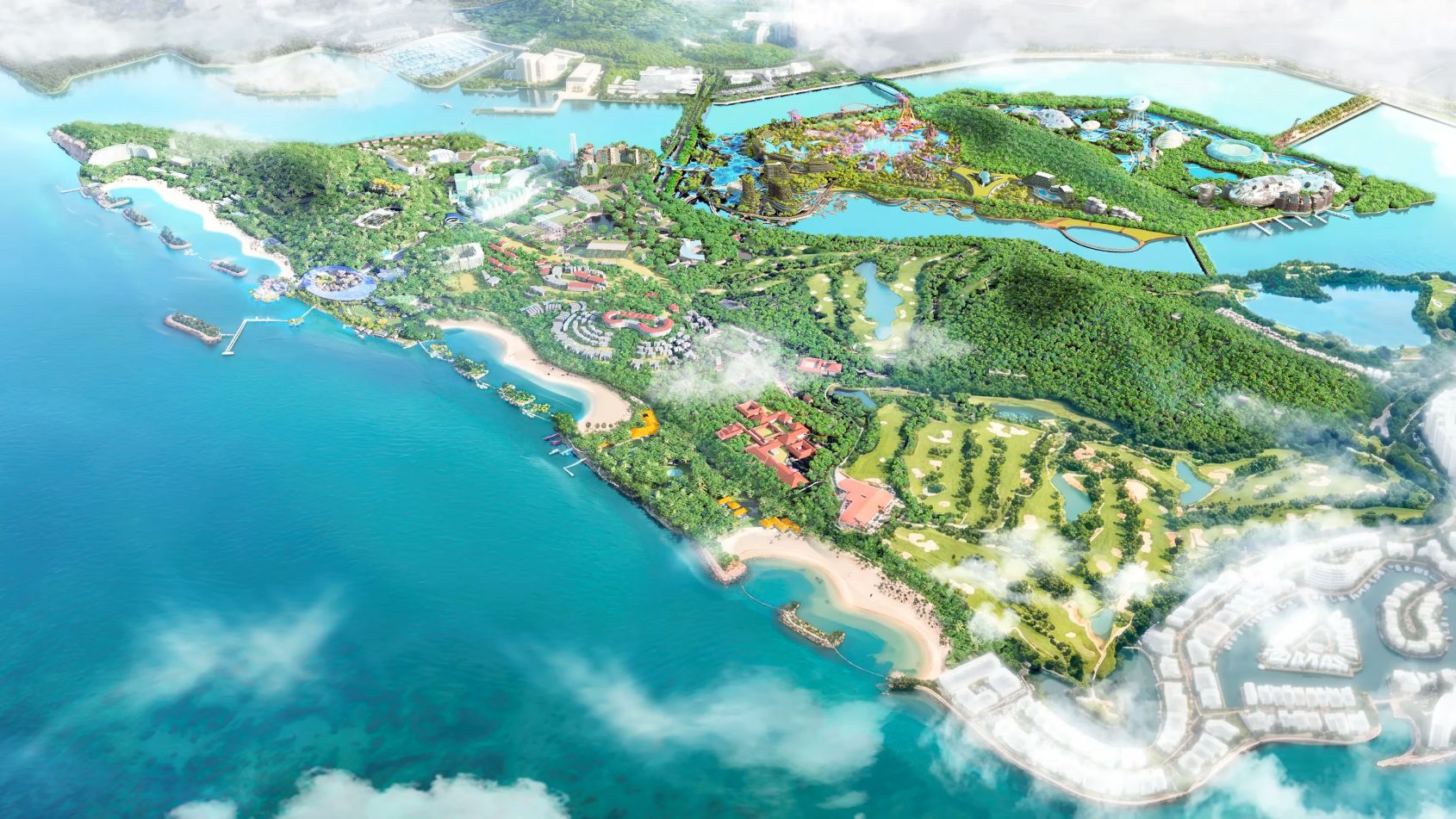


Singapore is preparing for the biggest transformation of Sentosa in decades after unveiling the Greater Sentosa Master Plan, an ambitious blueprint that will reshape the island and neighbouring Pulau Brani over the next 20 years. The project forms part of the wider Greater Southern Waterfront development, which aims to transform around 30 kilometres of Singapore’s southern coastline into a destination for tourism, leisure, business and housing. The plans include new attractions, improved transport, expanded green spaces and upgraded beaches designed to encourage visitors to stay longer and explore more of the island. Between April 2024 and March 2025, Sentosa welcomed 16.9 million visitors, and the long-term ambition is to double that number.
The first phase of the redevelopment is expected to open in the early 2030s, while new projects will continue to be introduced into the 2040s. The plans also support Singapore’s Tourism 2040 strategy and coincide with the future opening of Changi Airport’s Terminal 5, which will significantly increase the country’s passenger capacity. Rather than simply adding more attractions, the redevelopment aims to create a destination where entertainment and nature complement each other. “We are reimagining what Sentosa can become for decades ahead, an island transformed, connected and sustained,” said Singapore’s Minister for Sustainability and the Environment, Grace Fu. She added that the masterplan will “redefine Greater Sentosa as Singapore’s island playground, bolder, livelier and more exciting than before.”
One of the biggest additions will be Pulau Brani, a 120-hectare island next to Sentosa that is currently occupied mainly by port facilities. Once port operations move to Tuas Port, the area will be redeveloped into what officials describe as the region’s next-generation leisure destination. One of its largest development sites, Brani West, has been reserved for what the Sentosa Development Corporation (SDC) calls “game-changing attractions”, although details have not yet been revealed. Resorts World Sentosa will also continue its expansion with its Waterfront Lifestyle Development and the opening of Super Nintendo World, both expected in 2030.
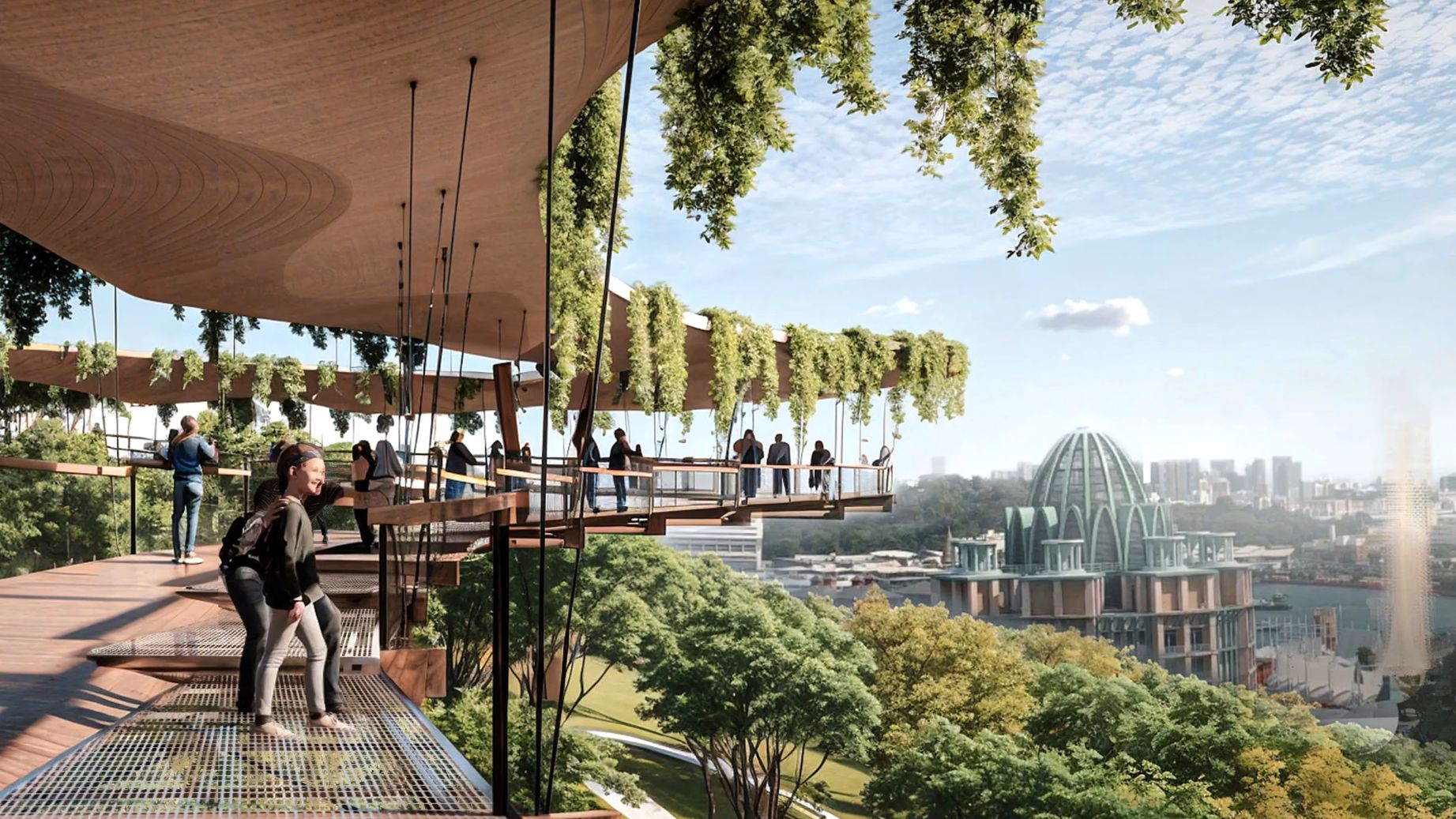
Visitors can also look forward to several new attractions across Sentosa itself. Along Siloso Beach, the new Sensorium will combine indoor attractions, green public spaces and a flexible venue for festivals, concerts and other events throughout the year. Nearby, the Imbiah Canopy will become a new hilltop destination with restaurants, shops, attractions and sheltered event spaces overlooking Sentosa, Pulau Brani and Singapore’s Southern Waterfront. One of the first projects to open will be the Imbiah Lookout Walk, a sheltered elevated forest canopy trail connecting the award-winning Sensoryscape to Imbiah Lookout and a wider network of walking trails.
Nature and sustainability remain central to the redevelopment plans. Over time, SDC intends to connect the forests of Sentosa, Pulau Brani and Serapong into one continuous green corridor, which will eventually link to Singapore’s Southern Ridges on the mainland. New hotels will also be designed with greater greenery integration to blend into the island’s landscape. “Energy and restoration are not opposites,” according to SDC, describing the philosophy that will guide future developments by combining vibrant attractions with spaces for relaxation and nature.
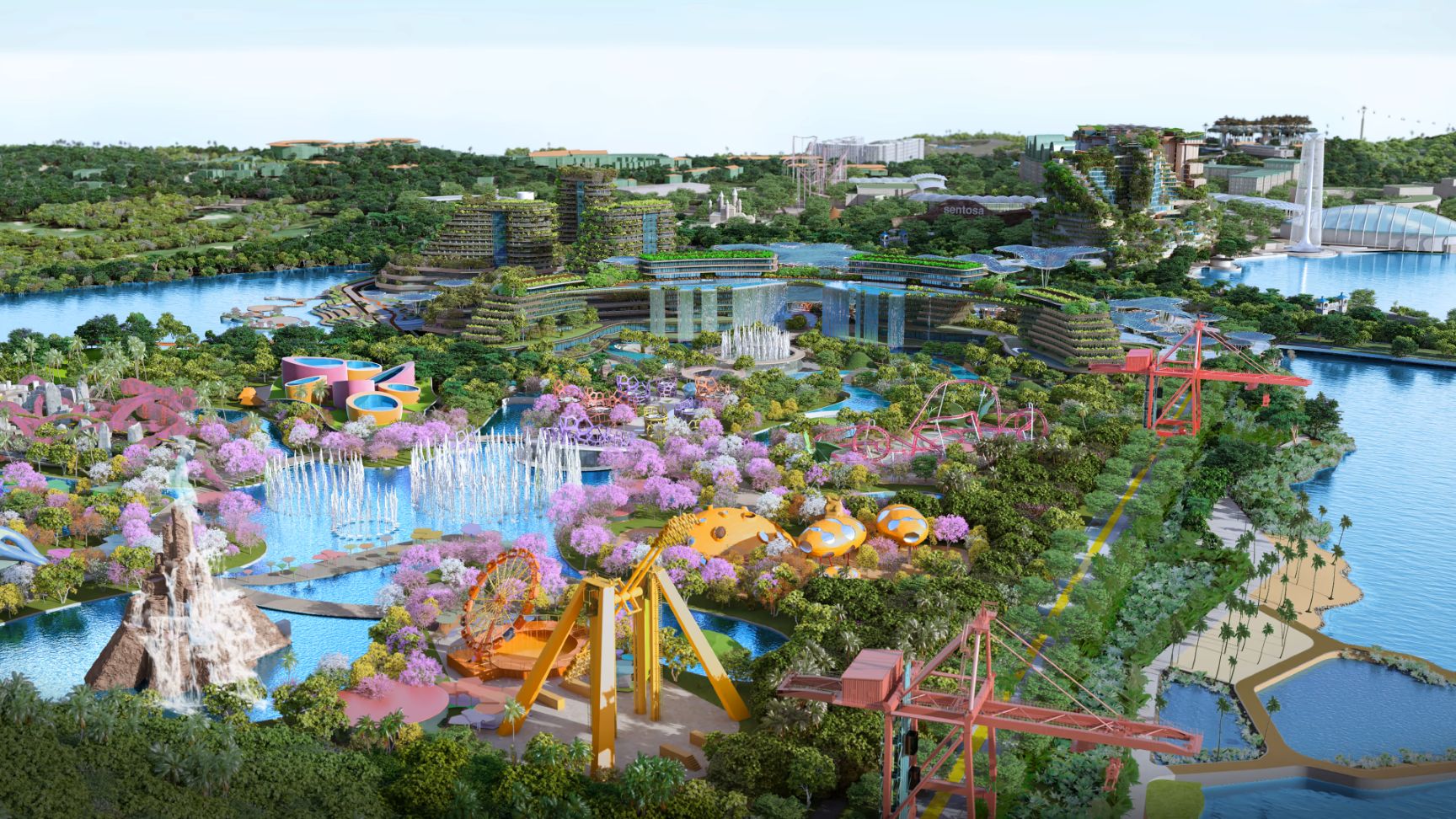
The island’s coastline will also undergo major changes in the coming years. Siloso Beach will be the first to be rejuvenated, followed by Palawan and Tanjong beaches. Plans include new beach clubs, treetop dining experiences and multi-purpose event spaces that will allow activities to continue from sunrise until late in the evening. Offshore, six existing islets will eventually be connected by floating boardwalks, creating a new island-hopping route while also supporting coastal protection measures against rising sea levels.
Getting around Greater Sentosa will become easier as part of the redevelopment. A new Island Heart transport hub will connect mainland Singapore with both Sentosa and Pulau Brani, serving as the main arrival gateway for visitors. The waterfront hub will feature a large solar-powered canopy, as well as hotels, restaurants and public spaces. The existing 2.1-kilometre Sentosa Express monorail will eventually be replaced by a new People Mover System with a greater passenger capacity, while the Singapore Cable Car will continue operating. SDC is also exploring additional transport options, including water taxis, to improve connectivity across the expanded destination.
Protecting the island’s character remains one of SDC’s priorities as Greater Sentosa continues to evolve. “We want to create the next generation of world-class experiences inspired by our beautiful coastlines, our greenery, our heritage, our sense of escape, as well as the Singapore identity,” said SDC chief executive Thien Kwee Eng. “At the same time, we want to grow Sentosa thoughtfully, and protect the island’s soul, while making it easier to explore, to access and to enjoy.” As new attractions continue to open over the coming decades, the masterplan aims to position Greater Sentosa as one of Asia’s leading leisure destinations while offering visitors a broader mix of entertainment, nature and cultural experiences.