

The Earthshot Prize finds, supports and celebrates those who turn bold ideas into solutions for our planet. Each year, they search for game-changing examples of climate leadership and innovation. From Tyres to Transformation has successfully entered the competition for 2026.
Sequestration is sometimes used to describe the capture and storage of CO2 to remove the greenhouse gas from our environment. Plastic waste is a major polluter of our environment and poses a significant danger to human health. Tires are hazardous if burnt; if abandoned, they can become breeding grounds for mosquitoes and other disease-carrying insects, and like plastics, they degrade slowly. These forms of polluting waste can be sequestered and used to build “durable, fire-resistant, well-insulated buildings” at lower cost.
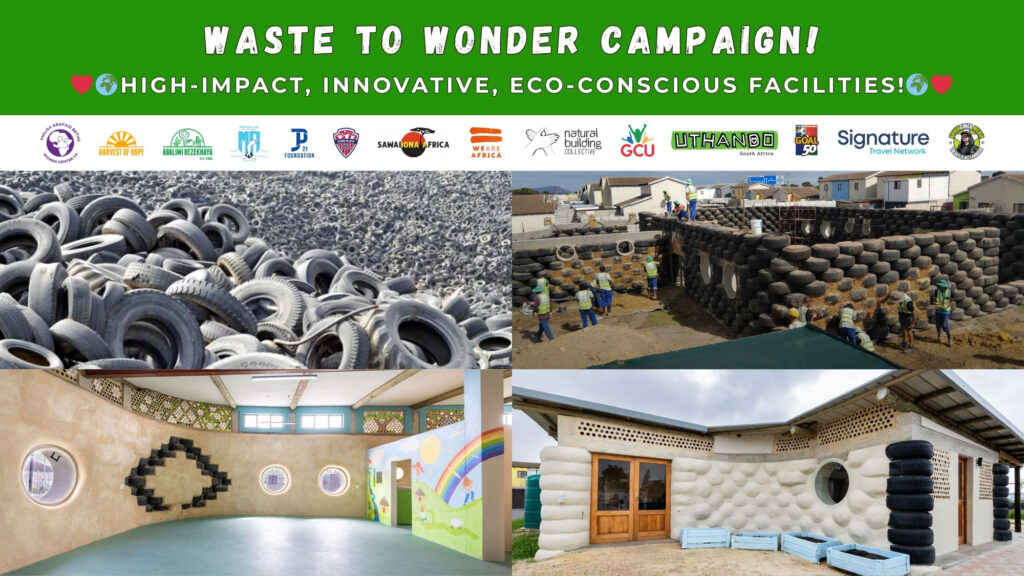
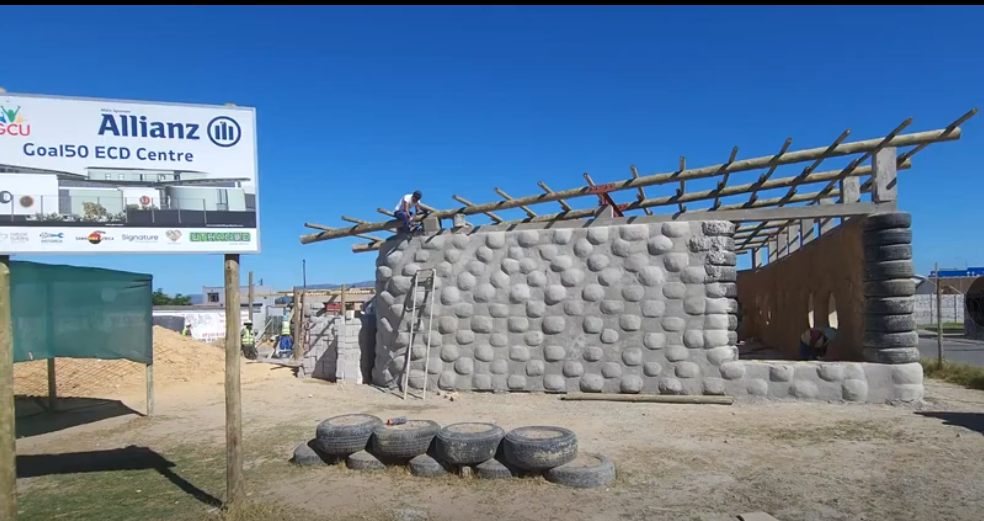
Uthando, working in partnership with the Natural Building Collective, “built two preschools (Ulwazi in Delft and Goal 50 in Heideveld) as well as three 5-a-side Soccer Pitches for Peace, diverting 5000 tyres, 18,000 plastic-bottles filled with waste and thousands of additional glass bottles and waste bricks from landfills, depots, movie sites or illegal dumping.”
As they say in their application for the Earthshot Prize.
“Our solution turns South Africa’s growing waste crisis into safe infrastructure for disadvantaged communities. Each tyre is packed with +-200 kg of earth, the plastic bottles are tightly filled with waste (also known as Eco bricks), and we also build using recycled glass bottles and film-set waste bricks. With a combination of reused and natural building materials, we create durable, fire-resistant, well-insulated buildings that remove waste from the environment permanently.”
Back in April, James Fernie of Uthando in Cape Town took me to see some of the buildings sequestrating used tyres and eco-bricks, plastic bottles stuffed with plastic waste, in mud walls. In the photograph below, the used tyres are clearly visible and the ‘mud’ used to create the walls. From the outside and in, construction looks ugly.
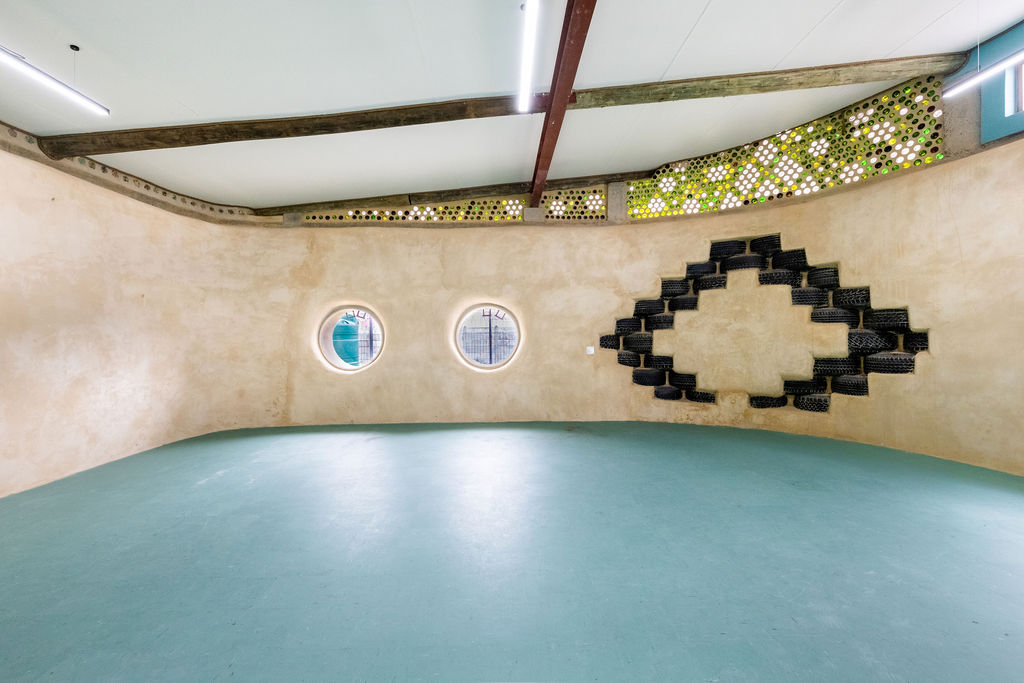
As can be seen from the image below its looks stylish. The round windows above on the right are the bottoms of glass bottles.
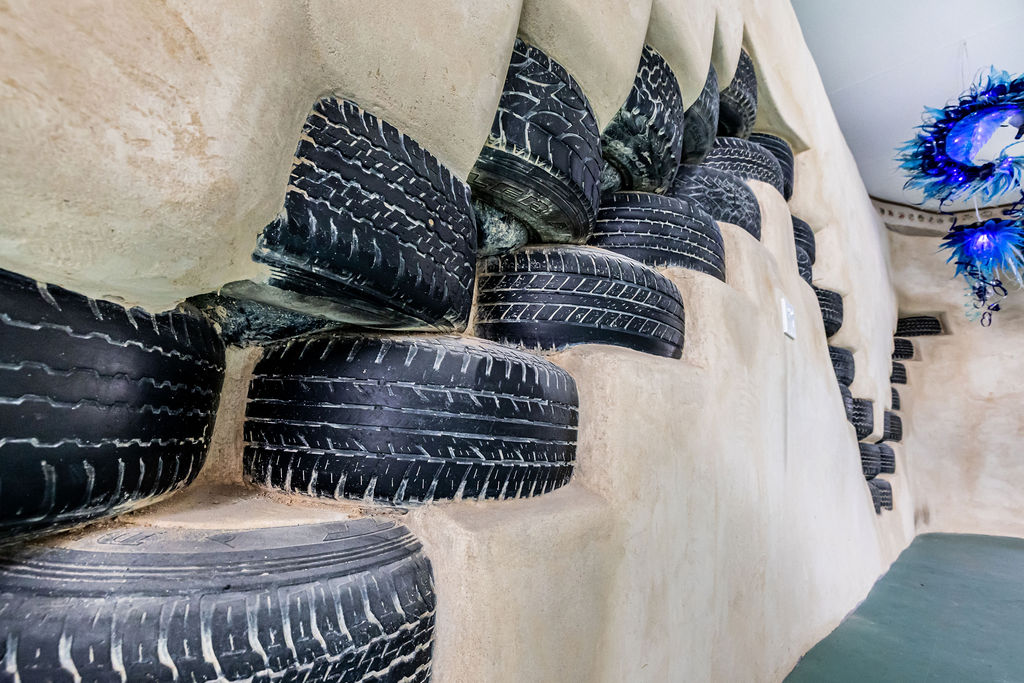
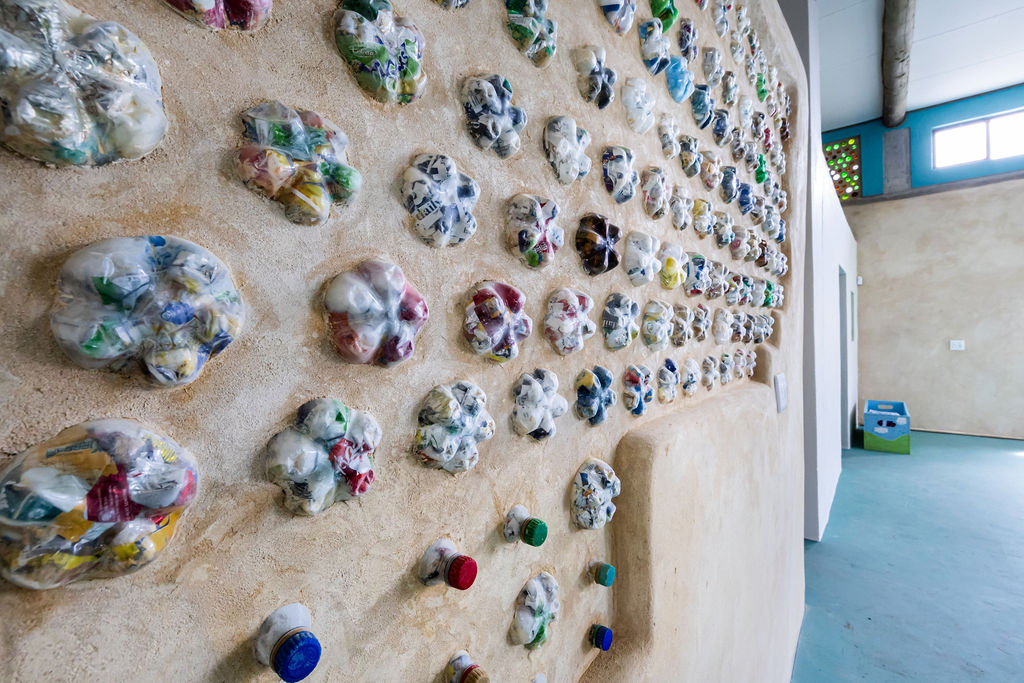
The wall below is made of plastic bottles stuffed with non-recyclable waste, much of which would otherwise have been spread in our environment and consumed as microplastics in our food chain.
You can find out more from Uthando.