


Portugal is reeling after a tragedy struck in the heart of its capital on Wednesday evening. At least 15 people lost their lives and more than a dozen others were injured when Lisbon’s famous Glória funicular railway derailed on its steep climb between Restauradores Square and the Bairro Alto.
The government has declared a day of national mourning, with flags at half-mast across public buildings on Thursday. Prime Minister Luís Montenegro described the incident as “a moment of deep grief for families and dismay for the entire nation.”
An accident on one of Lisbon’s best-known landmarks
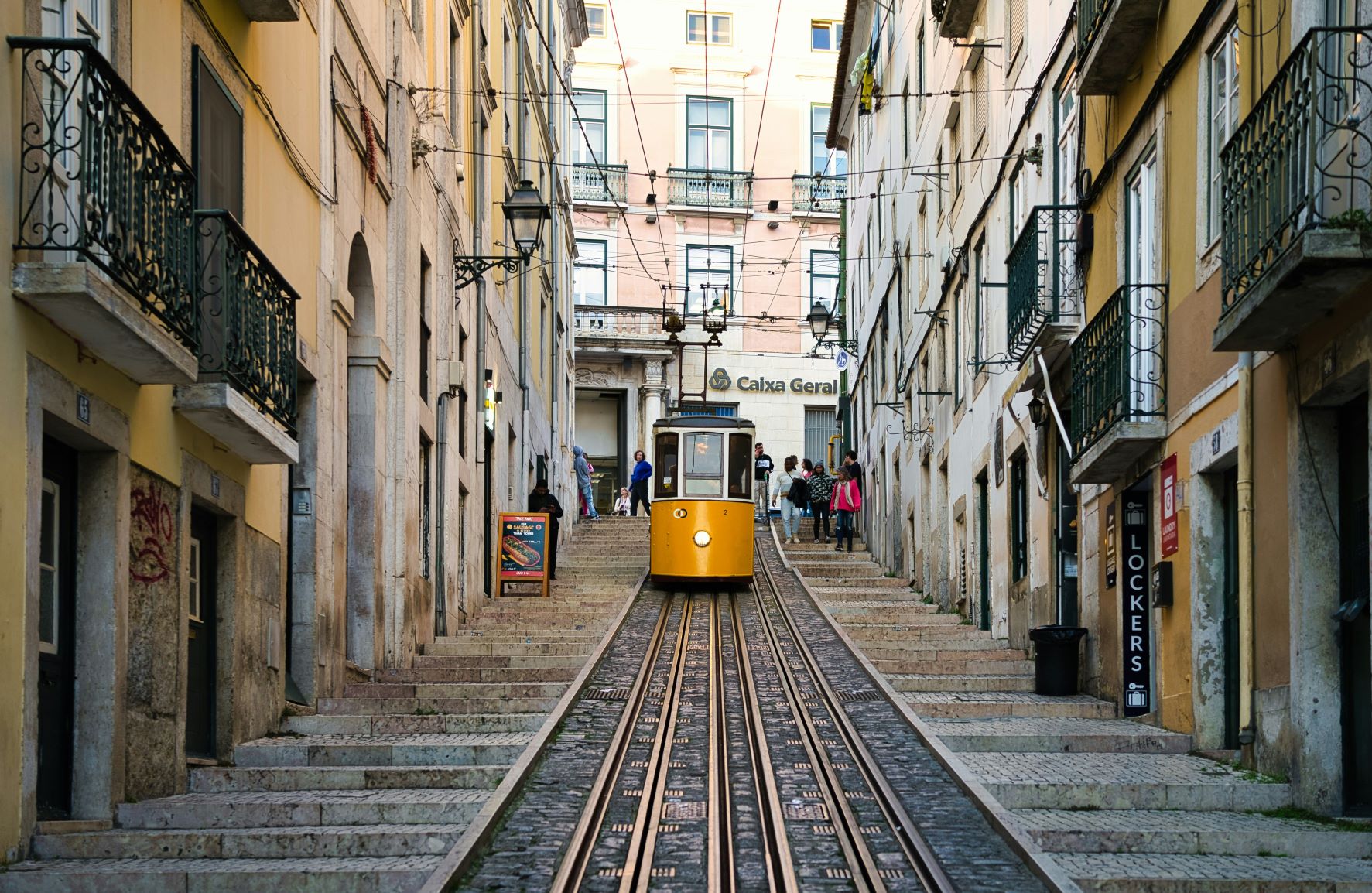
The Glória funicular, inaugurated in 1885 and today classified as a national monument, is one of the city’s most photographed and beloved icons. Carrying both residents and millions of tourists each year, the line links the downtown Baixa district with Bairro Alto, famed for its nightlife.
On Wednesday at around 6:00 pm, one of the two carriages reportedly lost control on the steep incline and smashed violently into a bend in the narrow street. Witnesses said the yellow-and-white carriage sped down the hill before slamming into a building.
Video footage shared on social media showed the wreckage lying on its side, its metal frame twisted and crumpled. The impact was so severe that nearby residents compared the sound to an explosion.
“It hit the building with brutal force and fell apart like a cardboard box,” Teresa d’Avó, a witness, told Portuguese television channel SIC. Another onlooker reported that the funicular toppled on to a pedestrian standing on the pavement.
🇵🇹 #ULTIMAHORA | El icónico tranvía Funicular Gloria de #Lisboa, #Portugal, se descarrila causando heridos y hasta el momento se contabilizan 3 fallecidos. O descarrilamento do Elevador da Glória, que ocorreu esta quarta-feira à tarde, em Lisboa #elevadordagloria #Lisboa pic.twitter.com/0PvqRnZZPe
— Redacción: Última hora (@RedaccionUH) September 3, 2025
Victims include foreign nationals
Emergency services confirmed at least 15 fatalities, with the victims including both Portuguese citizens and foreign nationals. Their identities and nationalities have not yet been disclosed. At least 18 people were injured, five of them seriously, including a child.
Rescue teams worked rapidly to extract passengers from the wreckage, completing the operation in just over two hours. Firefighters, civil protection officers and medical teams were supported by municipal staff and Carris, the company operating the funicular.
The Portuguese trade union SITRA said one of its members, believed to be working on the line, was among the dead.
🔴PORTUGAL 🇵🇹| #Drame : le déraillement mercredi 3 Sept, du funiculaire de Glória, monument touristique populaire de #Lisbonne, a fait au moins 15 morts et plusieurs blessées. L'engin, qui peut transporter jusqu'à 42 personnes, a plus d'un siècle, ayant ouvert ses portes en 1885. pic.twitter.com/euDkVbrr2r
— Nanana365 (@nanana365media) September 3, 2025
City and nation in mourning
Lisbon’s mayor, Carlos Moedas, described it as “a tragic day for our city.” Speaking to reporters at the scene, he added: “Lisbon is in mourning. It is a very tough day for all of us.”
President Marcelo Rebelo de Sousa issued a statement expressing his condolences and calling for answers: “We must establish the cause of this terrible accident and ensure that nothing like this ever happens again.”
The tragedy prompted an immediate halt to operations of all other funiculars and streetcars in Lisbon pending urgent inspections.
A Câmara Municipal de Lisboa decreta três dias de Luto Municipal pelas vítimas do trágico acidente no Ascensor da Glória.
— Carlos Moedas (@Moedas) September 3, 2025
Apresento as minhas sentidas condolências a todas as famílias e amigos das vítimas. Lisboa está de luto.
Investigation underway
The exact cause of the derailment remains unclear. Prosecutors have launched a formal investigation, while forensic experts from the Judiciary Police, including the homicide brigade, were seen examining the site.
Carris stated that the Glória line had undergone all required safety checks. In a statement, the company said: “All maintenance protocols have been carried out, including daily inspections, weekly and monthly programmes. Our teams remain on site and all means have been activated.”
Despite these assurances, questions are already being raised about the safety of ageing infrastructure under pressure from Lisbon’s booming tourism industry. The Glória funicular transports around three million people annually. Each of its two cars can carry approximately 40 passengers, attached to a central haulage cable and powered by electric motors.
Bystander video suggested that the accident had an immediate impact on the second car, stationed at the bottom of the incline, which jolted violently when its twin derailed. Passengers in that car were seen scrambling through windows to escape.
International reaction
Condolences poured in from across Europe and beyond. European Commission President Ursula von der Leyen said in a Portuguese-language post on X: “It is with sadness that I learned of the derailment. My condolences to the families of the victims.”
Spain’s prime minister Pedro Sánchez wrote that he was “appalled by the terrible accident,” while Italy’s foreign minister Antonio Tajani said he had expressed his solidarity directly to his Portuguese counterpart.
The UK’s Foreign, Commonwealth and Development Office said it was in contact with local authorities and ready to provide assistance if British nationals were affected. The United Kingdom is Portugal’s largest source of international visitors, followed by Germany, Spain and the United States.
É com tristeza que tomei conhecimento do descarrilamento do famoso “Elevador da Glória”.
— Ursula von der Leyen (@vonderleyen) September 3, 2025
Os meus sentimentos com as famílias das vítimas.
A painful reminder amid tourism boom
For many travellers, the Glória funicular is more than just transport: it is a quintessential Lisbon experience, connecting visitors to Bairro Alto’s bustling streets, its panoramic viewpoints, and its traditional restaurants. Its wooden interiors, vintage signage and creaking ascent up one of the city’s steepest hills have become a staple of Lisbon’s cultural identity.
The tragedy, however, is a stark reminder of the risks facing historic infrastructure strained by modern use. Lisbon has experienced a dramatic surge in tourism over the past decade, with visitor numbers setting new records each year. In the summer months, tourists crowd into the funicular, often queuing for long periods at its lower station on Praça dos Restauradores.
As investigators work to determine what went wrong, the city faces urgent questions about whether safety checks are adequate to cope with such heavy demand.
For now, the focus remains on the victims and their families. Candlelight vigils are expected in Lisbon’s central squares during the day of mourning. Churches across Portugal have announced memorial services, while Carris employees are planning their own tribute to the colleague lost in the crash.
“It is a heartbreaking tragedy for Lisbon, for Portugal, and for all those who have visited our city and loved this iconic funicular,” said Mayor Moedas.