


Between exhibitions, installations and long walks across Venice during the Biennale, visitors will welcome a new, quietly select place to pause: the newly opened Orient Express Venezia.
As its name suggests, the hotel is the second property opened by the legendary luxury travel brand, made all the more famous by Agatha Christie’s Murder on the Orient Express. Located in Cannaregio, slightly away from the heaviest tourist flows, it occupies the 15th-century Palazzo Donà Giovannelli.
The palazzo, which sits on the Rio de Noale canal, is identifiable by its pink and white stone façade and neo-Gothic lancet windows, which are attributed to Filippo Calendario, an architect also associated with the Doge’s Palace. Over the centuries, the building has passed through the hands of various illustrious families, including the Dona and Giovannelli, before becoming a pinacoteca and now beginning a new chapter as a hotel.
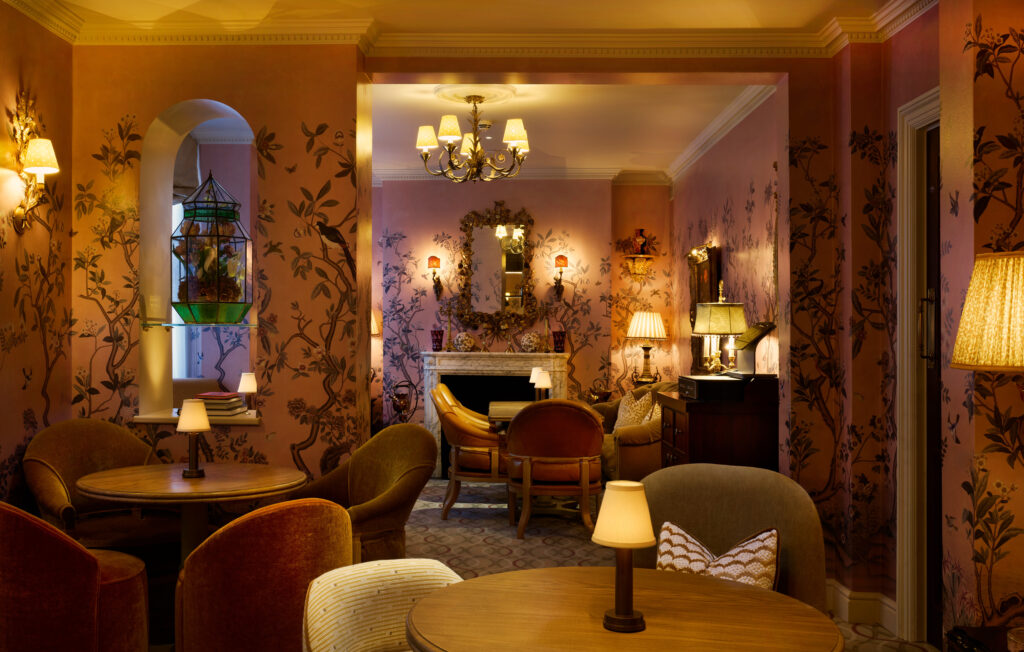
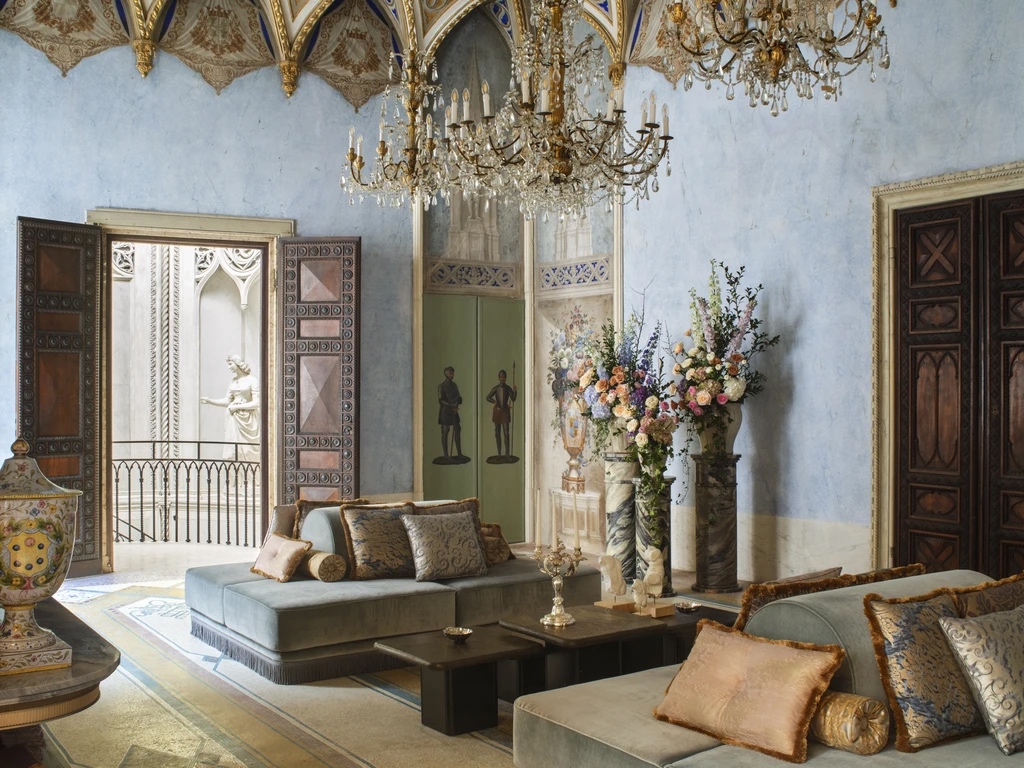
The latest transformation was led by Paris-based architect and interior designer Aline Asmar d’Amman. The property now comprises 47 rooms, suites and residences, including six Signature Suites, each conceived as a world of its own. Vaulted ceilings, frescoes, ornate stuccoes, watered silks, and rich velvets lend the interiors a theatrical opulence.
The interior is a deft blend of contemporary design, Baroque opulence and neo-Gothic elements. Asmar d’Amman has described her approach as one rooted in “carrying heritage forward” while establishing a dialogue between past and future. This ambition is evident throughout, from the careful preservation of mosaics, frescoes and sculptures to the efforts made to make guests feel at home in what remains unmistakably somebody else’s noble residence.
The result is striking, justifying the eight years that the restoration required. “To me,” she adds, “artistry and craftsmanship are the ultimate luxury.”
Key historical features were preserved, including the octagonal staircase attributed to Giovanni Battista Meduna, frescoes by the 19th-century Venetian artist Francesco Hayez, and a gilded ballroom dating back to 1548. The project also involved stabilising the palazzo’s underwater foundations – a delicate undertaking in a city like Venice.
“Here, Venice comes into focus as it has always been,” she says, “a cosmopolitan crossroads where East and West, scholarship and spectacle, share the same address”.
The hotel houses a fine-dining restaurant led by the three-Michelin-starred chef Heinz Beck. It is situated in the courtyard and is accessible via the hotel’s private boat entrance. The cuisine brings together haute gastronomy and Venetian influences.
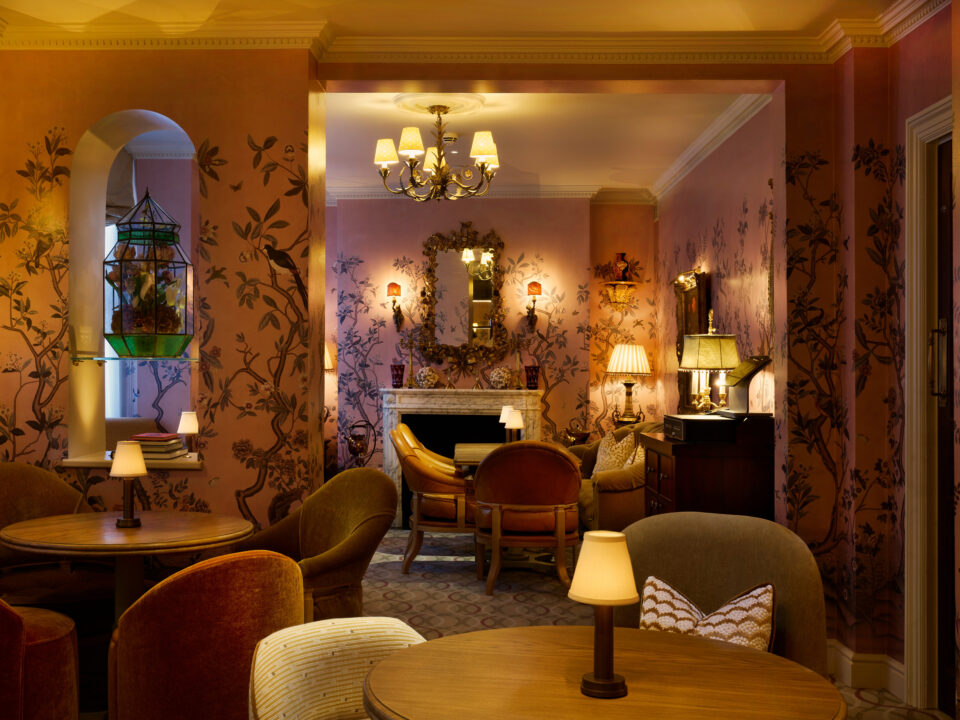
The result is lavish, yet intelligent. Murano glass and crystal chandeliers, silk wall coverings, brocade upholstery, blue-veined Marmorino plaster and Carrara marble come together to create interiors that feel both considered and intimate. Carved wooden frames and Venetian sliding panels add another local touch, while a rotating selection of contemporary artworks brings the space to life.
The lobby is designed to feel like a grand living room and connects to the garden via a passageway called Calle Meraviglia. There are also subtle references to the train’s history, most notably in the Art Deco-style Wagon Bar, which is inspired by the historic lounge cars of the original Orient Express. The property also features a garden with fountains and seating areas, set behind antique gates.
For those seeking an even deeper sense of restoration, a spa drawing inspiration from Roman thermal traditions, Venice’s maritime past, and the rituals of Ottoman hammams is also on the way.
Asmar d’Amman said she wanted visitors to feel “drunk on beauty”.
Gilda Perez-Alvarado, the chief executive of Orient Express, hopes that Orient Express Venezia will “open a new chapter in the legacy of our brand”, celebrating Venice as a cultural, beautiful and imaginative capital, where the art of travel meets the soul of the city.