A beloved English walk, first described in 1973 and once rated as the second-best hiking route in the world, has been revived by Natural England, a non-departmental public adviser for the natural environment that manages National Trails.
The Coast-to-Coast Walk, originally mapped by legendary UK walker Alfred Wainwright over 50 years ago, has now been upgraded to National Trail status. From St Bees Head on the Irish Sea to Robin Hood’s Bay on the North Sea, the walk traverses the “grandest territory in the north of England,” Wainwright said, noting that “two-thirds of the route lies through the areas of three national parks.”
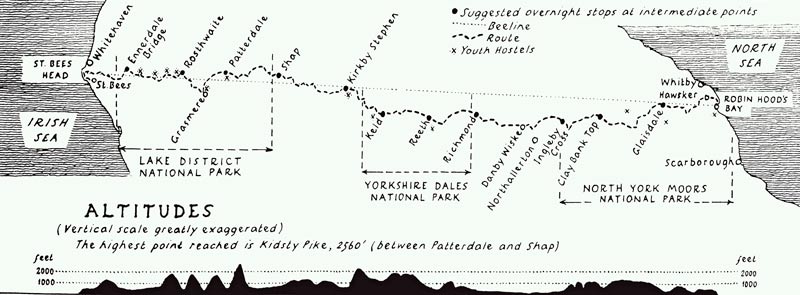
Covering over 308 km, the walk connects the westernmost point on the Cumbrian coast—a dramatic red sandstone headland characterised by towering cliffs and a seabird reserve—to a significant bay terminus on the North Yorkshire coast, linked historically to smuggling. The trail passes through scenic landscapes such as the UK’s Lake District, known for its associations with the romantic poet Wordsworth, and the Yorkshire Dales and North York Moors, forever linked to the Brontë sisters. The relaunch coincides with a resurgence of interest in literature-inspired tourism around the world.
It is set to open formally in spring 2026, following works to improve signage, visitor information, and wayfinding to services. There are now better access opportunities for people with reduced mobility, plus alternative routes for cyclists and horse riders. In addition, wildlife habitats have been restored, and local communities engaged, including through economic opportunities for local businesses.
What’s more, a local sculptor, Steve Iredale, has been commissioned to carve a new sculpture within Little Beck nature reserve, near Whitby, along the walk, at a point where ancient woodlands meet a river tributary, and bluebells, primroses, and ferns dot the countryside. The poem “Peace” by the African, Native American, and English poet Georgia Douglas Johnson provided the inspiration for his sculpture, and its words, written in 1916 at the height of the First World War, are a call to the calming influence of nature, where one can lose oneself and find refuge from the world’s tumult.

A Community Interest Company offers a “passport” for walkers of the trail, allowing participants to record the stages of their journey by collecting unique stamps from 29 different places. The passport also gives access to discounts on refreshments and walking gear en route, as well as admission to a range of attractions, and wellness treats such as a massage. Walkers who have completed the hike are entitled to a free Completion Certificate at the end point.