


New rules around the sale of honey in the European Union came into force on 14 June 2026, in a move aimed at helping consumers better understand their purchases in a market where low-cost imports, opaque blends, and suspicions of fraud can make buying a quality product difficult.
The new European honey labelling rules were introduced under Directive (EU) 2024/1438, known as the “Breakfast Directives”. This development, already in place in Germany and now formally implemented in Belgium through amendments to national legislation via new Royal Decrees, aims to strengthen transparency regarding the origin of several food products, including honey.
The legislation means consumers across Europe will gradually begin to see new information on jars of blended honey. Labels will now be required to clearly indicate the countries of origin of the honey, listed in descending order, and accompanied by the percentage share for each origin. Generic statements such as “blend of EU honeys” or “blend of EU and non-EU honeys” will no longer be sufficient.
BeeLife, a network of beekeeping associations, has campaigned for the regulatory shift as a way of recognising the value of European honey. “This change will not solve all the challenges facing the market on its own, but it finally provides consumers with essential information: where does the honey they are buying actually come from?” said Etienne Bruneau, Vice-President of BeeLife. Describing beekeepers as under pressure from “opaque blends and abnormally low prices”, he added that “transparency is the first condition for trust.”
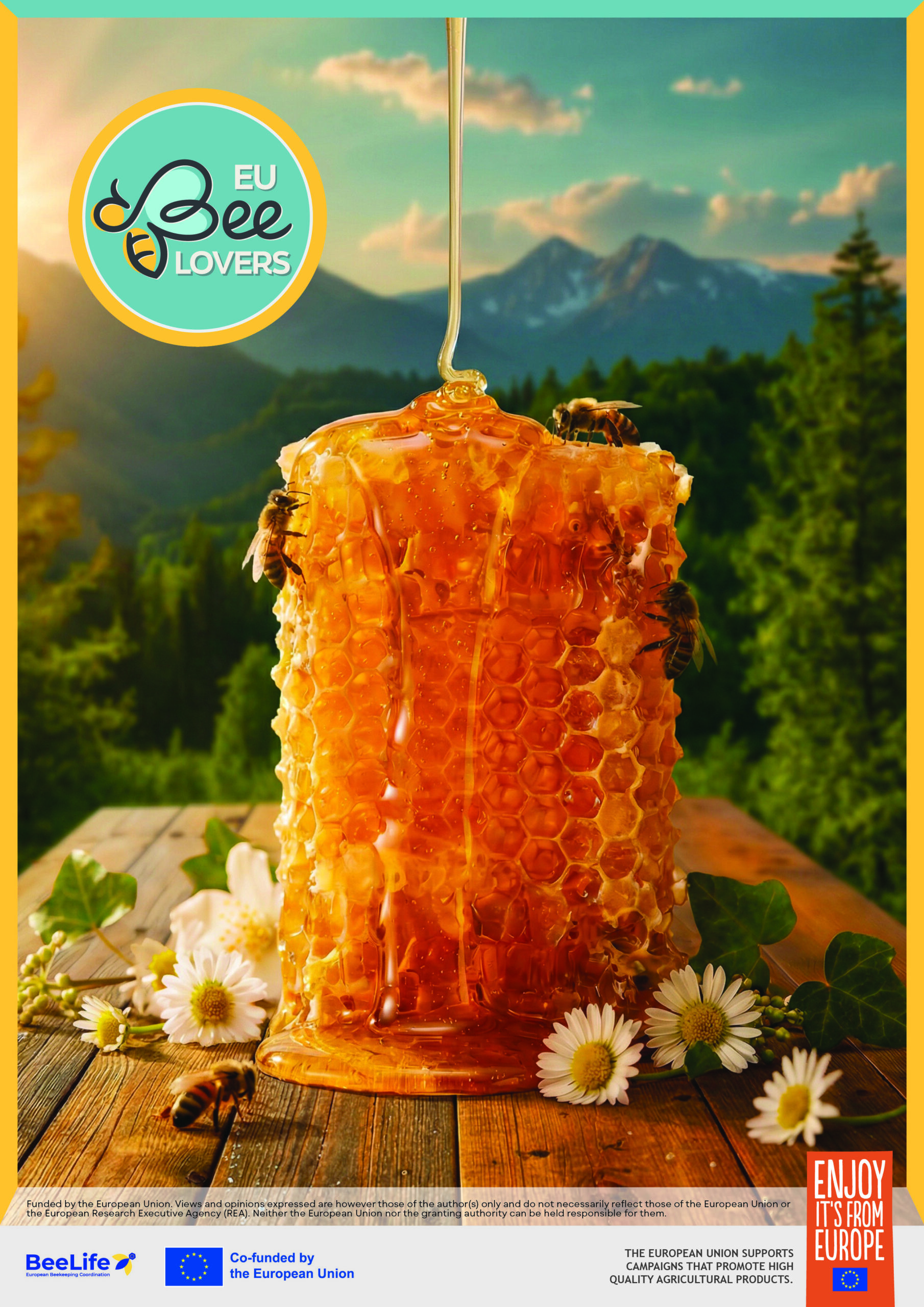
The European honey market is currently experiencing considerable strain. At the launch of the EUBeeLovers campaign, experts brought together by BeeLife highlighted that the European internal market represented approximately 153,000 tonnes in 2024. This volume was supplied equally by European production and honey imported from countries outside the European Union. The global honey market remains largely dominated by Asia, particularly China, which plays a central role in international trade. However, certain production and export figures continue to raise concerns among sector experts. Reported volumes, unusually high yields per hive in some countries and significantly low export prices have fuelled suspicions of irregularities and, in some cases, fraud.
BeeLife’s “From the Hives” research found 146 suspect samples out of 320 analyses, or 46%. Dodgy practices include adding sugar syrups, badly labelling products, harvesting immature honeys, over-filtering, and other methods designed to camouflage the way products have been adulterated or degraded.
At the same time, European beekeepers face an increasingly unsustainable economic imbalance. Between 2022 and 2024, the average production cost of honey in the European Union rose from €5.30/kg to €5.40/kg, while the average selling price fell from €3.69/kg to €2.92/kg, BeeLife points out. Meanwhile, some imported honeys enter the market at extremely low prices, sometimes below €1.50/kg, depending on their origin. For European producers, competition is therefore not only a matter of volume but also of price differences that are difficult to reconcile with actual production costs.
BeeLife has issued a statement strongly supporting the new, more transparent rules, arguing they will permit consumers to recognise the proper taste, texture, colour, value, and diversity of European honeys, whether they are based on flower nectar, honeydew, single sources, or territories.
“European honey must not be reduced to a commodity, said Anna Ganapini, BeeLife President. “It is the result of demanding apicultural and environmental work, including traceability across a range of territories. Better informed consumers are better equipped to make informed choices and to understand that they can make a difference,” Ganapini added, arguing that “reading labelling and choosing a European honey is a militant act that helps support the sector.”