


Learning a new skill on holiday is becoming increasingly popular, according to new data from Mastercard that reveals nearly half of Europeans (48%) plan to spend at least part of their summer vacation upgrading their skillset.
Gen Z are “leading the trend,” Mastercard reveals. During a February 2026 survey asking more than 27,000 holidaymakers across 28 European countries about their travel and tourism motivations, the financial products and services firm found 57% of 18–24-year-olds and 52% of 24–34-year-olds had already gone ahead and planned a dedicated skill-based trip this year.
Experiences over things
Across all age groups, more than a third (37%) of people had already booked up to boost their skills. More than half (51%) of travel consumers said travel feels more meaningful when they learn something new, and a similar number (48%) believe new skills are now “a more valued memento than souvenirs.”
The data reflects a wider spending trend where consumers increasingly value experiences over things—an important phenomenon for Mastercard, which, through its experience platform, Priceless.com, is offering a variety of skills-based experiences, such as traditional candy-cane making or Dala-horse painting in Sweden, making art by the sea in Croatia, or perfume creation in France. The strength of the trend is also shown by the fact that Mastercard is not the only one getting in on the act. Airbnb is offering bookable experiences, Netflix is going immersive with Netflix House, and even premium goods brands such as LVMH are partnering with Orient Express on an ultra-luxury yacht.
Skillcations spread tourism’s benefits more evenly
But back to skills and holidays. Despite the cringe-worthy neologism (“skillidays”) that Mastercard insists on using, the appetite for learning displayed by today’s consumers is opening a new revenue opportunity for tourism SMEs, which employ one in nine people in Europe, and account for 10.5% of EU GDP, World Travel and Tourism Council figures say. For any of those providers wondering what to call their offer instead of “skillidays,” perhaps “learnaways,” “skillcations,” “upstays” or even “learning escapes” are more elegant solutions.
Whatever term is used, two in five tourists (42%) are “happy to pay more for a trip that teaches them a skill,” Mastercard says, boosting the bottom lines of local providers that can offer authentic experiences. As Natalia Lechmanova, Chief Economist, Europe, Mastercard Economics Institute, puts it: “From winemaking and woodworking, to pottery, painting and even permaculture, consumers are opening their wallets for local businesses that can give them a taste of the culture, and a lesson that lasts long after they’ve arrived home.”
It’s also a trend that can balance footfall and income-generation, helping to mitigate overtourism, as Lechmanova explains: “Skill-based travel tends to draw people beyond the crowded hotspots and into smaller towns, rural areas and quieter seasons, helping to spread tourism’s benefits more evenly.”
Languages, food, wellness, and crafts dominate the wishlist
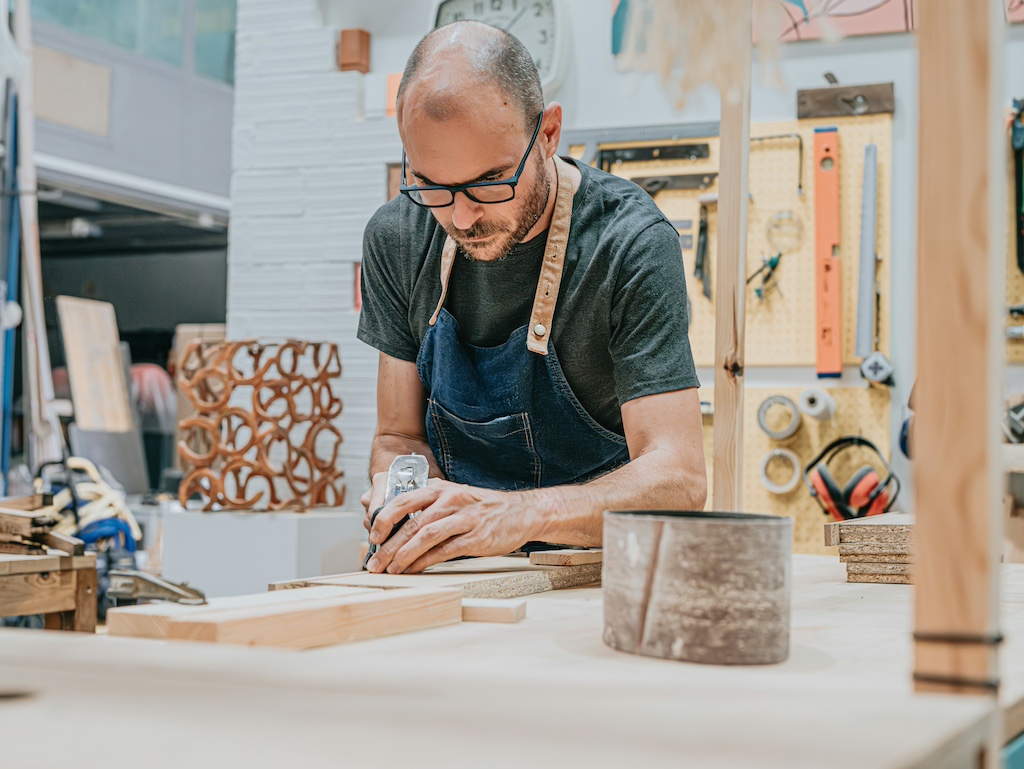
When it comes to which skills travellers want to acquire, unsurprisingly languages top the European wishlist, with 30% of tourists aiming for at least some conversation with locals during their trip. Cookery workshops are the next most popular choice, for 28% of consumers, and cheese and wine or “food production” workshops are equally attractive. The wellness sector can once again pat itself on the back, with yoga, meditation, dance, and martial arts attracting 25% of travel consumers. And 24% are interested in traditional arts and crafts such as pottery, woodwork, weaving, and textiles.
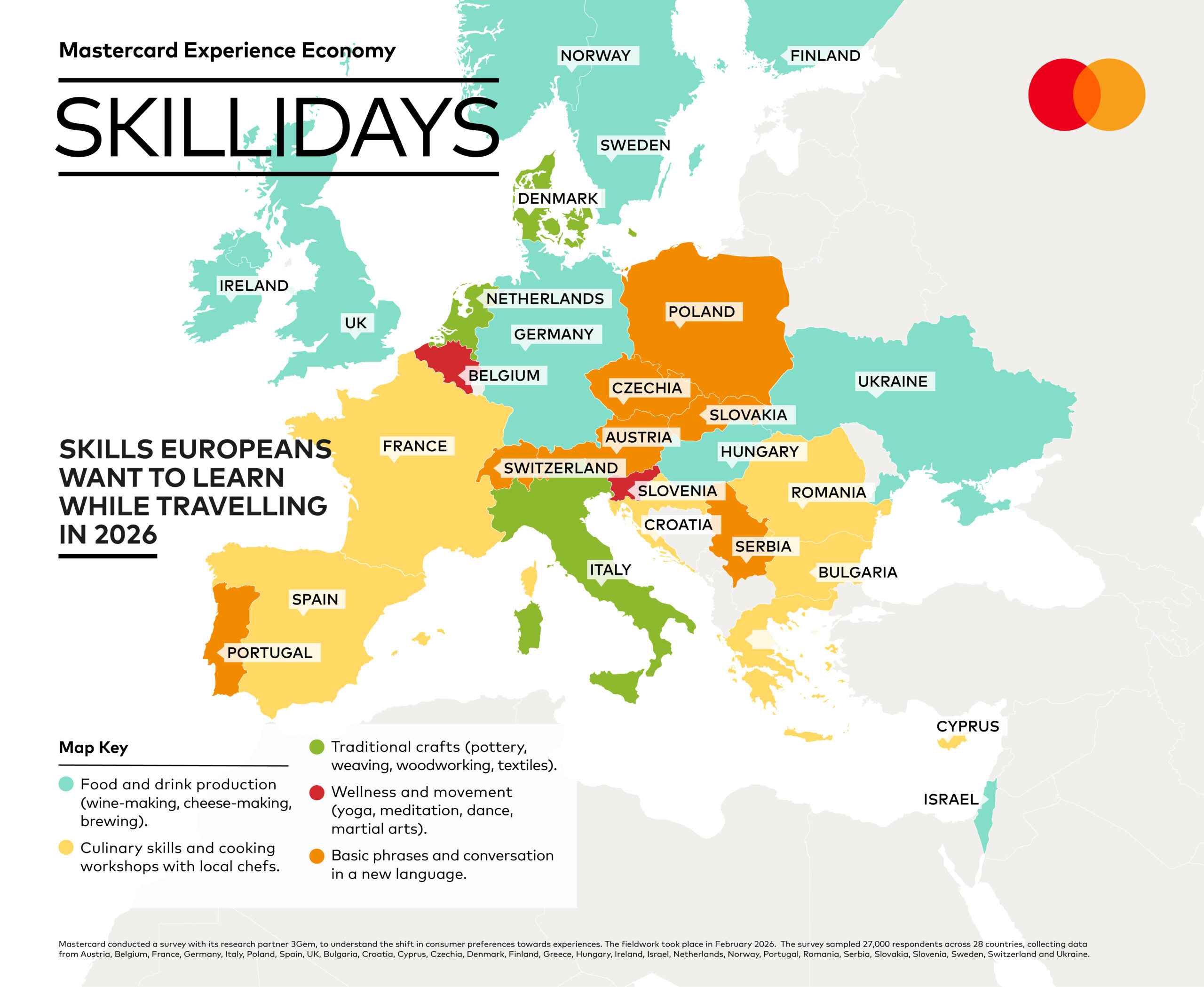
Mastercard has also drawn up a map showing which skills appeal most to which nationalities. A desire to get to grips with food and drink production dominates the northern European countries, while southern European consumers are more interested in culinary skills and cooking with local chefs. A streak of passion for the creative arts runs down the spine of Europe from Denmark to Italy, while Benelux consumers stand out for their yearning for wellness and movement-oriented vacations.
Finally, Mastercard’s latest travel report reveals which European nationalities are spending the most on life experiences when on the move around the region. Amsterdam cardholders are the biggest spenders on experiences in France, accounting for 9.7% of total spend, while Netherlands-based cardholders make up 4.9% of experience spending in the UK, and Italians account for 3.1% in Spain.