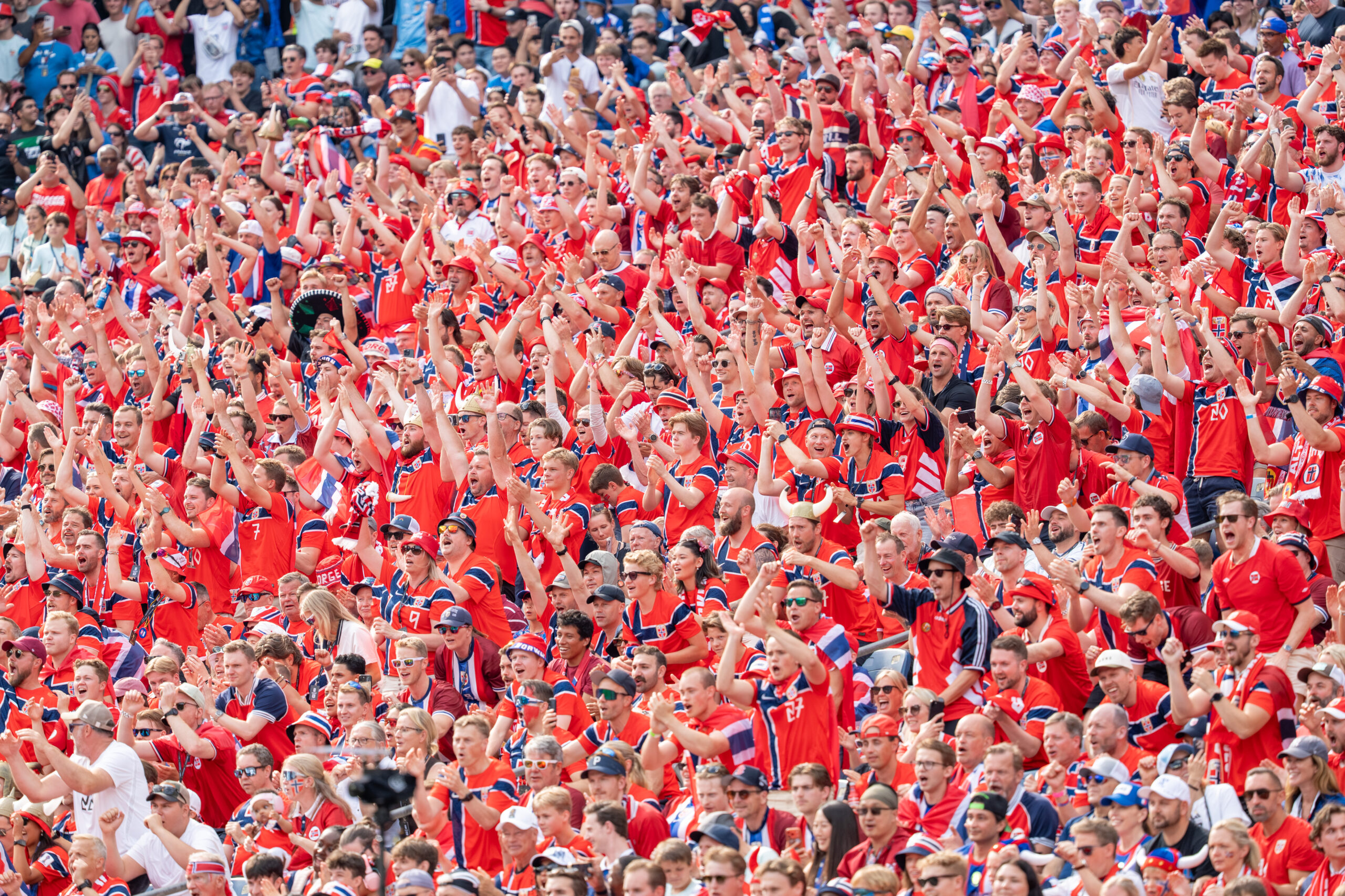



Norway is seeing a surge in global travel interest following its standout performance at the 2026 FIFA World Cup, with football star Erling Haaland and the viral “Viking row” celebration helping to put the Nordic country firmly on travellers’ radar.
The trend mirrors similar tourism boosts seen after other World Cup success stories. Spain’s tournament victory triggered a 33-fold increase in flight searches from China, while Cape Verde’s historic World Cup debut drove a 5,000% surge in US travel searches, highlighting the growing influence of major sporting events on tourism demand.
According to Euronews, online interest in Norway has risen sharply since the tournament. Google Trends data shows searches for the Polish term “Norwegia” increased by 200% year-on-year, while global searches for the English keyword “Norway” were up 300%. Flight search data from Kiwi.com also revealed that average daily searches for flights from Poland to Norway between 1 and 20 July were 32.3% higher than during the same period in 2025. Meanwhile, Airbnb recorded a 15% increase in accommodation searches for Norway between 11 June and 12 July compared with a year earlier.h
Much of the attention has centred on Manchester City striker Erling Haaland, who guided Norway to its best-ever World Cup finish by reaching the quarter-finals. According to the Institute of Media Monitoring, Haaland gained 31.9 million Instagram followers during the tournament – the largest increase of any player at the World Cup – making him the fourth most-followed active footballer in the world behind Cristiano Ronaldo, Lionel Messi and Kylian Mbappé. He also ranked third for Instagram interactions during the competition.
Rather than relying on polished promotional content, Haaland attracted audiences with behind-the-scenes videos from the Norwegian camp and his relaxed, humorous approach on social media.
“An increase of almost 32 million followers in such a short time is above all the result of the Norwegian’s sense of humour and authenticity. Internet users reward organic virality, behind-the-scenes access and people who keep a healthy distance from themselves. These elements mean that short videos spread rapidly online, generating spectacular reach,” said Tomasz Lubieniecki, head of the Media Reports Department at the Institute of Media Monitoring.
Norway’s supporters also became one of the defining images of the tournament through the now-famous “Viking row” celebration, with thousands of fans sitting behind one another and mimicking rowing movements in unison. The celebration quickly spread across social media and was adopted by players, appearing in stadiums, city streets and public transport. Combined with Norway’s Viking-inspired visual identity – including shirt numbers styled as Nordic runes and strong references to Viking culture – the celebration became one of the tournament’s most recognisable symbols.
The spike in online attention has translated into measurable tourism interest. Wikipedia traffic for Norway peaked on 11 July, when the national team faced England in the World Cup quarter-finals, while travel and accommodation searches also climbed. According to Lubieniecki, the data suggests that the tournament generated more than temporary online buzz.
“We can see a clear link here between the sporting event and consumers’ purchasing and travel decisions. The key point is that the spikes in search engines and on Wikipedia were reflected in Airbnb’s business data and in analyses of the Polish tourism market. This shows how online virality can build reach that has real value for the image and economy of an entire country,” he said.
Norway’s World Cup campaign adds to growing evidence that success on football’s biggest stage can influence travel demand, with destinations increasingly benefiting from the global attention generated by the tournament and the viral moments that capture audiences far beyond the pitch.