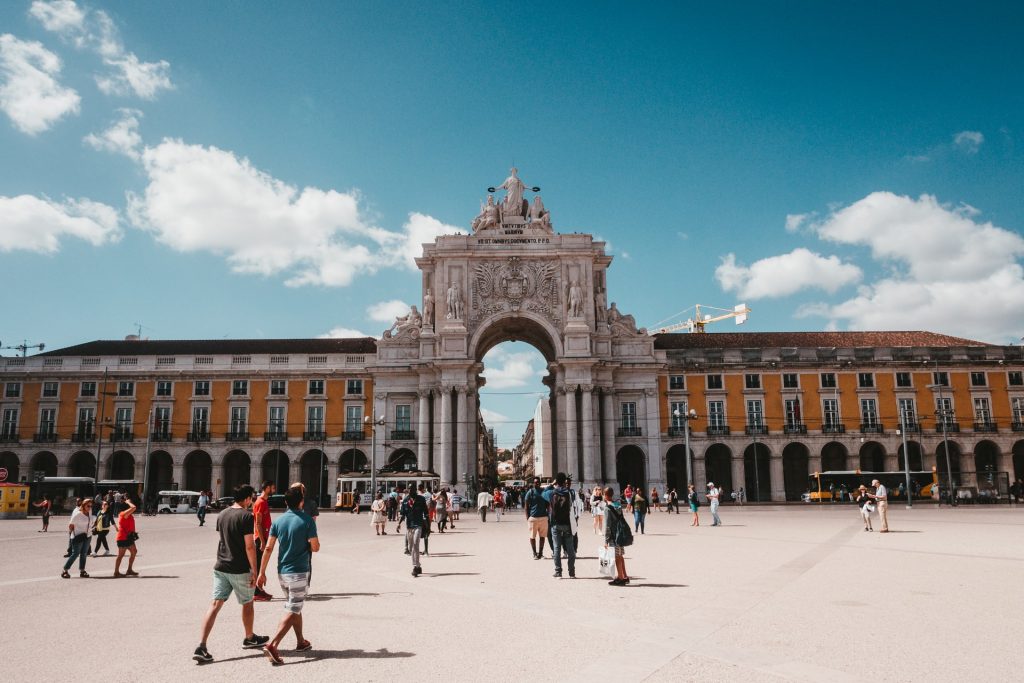
Lisbon, Portugal, has introduced a citywide reusable cup scheme in what the city council says is a first-of-its-kind initiative among European capitals, to tackle plastic waste and bring down emissions.
Faced with around 25,000 supposedly “reusable” plastic cups discarded in Lisbon’s nightlife and restaurant districts, city councillors ruled in 2024 to ban disposable plastic cups. Now the infrastructure to support the ban through a trial phase is being put in place.
Deposit-and-return model
Using a deposit-and-return model, the scheme requires consumers to pay a refundable deposit of €0.60 when buying a drink in a plastic cup. That small downpayment is reimbursed as soon as the cup is returned, when the consumer taps their contactless card or mobile phone to a collection point. No registration is involved.
Kiosks with collection points, operated by the Norwegian sorting technology firm TOMRA, are planned for central districts, with 17 planned for the Baixa area alone. Two have already been installed for a pilot run in Praça de São Paulo and Praça do Príncipe Real, and they have been up-and-running since 27 June, 2025.
TOMRA will take care of collecting, cleaning and redistributing the cups, ensuring a circular economy. By autumn 2025, the city intends to have launched a standardised “Lisbon cup” for all participating bars and establishments.
Hailing the move as “a concrete step towards building a culture of reuse in our city,” Rui Cordeiro, Lisbon City Council’s councillor for Waste and Circular Economy, expressed hope that other cities would be inspired to follow suit. He said Lisbon “is committed to leading by example, promoting sustainable alternatives to single-use plastics and involving partners in a real change towards more conscious consumption habits.”

“A sustainable and positive change”
The development comes about thanks to a partnership between Lisbon City Council, TOMRA and the Association of Hotels, Restaurants and Similar Services of Portugal (AHRESP). In particular, AHRESP, Portugal’s biggest industry association, is giving cafés, bars and nightclubs help and advice on how to align with the new reuse model.

“This initiative represents a necessary change for the HORECA (hotel, restaurant, and café)sector, which is now playing an active and central role in the transition to a more circular economy,” said Carlos Moura, AHRESP chairman, promising establishments “not only a practical solution to respond to the new regulations, but also an opportunity to lead, with consumers, a sustainable and positive change of habits for the city of Lisbon.”