

Following the border breach in Ceuta on 30 July 2026, Italy has announced to temporary suspend the Schengen free movement regime with Spain. According to the Ministry of Interior, checks will only concern Non-EU travellers.
On 30 July 2026, some 40,000 to 60,000 people (specific numbers vary per source) crossed the border between Morocco and the Spanish North African enclave of Ceuta, most of them via sea. According to Morocco’s Interior Ministry, who first commented on the matter on Sunday 2 August, the movement was sparked by a combination of misinformation on social media, human trafficking networks, and a Spain court ruling which bans the immediate return of migrants arriving by sea.
@kronikinsights 😅 Une scène qui fait le tour des réseaux sociaux : un migrant marocain a été filmé transportant son vélo après avoir rejoint Ceuta lors d’un important afflux de migrants. Selon plusieurs médias, des dizaines de milliers de personnes ont tenté de franchir la frontière entre le Maroc et l’enclave espagnole de Ceuta, un territoire dont la souveraineté est revendiquée par le Maroc et administré par l’Espagne.#info #insolite #viral #buzz #Politique ♬ son original – Kronik insights
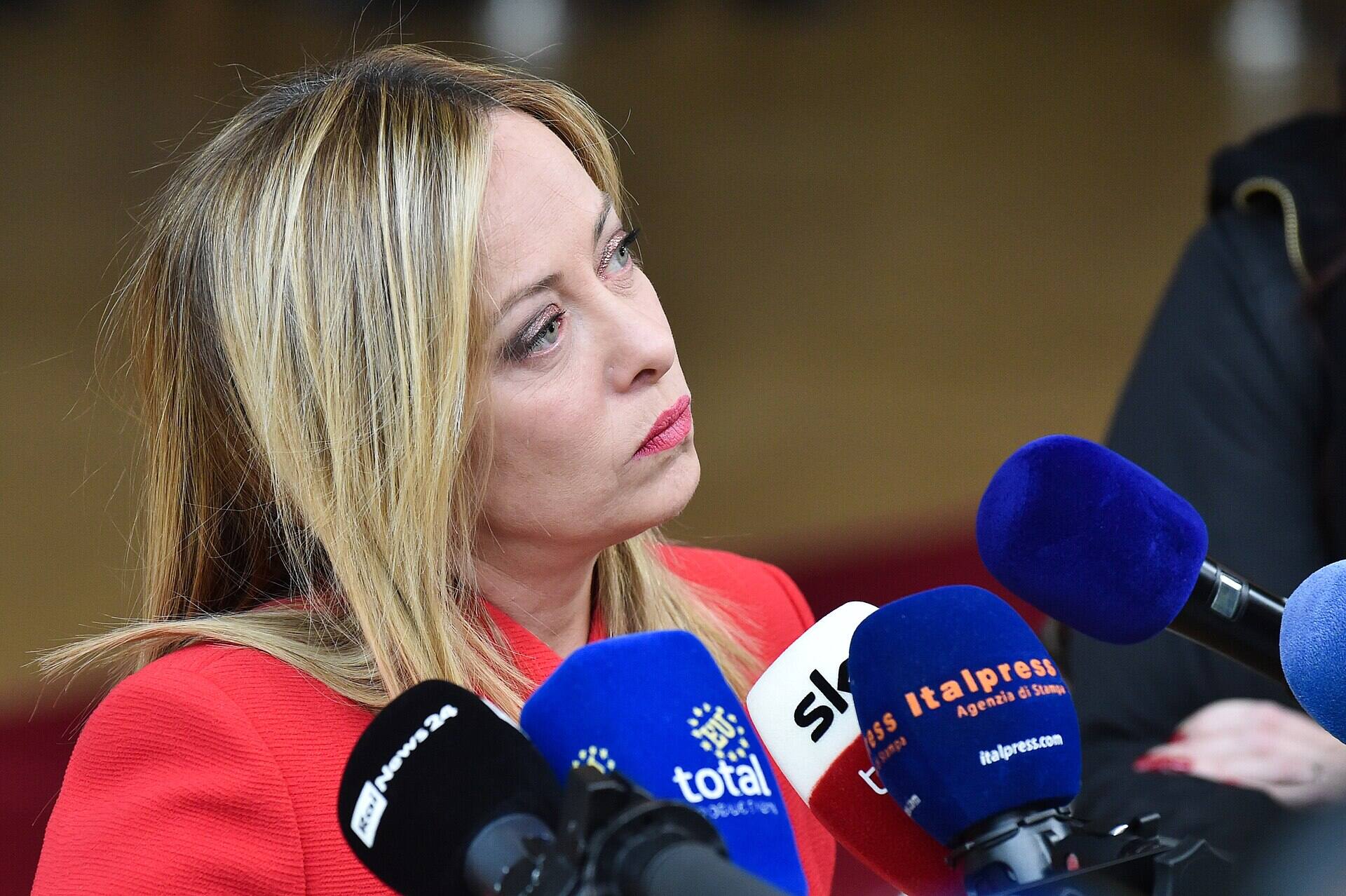
Italy’s Prime Minister Giorgia Meloni and Deputy Prime Ministers Antonio Tajani and Matteo Salvini were quick to respond to the situation. During the evening of Thursday 30 July, they announced the country would be temporarily suspending the Schengen free movement agreement between Italy and Spain, Introducing “targeted and selective” checks on Non-EU travellers. The decision was formally approved on 31 July and took effect on 1 August, scheduled to last for one month.
“The temporary suspension of Schengen with Spain is a necessary choice to safeguard the security of our citizens and defend the European borders. A measure provided for by the treaties and made unavoidable today. The migrant crisis in Ceuta reminds us that the management of the Union’s borders is a shared responsibility among our countries, one toward the other. We must work together to prevent uncontrolled migrant flows from entering EU territory, with all the consequent risks and the threat of terrorism, which must be countered without hesitation,” Deputy Prime Ministers Antonio Tajani wrote on X.
Sono favorevole alla chiusura dello spazio Schengen con la Spagna e ho piena fiducia nell’operato del Ministro Piantedosi. L’immigrazione irregolare e incontrollata rappresenta un pericolo per la sicurezza nazionale. Le immagini che arrivano da Ceuta dimostrano come la scelta del…
— Antonio Tajani (@Antonio_Tajani) July 30, 2026
Italian critics of Meloni said the measure was largely symbolic, as there was no reason to believe that the migrants arriving in Ceuta wanted to travel onwards to Italy.
Although Italy’s decision was heavily disputed, several EU member states including the Netherlands, Finland, the Czech Republic, Denmark, and Sweden seemed to be approving Meloni’s measures. Multiple European far-right parties, such as the French National Rally, the German Alternative for Germany (AfD), and the British Reform UK have praised the decision.
Le immagini arrivate da Ceuta hanno dimostrato ancora una volta quanto sia urgente una risposta europea all’immigrazione clandestina.
— Giorgia Meloni (@GiorgiaMeloni) August 1, 2026
Per questo l’Italia ha promosso, insieme alla Danimarca, una lettera sottoscritta da 22 Stati membri dell’Unione europea, che chiede un’azione… pic.twitter.com/v8nmxzSYKn
Spanish Prime Minister Pedro Sánchez and Foreign Minister José Manuel Albares, however, condemned the suspension of the Schengen agreement.
“Solidarity and empathy are optional. Respect for European treaties and the facts is not. This is not the time to divide. It is time to continue building a strong and united EU,” Pedro Sánchez said on X, citing Frontex figures showing the number of illegal entries via Italy between 2021 and 2026 was higher than those via Spain.
Lo que ha sucedido es un ataque a la integridad territorial de España y merece nuestra más rotunda y enérgica condena.
— Pedro Sánchez (@sanchezcastejon) July 31, 2026
Toda España está con la ciudadanía de Ceuta. El Gobierno de España está con la Ciudad Autónoma.
Gracias por la cooperación que siempre hemos mantenido con el… pic.twitter.com/ZqKdUdu7Oy
Following the border crossings, France, too, announced it would be reinforcing its border checks with Spain. The French Interior Minister Laurent Nuñez, took to X to share France’s measures.
“In response to the situation in Ceuta, in accordance with the request from the President of the Republic, the deployment of reinforcements has begun at the Spanish border. From this Friday, in addition to the resources already deployed on a daily basis, the number of reinforcements will be tripled, with 184 police officers mobilised alongside enhanced drone surveillance. From tomorrow, these numbers will be increased fivefold, bringing the total to 334 police officers and gendarmes in addition to the usual numbers deployed. Aerial surveillance capabilities will also be strengthened with the deployment of three Border Police aircraft. Furthermore, there will be an increased presence of patrols on trains along the Franco-Spanish rail link”, Nuñez wrote.
Face à la situation constatée dans l’enclave de Ceuta, j’ai, dès hier soir, donné des instructions pour renforcer sans attendre les contrôles à la frontière espagnole. Par ailleurs, j’active la Force Frontière d’intervention rapide pour des contrôles en profondeur.
— Laurent Nuñez (@NunezLaurent) July 31, 2026
By Sunday 2 August, most of those who crossed the border had walked back into Morocco, with Spanish officials saying 72 people died in the border rush and some 1,000 were treated by medical services. Authorities also installed a 500-meter long floating barrier in the sea off Ceuta, in order to boost border security, while police and army patrols were reinforced.
The European Union interior ministers are scheduled to meet for emergency talks on Tuesday 4 August, as 22 member states have requested coordinated border measures. According to European Commission President Ursula von der Leyen, “the Commission has offered support to Spain from the first moment.”