


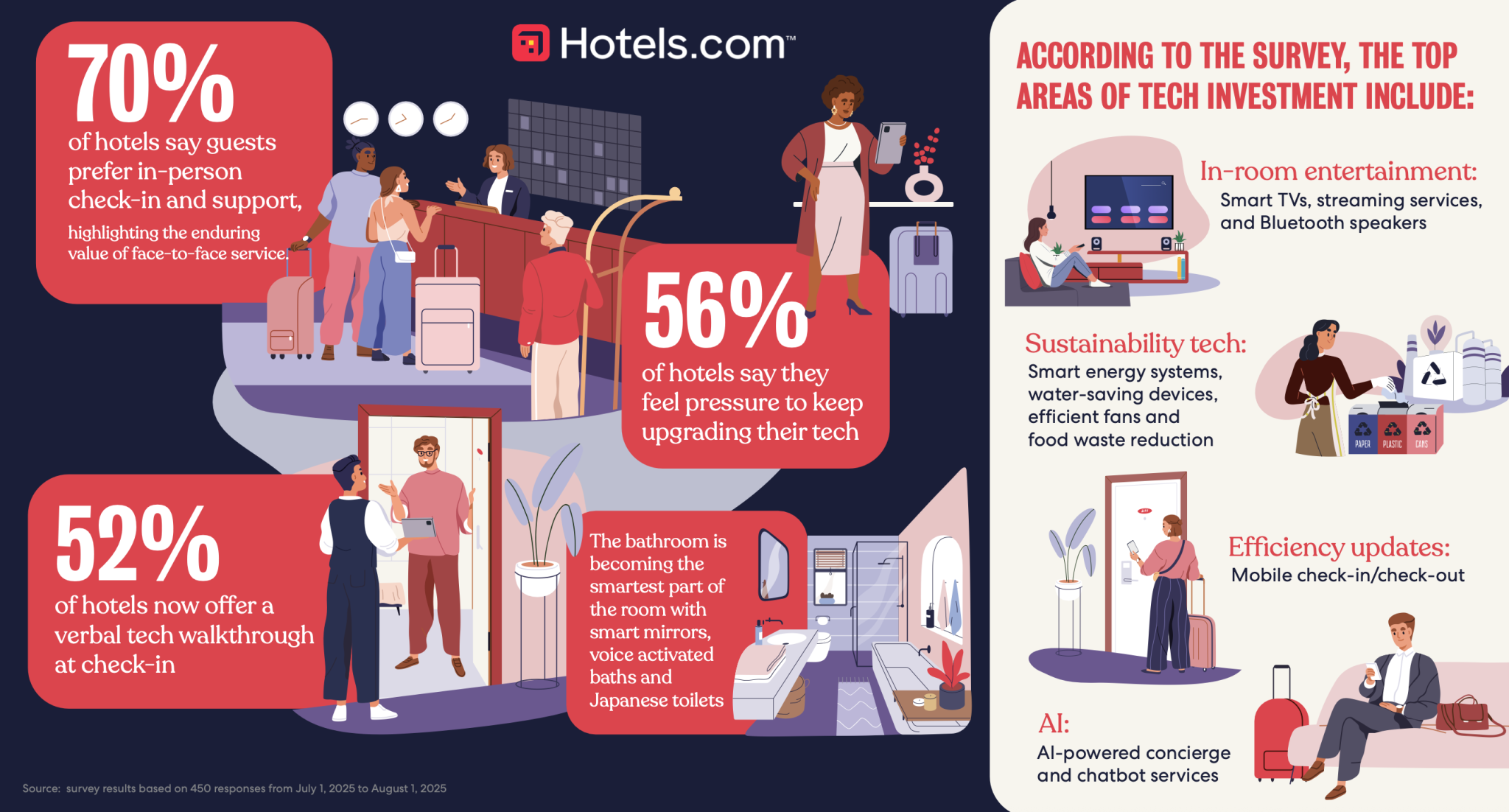
Hotels are increasingly adopting hi-tech solutions even though their guests do not always appreciate the innovation, a new report shows. Hotel.com’s survey of 450 properties around the world in July 2025 found that 56% of hoteliers feel pressured to keep upgrading their technology, yet 70% acknowledge that guests prefer interacting with a human.
Contact with a human is especially important during check-in and other front-of-house situations, according to responses collated in the 2025 Hotel Room Innsights report. However, this valuable contact time is being taken up, in 52% of hotels, with explainers of in-house tech systems, such as smart lighting and air-con in rooms, smart TV connections, streaming services, and Bluetooth speakers, mobile check-in/out, AI-powered concierge and chatbox services, smart mirrors, motion-triggered taps, digital water temperature controls, and voice activated bathtubs.
One hotel guest in Brussels on a work trip told Travel Tomorrow he was infuriated by the lack of human interaction at the establishment, the requirement to use WhatsApp to communicate with absent hotel staff, and the lack of assistance to sort out Wi-Fi connection problems.
Despite recognising the issues smart “Comfort-tech” can create, such as guests not being able to operate the lights in their rooms, hoteliers feel that “Features like fast Wi-Fi, TV connectivity, and intuitive in-room controls have become standard expectations,” according to one respondent’s comment.
“Intuitive” might well be the keyword here. In too many instances, services are not intuitive or easy to use. The disconnect is explained by Melanie Fish, vice president of global public relations at Hotels.com, who hints at the need to find a balance. “It’s clear,” she said, “there’s a sweet spot when it comes to smart hotel rooms: intuitive and personalized, but still easy to navigate.”
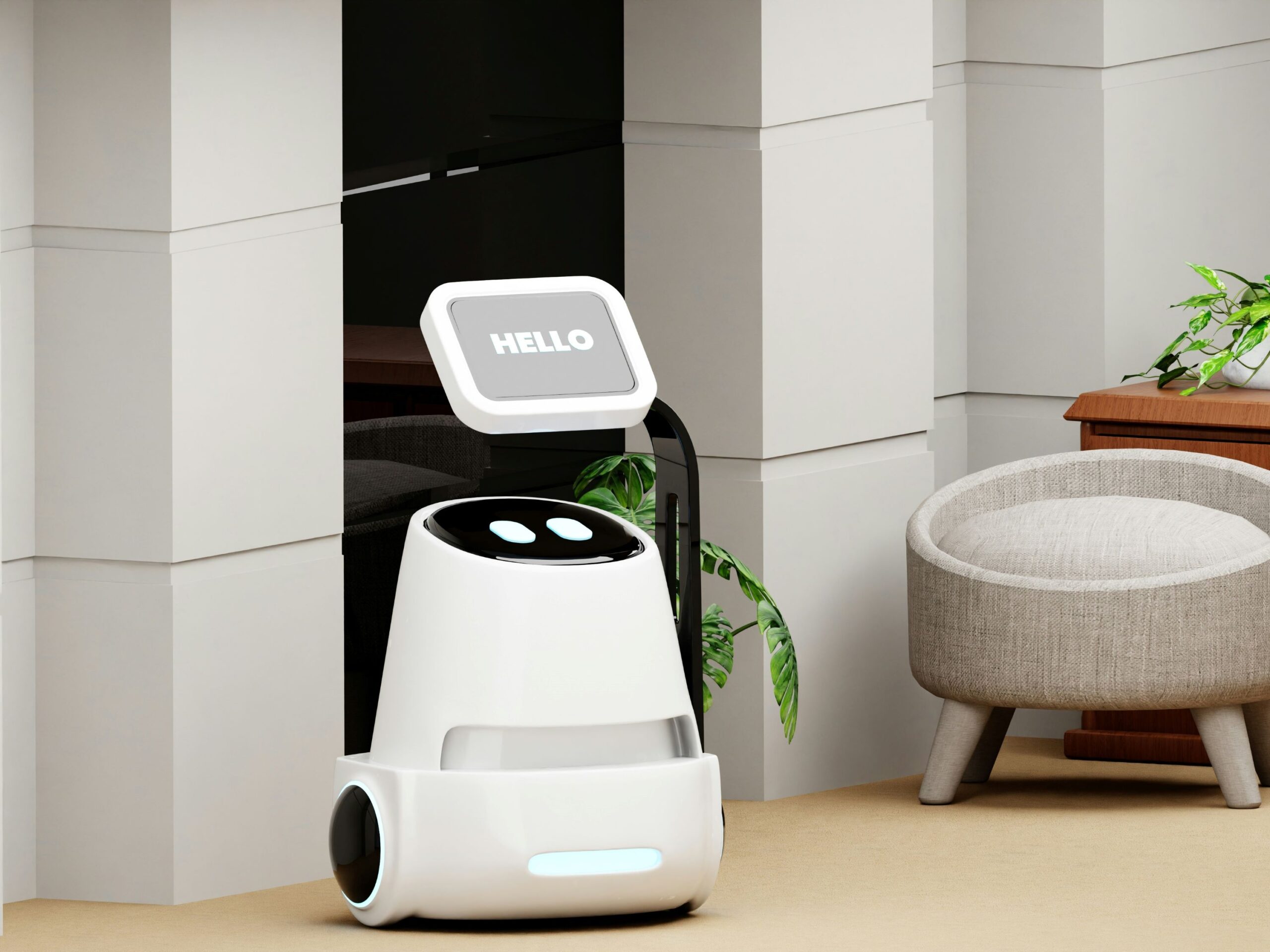
To find that sweet spot, some early-adopter hotels have since taken a step back from certain tech solutions, like lobby or breakfast robots, but others remain interested in pursuing automated staffing. The most cited tech “improvements” hotels are considering include: AI concierges; sustainability solutions around energy (and money) saving; translation services; cooking robots; automatons for dealing with luggage, room service, housekeeping, and outdoor maintenance; voice-controlled rooms; sleep monitoring devices; and smart mirrors.
For the tech-curious or those who want to research the business case, Hotels.com offers a list of some of the globe’s most high-tech hotels. They are:
- Hotel EMC2 (Chicago, IL): A boutique hotel offering art, science, and tech as well as robotic room service and voice assistant integration.
- Grand Hyatt Jeju (South Korea): A tech “haven” with smart rooms, robot butlers, smart mirrors, and facial recognition.
- FlyZoo Hotel (Hangzhou, China): Developed by Alibaba, FlyZoo is an exemplar of AI-driven hospitality with facial recognition check-in, Tmall Genie AI assistant, and robotic room service.
- CitizenM New York Bowery (NY, NY): With a supposed appeal for tech-savvy business travellers, all citizenM properties feature tablet-controlled rooms, screen-mirror functionality and meeting spaces guests can book online.
- Pullman Singapore Orchard (Singapore): Their QR-powered “transforming rooms” claim to enable guests to adapt their personal environment with the touch of a button.
- The Thief (Oslo, Norway): Even VIP check-in is by facial recognition here, and guests will find mirror-integrated TVs and digital art curation via in-room tablets.