The Vietnamese capital has unveiled the design for its newest cultural landmark, a futuristic floating opera house that promises to become a striking addition to the city’s skyline, highlighting its unique heritage and identity.
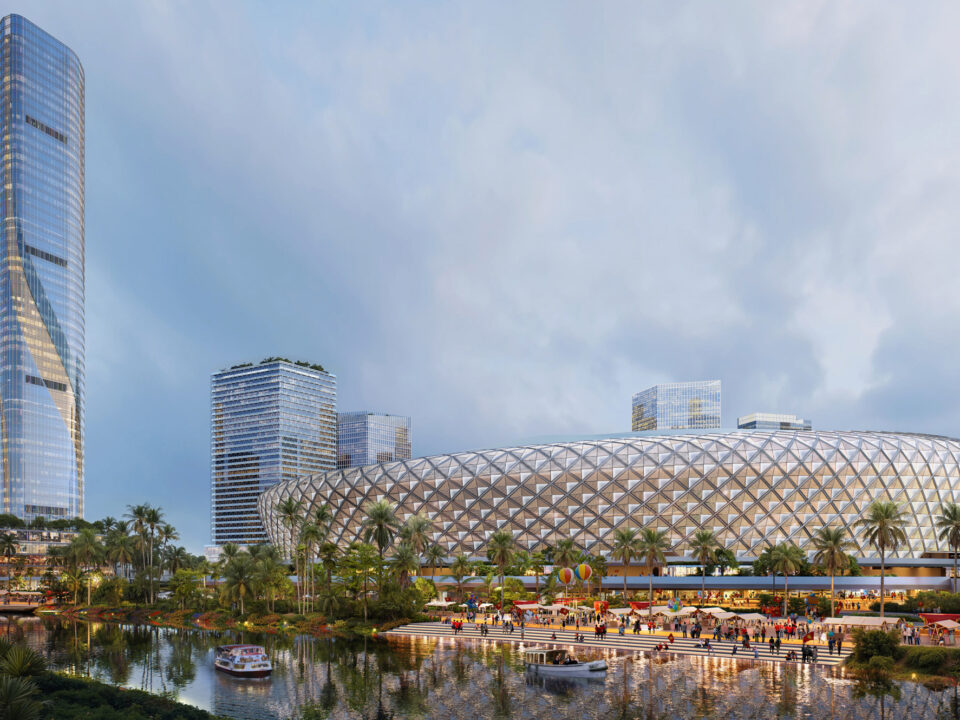
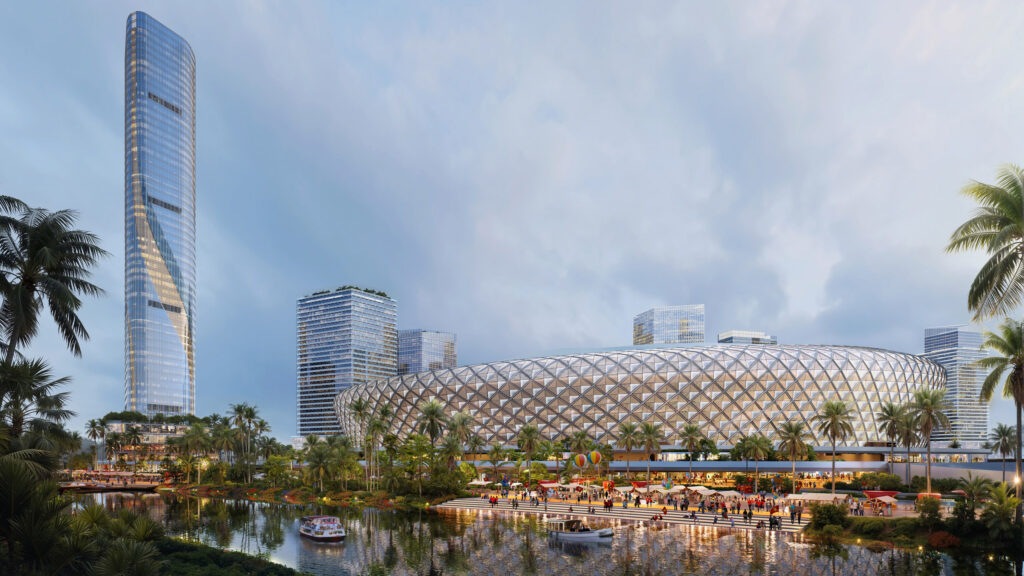
Designed by the Italian Renzo Piano Building Workshop, the project — officially named the Island of Music — will be placed between West Lake and Đầm Trị Lake on the Quảng An Peninsula. The architects reshaped the area by removing about 13,000 square metres of land to reconnect the two lakes, allowing the building to appear as if it floats on the water’s surface, creating an island-like structure that blends gracefully into its natural surroundings.
The new addition to Hanoi’s vibrant cityscape, known for its unique blend of Vietnamese and French architecture, draws inspiration from the lake’s traditional oyster-farming community, whose freshwater pearls shimmer in soft shades of pink, orange, and white.

The visual aesthetic of the exterior uses smooth curving volumes and a “pixelated” ceramic façade, replicating the delicate forms of oyster shells and the soft iridescence of pearls that reflect sunlight in subtle, shifting tones, depending on the time of day and the seasons.
The opera house’s main structure is built from thin-ribbed concrete shells formed by 3D catenary curves — an approach that allows the building to maintain its sweeping shape while remaining structurally efficient. Large glass openings will offer panoramic views of the lakes, bringing natural light into the interior and setting up the sense of connection between art, architecture and nature.

Inside, the complex will include a 1,800-seat opera auditorium and a 1,000-seat congress hall, designed for both classical and contemporary performances, alongside a museum and event spaces that will host concerts, opera and ballet performances and award ceremonies. According to Renzo Piano, the project is part of a broader masterplan for a cultural and artistic park in Tay Ho Ward, designed to serve as a space for cultural exchange and large-scale entertainment, aiming to redefine Hanoi’s urban landscape and attract international visitors.
Renzo Piano, known for landmarks like the Centre Pompidou in Paris and The Shard in London, collaborated with PTW Architects, Theatre Projects, Arup, and RPBW, integrating architecture, theatre, and engineering expertise in the project. Arup applied advanced computational modeling and BIM techniques to optimise the structure, reducing materials, cutting costs, and minimising the building’s carbon footprint, reflecting Piano’s commitment to sustainability.
While the project is still under construction, with completion expected around 2027, its announcement has already drawn attention from global design circles, hailed as a symbol of Hanoi’s creative ambition and its growing embrace of contemporary architecture. Once finished, it is expected to become a lasting landmark and a cultural treasure in the heart of the capital.