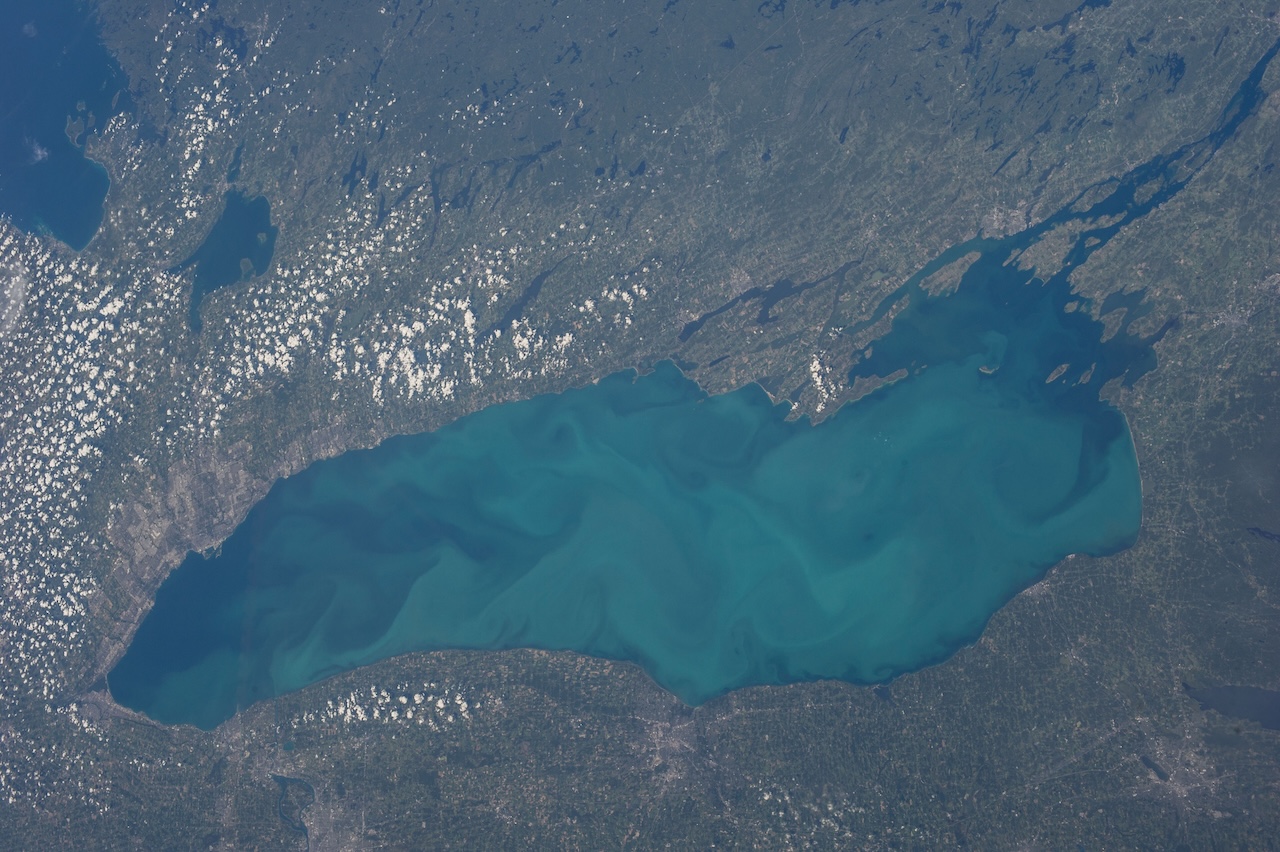



Google has begun displaying Lake Ontario as “Lake America” to users in the United States after President Donald Trump ordered the shared US-Canadian lake to be renamed, prompting a defiant response from Canadian authorities.
The change follows an executive order signed by Trump directing the US Department of the Interior, together with the Board on Geographic Names, to officially replace “Lake Ontario” with “Lake America” in federal records.
Google said it had made the change after the US Geographic Names Information System (GNIS), the federal database it uses for geographic naming in the country, formally adopted the new designation.
Under Google Maps’ approach, users in the United States will see “Lake America”, while those in Canada will continue to see “Lake Ontario”. Users elsewhere will see both names.
“People using Maps in the U.S will see ‘Lake America,’ those in Canada will continue to see ‘Lake Ontario,’ and those outside of the U.S. and Canada will see both names,” Google said, explaining that the move follows its longstanding policy for geographic features whose official names differ between countries.
From Lake Ontario to ‘Lake America’
Lake Ontario is the smallest and easternmost of North America’s five Great Lakes, bordered by the Canadian province of Ontario to the north, west and southwest and the US state of New York to the south and east. It is also an important link in the Great Lakes-St Lawrence Seaway system.
In his executive order, Trump argued that the United States is the “greatest protector of the Great Lakes” and pointed to American spending on environmental protection, the US Coast Guard’s icebreaking operations and the lake’s historical importance to American trade, defence and industry.
The White House also argued that the deepest parts of the lake are within US territory, meaning the United States accounts for most of its water volume.
“The Lake will continue to play a pivotal role in shaping America’s future and the global economy,” the executive order states. “In recognition of this flourishing economic resource and its critical importance to our Nation’s economy and its people, I am directing that the Lake officially be renamed as Lake America.”
The decision comes amid a significant deterioration in relations between Washington and Ottawa after trade negotiations collapsed. The United States has imposed 50% tariffs on $20 billion (€17.1 billion) worth of Canadian goods, with Canada announcing plans for equivalent counter-tariffs.
Trump denied that the renaming was specifically intended as a message to Canada, while accusing the country of having “been ripping us off for a long time on trade”.
Canada responds with giant Lake Ontario sign
Canadian politicians have rejected the name change, which has no authority over how Canada or other countries refer to the lake. Ontario Premier Doug Ford went a step further, unveiling a large sign on the Canadian shoreline reading: “Lake Ontario. Now and Always.” “Long before President Trump, this lake was called Lake Ontario. Long after President Trump is gone, it will still be called Lake Ontario,” Ford said.
Canadian Prime Minister Mark Carney has also rejected Washington’s new designation, saying the lake’s name dates back more than 400 years and predates both Canadian Confederation and the US Declaration of Independence.
“The name Lake Ontario comes from the Wendat word Ontari’io, which, appropriately, means ‘the lake is beautiful, the lake is big’,” Carney said.
The names of four of the five Great Lakes – Ontario, Huron, Michigan and Erie – have Indigenous origins.
Trump has meanwhile amplified the dispute on social media, sharing AI-generated videos about the renaming. One depicts him knocking down a Lake Ontario sign and replacing it with a “Welcome to Lake America” sign, while another shows Canada geese sporting his distinctive hairstyle and carrying rifles along the shoreline.
Ford said the renaming was a response to Canada and Ontario “standing up for ourselves”, adding: “Just in case President Trump or anyone else forgets, we’ve set up this sign to remind them, it’s Lake Ontario, now and forever.”
A familiar dispute for Google Maps
The controversy echoes Trump’s 2025 decision to rename the Gulf of Mexico as the Gulf of America for US federal purposes.
Google subsequently changed how the body of water appears on Maps. US users see “Gulf of America”, Mexican users see “Gulf of Mexico”, while users elsewhere are shown both names.
Mexico rejected the US designation, arguing that one country cannot unilaterally rename an international body of water shared with other nations.
There is no universally recognised international authority responsible for determining the names of international waters, meaning the Lake Ontario dispute is likely to result in different names continuing to appear depending on the country, government, organisation or mapping service involved.
The issue has also divided politicians within the United States. Democratic New York Governor Kathy Hochul has said her state, the only US state bordering the lake, will continue to call it Lake Ontario.
Michigan Democratic Representative Debbie Dingell has announced plans to introduce legislation seeking to reverse Trump’s decision, calling the executive order “idiotic” and describing the Great Lakes as a shared resource that generations of Canadians and Americans have worked together to protect.
Trump, however, has suggested Lake Ontario might not be the last geographic feature he wants to rename.
“If you think about it, we have a gulf and we have a lake. Now, all we need is an ocean,” he told reporters. “So maybe we’ll have to change the name of the Atlantic and/or the Pacific.”